ASEAN Catalytic Green Finance Facility (ACGF)

The ACGF is an ASEAN Infrastructure Fund initiative supporting governments in Southeast Asia to prepare and finance infrastructure projects that promote environmental sustainability and contribute to climate change goals. The ACGF is owned by ASEAN governments and ADB and is managed by ADB’s Southeast Asia Green Finance Hub.
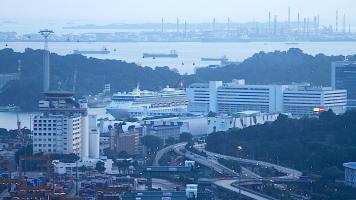
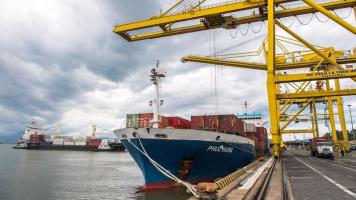
Ports connect cruise operations with community wellbeing, environmental stewardship, and destination quality. Photo credit: ADB.
Article
22 July 2026

Growth Without Compromise: The Case for Sustainable Cruise Ports

Cruise and tourism ports across Southeast Asia can help ensure growing passenger volumes deliver lasting economic, social, and environmental value.
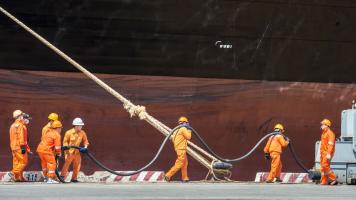
Ports must earn, and continuously maintain, their social license to operate. Photo credit: ADB.
Article
16 June 2026

Sustainability and Social License: What Ports Need to Know

A structured approach to identifying what matters most is helping ports build trust, align stakeholders, and deliver on their sustainability commitments.
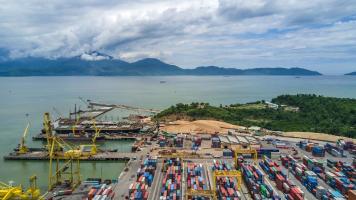
Ports are significant contributors to greenhouse gas emissions and face mounting pressure from climate risks, regulatory complexity, and growing stakeholder expectations. Photo credit: ADB.
Article
25 March 2026

Smart, Clean, Connected: The Next Wave of Port Decarbonization

Exploring practical pathways and technologies shaping Southeast Asia’s green and resilient ports.
Ports sit on the frontlines of climate risk, facing sea-level rise, storm surges, pollution pressures, and growing expectations from regulators, financiers, and communities. Photo credit: ADB.
Article
18 March 2026

Green and Resilient Ports: Global Lessons for Southeast Asia

Leading ports worldwide are advancing green and climate-resilient solutions, providing lessons for Southeast Asia’s port operators.
ASEAN Catalytic Green Finance Facility 2022: Building Southeast Asia’s Green Project Pipelines
Publication
17 February 2023

ASEAN Catalytic Green Finance Facility 2022: Building Southeast Asia’s Green Project Pipelines

This report from ADB presents progress and achievements made by the ASEAN Catalytic Green Finance Facility in 2022.
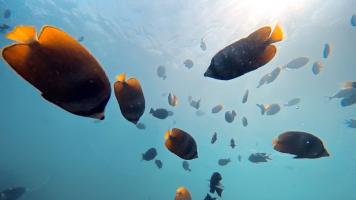
The ocean is valued at more than $24 trillion. Photo credit: ADB.
Article
12 August 2022

Breaking the Waves: Kickstarting the Global Sustainable Blue Economy in Southeast Asia

Advancing a sustainable blue economy entails developing a globally recognized taxonomy, attracting much-needed private capital into blue projects, and generating a healthy project pipeline.
By 2030, the region’s green economy will contribute $1 trillion in economic opportunities, and potentially contribute 6%–8% growth in GDP from new growth areas. Photo credit: ADB.
Article
26 April 2022

Financing Climate Action: Three Priorities for Southeast Asia

Southeast Asia needs to rapidly mobilize private funds to meet the region's financial needs of $210 billion per year in adaptation and mitigation investments.
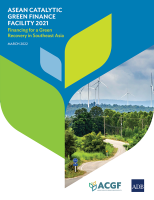
ASEAN Catalytic Green Finance Facility 2021: Financing for a Green Recovery in Southeast Asia
Publication
22 March 2022

ASEAN Catalytic Green Finance Facility 2021: Financing for a Green Recovery in Southeast Asia

This report documents ACGF's progress and achievements from January to December 2021.
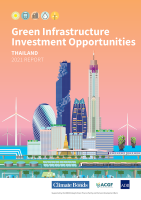
Green Infrastructure Investment Opportunities: Thailand 2021 Report
Publication
31 January 2022

Green Infrastructure Investment Opportunities: Thailand 2021 Report

This report explores green bonds and other finance instruments for climate-resilient infrastructure and investment opportunities that can support Thailand in achieving a low-carbon economy.
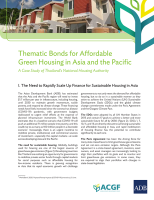
Thematic Bonds for Affordable Green Housing in Asia and the Pacific: A Case Study of Thailand’s National Housing Authority
Publication
30 January 2022

Thematic Bonds for Affordable Green Housing in Asia and the Pacific: A Case Study of Thailand’s National Housing Authority

This case study discusses the experience of Thailand’s National Housing Authority in the issuance of thematic bonds to build green, affordable housing for the country’s low-income residents.