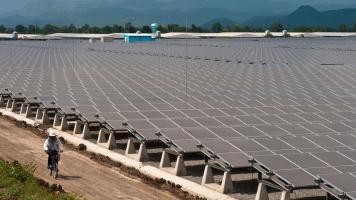
While ASEAN countries have embarked on reforms to create more favorable conditions for businesses to thrive, there is significant scope to enhance trade efficiency and investment readiness across the region. Photo credit: ADB.
ASEAN is forging ahead to turn regulatory reforms into meaningful outcomes to sustain the region’s investment attractiveness and achieve its goal of economic integration.
As ASEAN advances the ASEAN Community Vision 2045, the regional bloc’s efforts to foster private sector development and attract investments are integral to realizing this ambitious agenda. Development of a strong and dynamic private sector is crucial as it is an important engine of growth and job creation. Thus, many Southeast Asian countries have embarked on reforms to create more favorable conditions for job-generating businesses and industries to thrive.
At the ASEAN Business Environment Forum in March 2026 organized by the Department of Trade and Industry (DTI)—with support from the Asian Development Bank (ADB)—policymakers, business leaders, and development partners showcased initiatives aimed at advancing ASEAN’s goal of becoming a more competitive, digitally enabled, and investment-ready region. The forum highlighted the region’s progress in translating policy into outcomes that support a strong, predictable, and transparent business environment.
Toward an ASEAN Single Market: Still a Long Road Ahead Despite Progress
Against a backdrop of increasingly complex global challenges, ASEAN remains a premier investment destination, recording an 8% increase in foreign direct investments (FDI) in 2024 despite an 11% decline in global FDI flows. In the latest EU-ASEAN Business Sentiment Survey, ASEAN continues to be an attractive market for European businesses, with a majority indicating the region’s importance to their revenues.
Viet Nam is among the ASEAN countries that stands out in FDI performance, attracting approximately $38.2 billion in registered FDI in 2024. As a fast-growing powerhouse in the region, the country seeks to sustain its economic momentum through private sector and innovation-led growth. In 2025, the country introduced Resolution 68, a directive acknowledging the private sector as a fundamental force for its economic growth. The goal is to increase the number of private enterprises in Viet Nam to 2 million by 2030. Since the issuance of the resolution, more than 1 million businesses have been registered and operating in the Vietnamese economy. Complementing this directive is Resolution 57, which seeks to promote the development of science, technology, innovation, and digital transformation. “We’re trying to improve the cooperation between enterprises in these sectors with government agencies, helping them to have more possibility or opportunity to have contracts with government bodies in the process of digital government development,” Viet Nam Finance Vice Minister Tran Quoc Phuong said.
Similarly, the Philippines recognizes digitalization as a strong driver of its economy and a critical enabler of improving the ease of doing business. Established in 2018, the Anti-Red Tape Authority (ARTA)—which holds the mandate to streamline government processes and eliminate bureaucratic hurdles—has set up the Electronic Business One-Stop Shop or eBOSS, allowing businesses to register and renew permits online within one day. ARTA has also rolled out the National Effort for the Harmonization of Efficient Measures of Inter-Related Agencies or NEHEMIA program—with assistance from ADB—to promote interconnectivity among government agencies and simplify regulations for priority sectors of the economy, including digital infrastructure.
While predictable and stable regulations are essential for promoting a business-friendly environment, these must be paired with access to capital to support entrepreneurs. To this end, DTI has launched funding mechanisms, such as the Women's Enterprise Fund, providing loans for women-led enterprises. Another initiative is the Overseas Filipino Worker (OFW) Negosyo Fund, a financing program targeted at returning OFWs that aim to set up a business in the Philippines. This is particularly timely as many OFWs have been repatriated back in the country due to the Middle East conflict.
At the regional level, the ASEAN Single Window has been developed to streamline customs processes and integrate trade administration systems across member states. In addition, the Regional Comprehensive Economic Partnership or RCEP—the world’s largest free trade agreement—provides enhanced trade facilitation provisions by streamlining customs procedures, implementing paperless trading, and harmonizing rules of origin among ASEAN member states and five major partner countries.
Despite these laudable initiatives, forum panelists acknowledged the disconnect between ASEAN’s ambition and implementation. Its goal of becoming a single market remains elusive given the diverging rules and regulations across member states, as well as lack of effective execution of policies that look good on paper. Although regional frameworks on trade facilitation have been introduced, some only serve as guiding tools rather than mandatory requirements. As a result, fragmented trade systems and incoherent standards impede efforts to facilitate the seamless movement of goods and achieve full economic integration in ASEAN.
Apart from being a strategic necessity, trade facilitation is a vital policy tool that directly impacts the cost of living, a critical issue in this time of crisis. It improves the affordability of goods for consumers by reducing the time, cost, and bureaucratic bottlenecks associated with importing and exporting. “Economies of scale and standardization of process reduce costs significantly, and ultimately, all those savings transfer back to the population—the people that we are serving,” said Kenvue Senior Director Jesselynn Lai.
From Policy to Performance in the Face of Polycrisis
While there is significant scope to enhance trade efficiency and investment readiness across the region, ASEAN as a platform for peer learning and exchanging good practices remains essential to narrow the implementation gap. Policies alone do not transform economies. Translating them into meaningful outcomes through credible execution and partnerships is essential.
DHL Express Vice-President Raymond Yee cited the idea of co-creation, whereby businesses and governments engage in meaningful consultations to reduce administrative barriers and ensure that policies are well-designed. A notable example is DHL’s collaboration with the US Department of Homeland Security on the submission of shipment data prior to the arrival of goods for streamlined customs processing. Leveraging digital tools is also instrumental in modernizing customs and bolstering the speed and efficiency of trade. For instance, Dubai’s cross-border e-commerce platform built on blockchain technology has provided total visibility and traceability on transactions and improved customs efficiency by eliminating declaration preparation time.
With digital tools becoming deeply embedded in trading systems, regional initiatives, such as the ASEAN Digital Economy Framework Agreement (DEFA), play a pivotal role in harmonizing digital trade rules and establishing a coherent regulatory framework, which will facilitate smoother cross-border transactions and enable small enterprises to operate with greater predictability in a more integrated digital economy. The Philippines has elevated DEFA as a key deliverable for its 2026 ASEAN Chairmanship, aiming for the agreement’s signing to establish the world’s first regional digital agreement.
Beyond digitalization, there is merit in considering low-hanging opportunities to achieve quick wins for regional integration. Since Singapore demonstrates strong performance in ease of doing business, ASEAN member states can leverage on its model to avoid reinventing the wheel. Given Singapore’s efficient regulatory framework and credible standards, Ikhlas Capital Founder and Former Philippine Finance Secretary Cesar Purisima raised the idea of replicating them, which may be a pragmatic solution to foster a common system and uniform rules for trade in the region.
Finally, as countries grapple with new complexities brought by the ongoing tensions in the Middle East, speakers advised countries to never let a crisis go to waste and use it as an opportunity to speed up domestic reforms for long-term resilience. As international trade continues to realign and the pace of change accelerates, governments must respond with policies that build investor confidence amid volatility. “Efforts grounded in transparency, good governance, and sound regulatory practices drive investor confidence,” said ADB Vice-President Scott Morris.
“Economies that can anchor this confidence will be best positioned to attract capital, talent, and value-adding investment in the years ahead.”