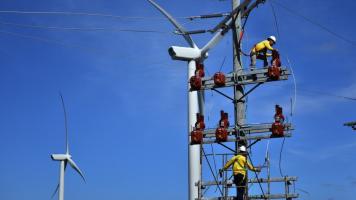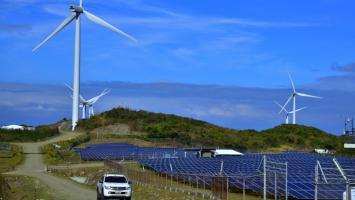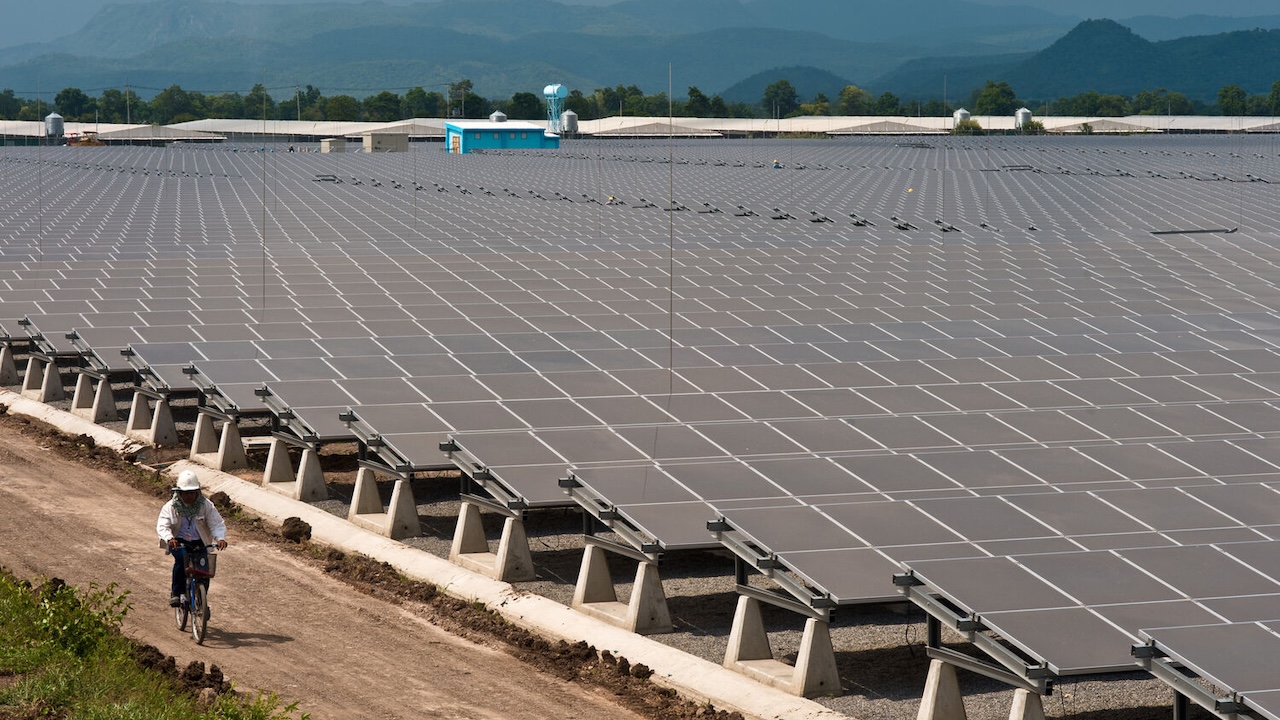
Regional cooperation, policy coherence, knowledge sharing, and international support are essential to enable countries at different stages of development to fully participate in and benefit from the green transition. Photo credit: ADB.
Across the region, member states are making the transition at varying speeds and through different pathways.
With the green transition now an imperative, ASEAN countries are stepping up efforts to reset policy frameworks, mobilize private investment, and accelerate the shift to clean energy to sustain growth amid rising climate and economic risks.
Over the past 3 decades, ASEAN’s rapid economic growth has lifted millions out of poverty and positioned the region as one of the fastest-growing in the world. But these gains came at a cost as the region now faces rising carbon emissions, resource depletion, and biodiversity loss. These threaten Southeast Asia's resilience and competitiveness in the long term. While recent geopolitical tensions and energy market volatility have underscored the urgency of making the transition.
At the recent launch of a new report from the Asian Development Bank (ADB) on ASEAN’s green transition, speakers stressed the need to reset the region’s economic model toward low-carbon, climate-resilient, and inclusive development. The report evaluates the state of the green economy transition in ASEAN and identifies gaps and challenges impeding adoption.
“Sustaining ASEAN's growth now requires a decisive shift toward a green economy,” said ADB Vice-President for East and Southeast Asia, and the Pacific Scott Morris in his keynote at the event. “This transition is not about slowing development. It is about growing differently—pursuing growth that is low-carbon, resource efficient, resilient, and inclusive.”
Citing the report, Advancing the Green Economy Transition in ASEAN, he said the green economy represents a major economic opportunity for ASEAN as it could generate up to $1 trillion in annual revenue, create 30 million jobs, and strengthen the region's competitiveness in a global economy that is rapidly moving toward sustainability.
“The green transition, therefore, is not only an environmental imperative. It is a powerful driver for future growth,” said Morris.
With the regional grouping setting a broad direction for a shift toward a low-carbon, sustainable economy, as enshrined in the ASEAN Community Vision 2045, member states are making the transition at varying speeds and through different pathways.
“While some economies are already scaling up green infrastructure and technologies, others are still building the necessary policy frameworks, institutional capacities, and financing mechanisms,” said Cambodia Secretary of State Pich Rithi during the launch, a side event of the ASEAN Economic Ministers’ Meeting. “This diversity presents both a challenge and an opportunity.”
He said that Cambodia, an ASEAN member, believes the region could successfully make the transition. “Regional cooperation, policy coherence, knowledge sharing, and international support are essential to enable countries at different stages of development to fully participate in and benefit from the green transition,” he said.
Governments in action
Governments play a key role in the green transition. Though they are at different stages of development, both Cambodia and the Philippines are taking urgent steps toward the green economy.
Rithi said Cambodia is mainstreaming sustainability, with the government actively promoting sustainable development policies and climate-responsive economic strategies. It is also working to expand renewable energy, promote sustainable agriculture, and increase environmentally responsible business practices.
The government also views the green transition as an opportunity to generate new industries in areas such as ecotourism, sustainable manufacturing, and circular economy solutions.
Meanwhile, the Philippines is making the transition by enacting laws to diversify energy supply and ensuring there are jobs for Filipinos in the green economy. It is also committed to increasing the share of renewable energy in its power mix from the current 21% to 35% by 2030 and 50% by 2040. The initiatives include opening offshore wind development to foreign investors.
The Philippines is also working to conclude a free trade agreement with the European Union to align with global green standards and is pursuing global partnerships to reduce plastic waste and foster a circular economy.
To ensure swift action, the Philippines is also making sure government departments work closely with each other. “For us in government, we take a whole-of-government approach to make sure that we get things done,” said Philippine Trade Secretary Maria Christina Roque. “We resolve the issues on the table right there and then.”
ADB Chief Economist Albert Park said it is also important for governments to give clear signals to both consumers and producers about the shift to more sustainable technologies and sustainable forms of consumption.
One of the tools being explored to provide clearer signals to markets is carbon pricing as it puts a price on greenhouse gas emissions. Carbon pricing provides an incentive to switch away from emissions-intensive products and production toward cleaner alternatives, encouraging firms to invest in innovative low-carbon technologies and inducing consumers to switch to low-emissions goods and services.
“It really is the key to making the transition efficient and minimizing the growth trade-offs to transition,” said Park.
Private sector role
While governments can set direction through policy and regulation, they cannot finance ASEAN’s green transition alone. The private sector also plays a key role.
“Policies alone do not reduce emissions and regulations alone do not build renewable energy systems, modernize factories or create green jobs. That is where the private investment becomes indispensable,” said Morris.
Park noted the importance of public–private partnerships in mobilizing capital, given that for many countries, the exposure to risks is very high. “It's really about facilitating investment from the private sector where all the money is and that requires creating enabling environments and signaling clear policy intentions,” he said. “There's a lot of very nut and bolts type work needed to create standards and reduce uncertainty, so public–private partnerships are critical for enticing private sector capital.
Ensuring an inclusive transition
The transition to a green economy requires creating green jobs and developing green skills.
The ADB report said 1 in 3 jobs in ASEAN depends on natural resources. This includes over 100 million workers engaged in farming, fishing, forestry, and nature-based tourism.
“The high dependence on natural systems means that environmental degradation, biodiversity loss, and climate change pose significant risks to livelihoods, especially for those in rural and coastal areas,” the report said. “As such, protecting these ecosystems is not only an environmental priority but also a socioeconomic necessity.”
Promoting green jobs in these sectors—through sustainable agriculture, ecotourism, and climate-resilient livelihoods—can help safeguard employment, reduce poverty, and build long-term resilience.
Creating green jobs also ensures families stay together, which is a concern for the Philippines. "We have a huge population and our number one export for now is our people. So we might as well create the jobs for them to stay here and be with family,” said Roque.
The path to a $1-trillion green future
With national pathways differing, regional cooperation will be critical to making the transition a success. ASEAN has put in place frameworks and initiatives to strengthen coordination and support member states as they shift toward more sustainable growth models.
The ADB-supported ASEAN Power Grid is a key regional initiative as it seeks to integrate national power systems and enable cross-border electricity trade to enhance energy security and support the transition to cleaner energy. The project is estimated to cost more than $16 billion, with nine of the planned 18 interconnection projects already operational as of 2022.
ASEAN Deputy Secretary-General Satvinder Singh said the region has advanced the green agenda by embedding sustainability in its 2045 vision. “For the first time, we actually saw sustainability embedded so deeply into our entire plan.”
ASEAN also plans to track what the region does sustainably in terms of the environment, he said. “These are the practical ways in which we are coordinating work in our region that allows all of us to be able to bring everyone together, benefit from the ability to understand what our needs are for the future, but at the same time depend on one another to achieve our regional goal,” he said.