Sharing Sanitation Best Practices to Expand Sustainable Resource Management in Southeast Asia
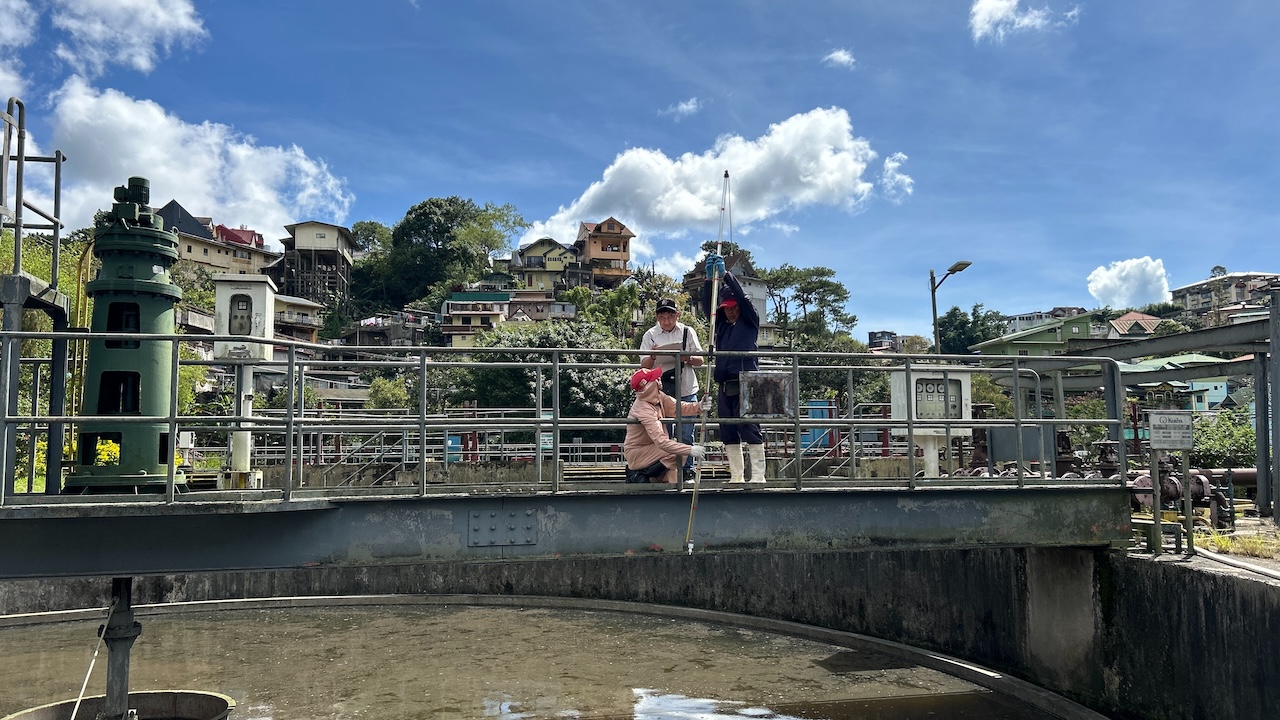
An ADB program has supported at least 80 partnerships in 21 countries in the region, with about $1.1 billion in investments in water supply and sanitation. Photo credit: ADB.
Encouraging sanitation providers in Southeast Asia to twin can help boost operational efficiency and improve services.
Cultivating partnerships is an important facet of the Asian Development Bank's (ADB) mission in the Asia and the Pacific. Building strong bonds and leveraging shared strengths can amplify development outcomes. In 2007, ADB pursued this commitment specifically for the water sector when it launched the Water Operators Partnerships (WOPs) program. The aim was to assist water operators through cooperation among peers.
Since then, the WOPs program has become a pillar of ADB’s water sector operations. It has supported at least 80 partnerships in 21 countries in the region, with about $1.1 billion in investments in water supply and sanitation. The program has enabled water and sanitation operators to improve their service coverage and delivery, financial sustainability, and other operational aspects through peer-to-peer learning and capacity building.
The success of the WOPs program led to its current evolved format: the Water Organizations Partnership for Resilience or WOP4R. This is one of the subprojects of the Mainstreaming Water Resilience in Asia and the Pacific technical assistance (TA) cluster that was approved in 2021.
The focus on water resilience under the new program is a sign of the times, specifically the changing needs and issues faced by water and sanitation operators. WOP4R supports water entities in becoming more sustainable, inclusive, and resilient, so they are better prepared to address water security challenges, increasing climate change and disaster risks, and any future pandemics. Under the updated program, there is also a greater emphasis on using different technologies to improve efficiencies and boost skills.
Value Added by WFPF
In 2025, the Water Financing Partnership Facility (WFPF) funding to WOP4R was approved. Allocated through the Sanitation Financing Partnership Trust Fund (SFPTF) and the Water Resilience Trust Fund, this will support more twinning partnerships, especially for operators who require capacity building on the use of innovative solutions, such as smart water management systems, digital monitoring tools, and climate-resilient infrastructure designs.
In Southeast Asia, one of the twinning partnerships for SFPTF funding is between Malaysia’s Indah Water Konsortium (IWK) as mentor and three service providers from Indonesia as mentees—namely, the cities of Jambi, Makassar, and Pekanbaru.
IWK is Malaysia’s national sewerage company. Prior to this potential twinning arrangement with Indonesia, IWK already partnered and guided the Baguio City Environment and Parks Management Office in the Philippines in 2024. They shared their expertise on sewage treatment plant process monitoring, sewer network maintenance, and energy efficiency. In 2013, IWK also served as mentor to PDAM Tirtanadi in Medan, Indonesia, with the twinning partnership focused on wastewater management. PDAM or perusahaan daerah air minum refers to water utilities owned by local governments in Indonesia.
The new partnership with three Indonesian cities is proposed to focus on maintenance, process efficiency, and management and coordination. It will also largely serve as project sustainability support to the ADB-financed Metropolitan Sanitation Management Investment Project that was completed in June 2024, which improved urban wastewater services in the cities of Cimahi, Jambi, Makassar, Palembang, and Pekanbaru. The project constructed new sewerage systems and wastewater treatment plants, established wastewater infrastructure management institutions, and strengthened relevant departments of respective regional governments.
In Jambi, Makassar, and Pekanbaru, the twinning can help operators with: (i) addressing operational challenges such as frequent equipment malfunctions and the absence of formal operator appointments, (ii) improving process efficiency by resolving issues like inadequate bypass systems and reagent shortages, and (iii) enhancing infrastructure and maintenance by ensuring proper calibration of instruments and addressing structural deficiencies. Additionally, IWK could share better management practices, such as proactive maintenance planning.
Currently, ADB is already supporting the utilities with GIS systems, water, sanitation, and hygiene, and tariff settings; however, adopting tried and tested processes from a well-functioning utility like IWK could further enhance the overall performance of the three mentee-utilities.
Expected Results
The twinning partnership with Indonesia will likely expand the benefits of improved sanitation and wastewater management.
As for overall support to WOP4R, the focus on transformative technologies is expected to contribute toward climate-resilient infrastructure and improved operational efficiency and adaptability to climate-related challenges.
Lessons learned will be documented to inform the development of scalable models for replication across other water organizations.
WFPF’s support will also enable knowledge dissemination through workshops, case studies, and regional forums, creating clear pathways for the uptake of successful practices within and beyond the program’s immediate scope.
This article was republished from the Water Financing Partnership Facility Annual Report 2025, which summarizes the activities and accomplishments of the Facility from January to December 2025.