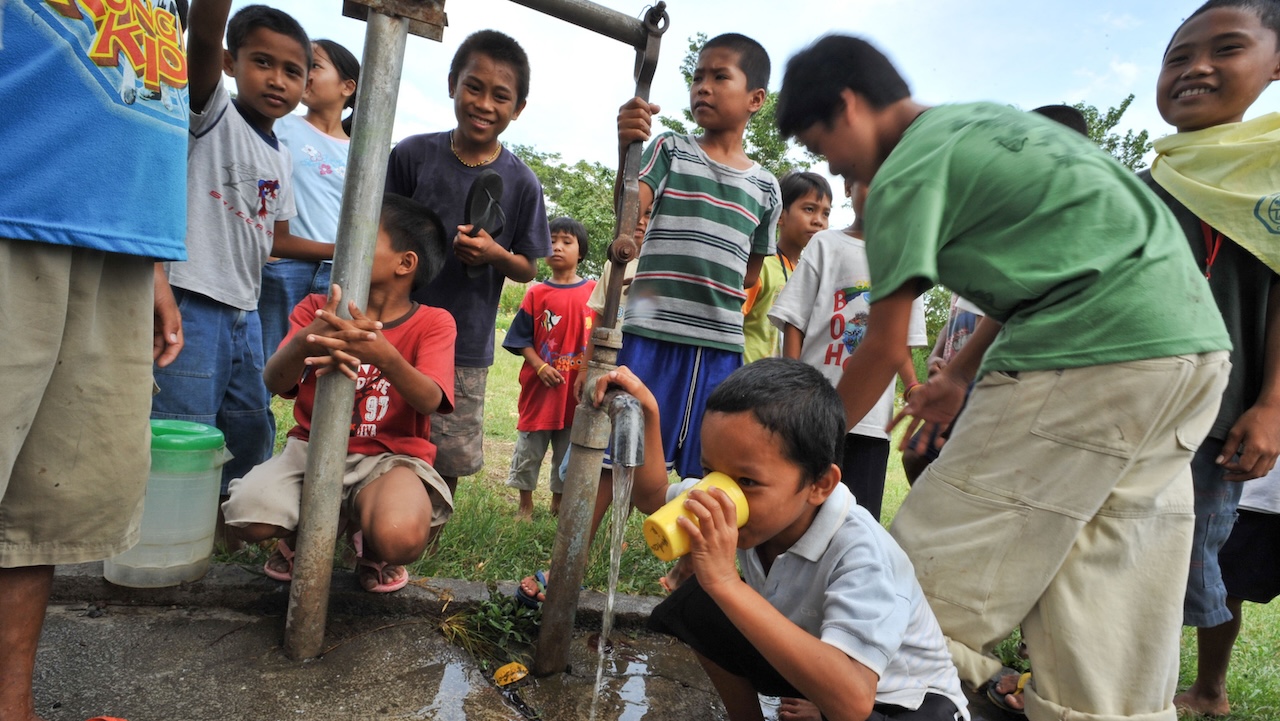
Experts have warned that the water crisis is not a brewing crisis—it is a crisis now. Photo credit: ADB.
Beyond infrastructure, a combination of advanced treatment technologies, digital intelligence, and sustainable collaboration is needed to achieve water resilience.
Southeast Asia remains vulnerable to water insecurity as climate change, ecosystem degradation, urban growth, and insufficient and aging infrastructure strain water systems.
Strengthening water resilience is no longer possible with just conventional infrastructure. Beyond building and upgrading existing infrastructure, a combination of advanced treatment technologies, digital intelligence, and sustainable collaboration would be required to achieve water resilience.
Under pressure
As many experts warn, the water crisis is not a brewing crisis—it is a crisis now.
Long considered the backbone of water security, natural ecosystems such as wetlands, rivers, and forests are deteriorating fast.
Climate change is intensifying heatwaves, altering rainfall patterns, and increasing the frequency and extent of extreme events.
From 2013 to 2023, Asia and the Pacific experienced more than 240 major flood events, over 100 droughts, and around 100 severe storms, significantly heightening risks to water supplies and infrastructure. These disruptions reduce the ability of natural systems to store and regulate water, leaving communities more exposed to water shortages and contamination.
Freshwater resources are also under growing threat from industrial effluents, agricultural runoff, and untreated sewage or sediments washed from degraded land by heavy rainfall. Weak environmental governance and inadequate treatment capacity result in pollutants entering rivers and groundwater, further undermining natural ecosystems.
Cities in Asia and the Pacific are expanding quickly, with urban populations growing at an average rate of 1.8% annually between 2017 and 2023. This urban growth drives sharp increases in water demand which often outpace infrastructure development.
Without targeted and inclusive strategies to build water resilience, these challenges often disproportionately affect the most vulnerable communities who lack the buffers to adapt and recover from such shocks. This further deepens inequality and hinders development in the region.
Infrastructure shortfall
Across Southeast Asia, countries face significant shortfalls in water and wastewater infrastructure.
Indonesia: More than half of households do not have direct access to the national water utility network, and the capital Jakarta ranks among provinces with the lowest household access to safe drinking water.
Malaysia: National projections by Malaysia’s National Water Resources Study indicates total water demand could rise by over 100% by 2050 across domestic, industrial, and agricultural sectors.
Myanmar: With widespread disruption of critical services, more than 5.6 million people lack access to safe water supplies.
Philippines: An estimated 11 million families have limited access to safe water, particularly during the dry seasons, and El Niño events have caused prolonged service interruptions.
Singapore: Despite having advanced desalination and reuse capabilities, national studies suggest water demand to almost double by 2065, reinforcing the need to ensure water security.
Thailand: Based on projections, industrial and household water consumption will grow by 80% and 25% by 2037.
Viet Nam: Wastewater treatment rates remain around 15%, with an estimated $9 billion needed for treatment and drainage infrastructure.
Leveraging advanced technologies
Water security is no longer about just ensuring a stable supply, water systems need to also be sustainable, flexible, and resilient to shocks.
Governments and utilities across Southeast Asia are increasingly turning to advanced technologies to build water security and reuse.
Solutions providers can help establish integrated water infrastructures that deliver safe, reliable, and efficient treatment across the entire water cycle. They go beyond traditional water treatment as they advance circular water management, in turn, maximizing reuse, minimizing losses, and optimizing operations through digitalization.
Advanced recycling systems enable treated wastewater to be converted into high-quality water suitable for reuse. Multi-barrier processes combining ultrafiltration, reverse osmosis membranes, and ultraviolet disinfection consistently produce high-grade recycled water from treated wastewater.
For coastal and island communities, modular seawater desalination systems, designed for rapid deployment, minimal setups, and installed as containers, provide a practical solution where freshwater sources are scarce.
Beyond physical infrastructure, intelligent solutions can also work in tandem with existing structures. Some providers offer digital platforms that support real-time monitoring and optimization of treatment plants and distribution networks.
By integrating sensors, analytics, and predictive maintenance, utilities gain end-to-end visibility of operations, and enabling faster decision-making, early detection of anomalies, and more efficient resource use.
Extending impact
Apart from technology, thought leadership, knowledge sharing, and cross-sector collaborations are essential in driving systemic change. Through industry dialogues, partnerships, and advocacy on water, stakeholders such as governments, utilities, and industry leaders can align priorities and mobilize collective action.
Amid many challenges, there is a need to be intentional in conserving water through collaboration with government, policymakers, and stakeholders. At Hitachi, we believe in catalyzing partnerships to translate ideas into tangible impact.
Great partnerships are formed when we ask, “What’s next?” By continuously looking forward, we pave the way for a hopeful future, where innovation, collaboration, and purpose drive lasting impact for communities across Southeast Asia.

Hitachi Asia Ltd.
Hitachi Asia Ltd., a subsidiary of Hitachi, Ltd., is headquartered in Singapore. With offices in six other ASEAN countries including Indonesia, Malaysia, Myanmar, the Philippines, Thailand, and Viet Nam. Hitachi Asia and its subsidiaries address social challenges by offering information technology, operational technology, and products through co-creation with customers to support their transformation journeys.