Preparing ASEAN Education Systems for an AI-Driven Future

Project Manager, AI Ready ASEAN, ASEAN Foundation
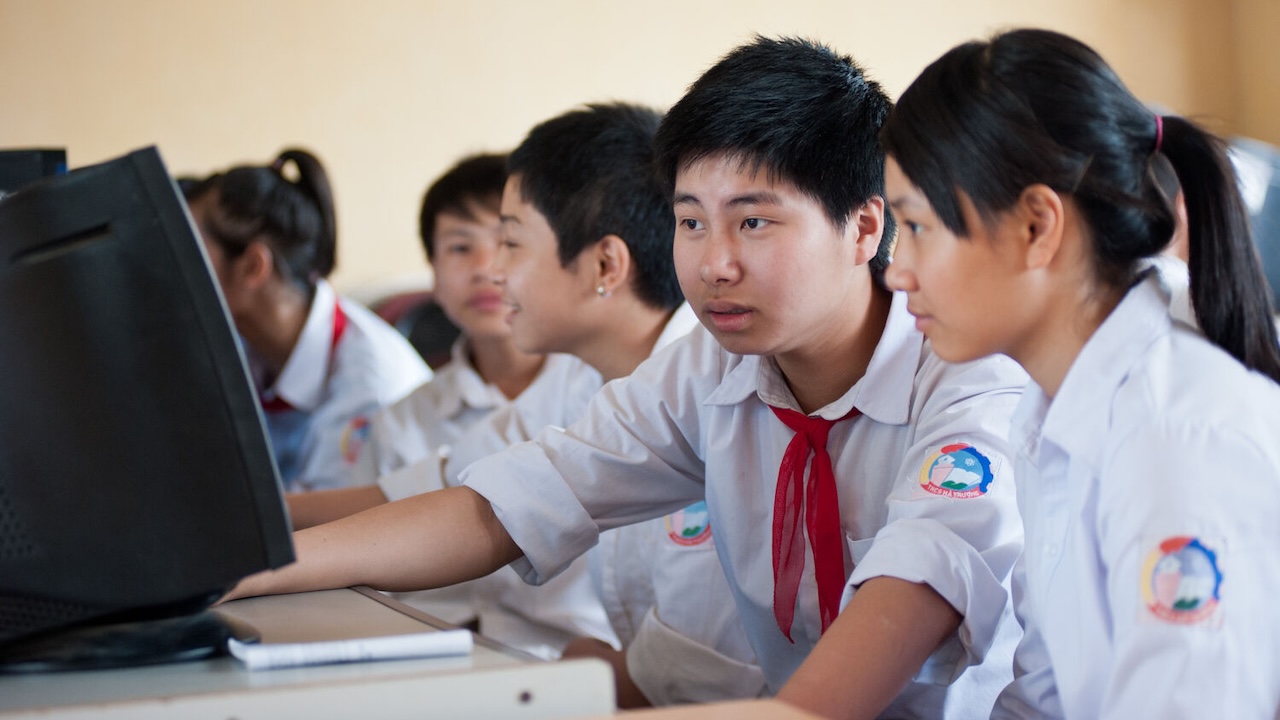
AI is not only changing students’ learning requirements but also transforming how learning happens. Photo credit: ADB.
The rapid adoption of artificial intelligence is placing immense pressure on ASEAN's education systems, creating a critical gap between industry demand and educational supply.
The next decade is not just a period of time, but a crucial window that will shape how Southeast Asia’s workforce grows and adapts. Artificial intelligence (AI) is not just rapidly spreading, but it is a tidal wave that is transforming how people live, work, and learn. With a fast-growing digital economy and a young, dynamic population, ASEAN has not just a chance, but a pressing need to turn this technological shift into shared progress.
This opportunity comes with challenges. If access to AI tools and skills remains uneven, some communities and industries risk being left behind. Education is at the heart of this moment. It connects innovation with people, equipping them to succeed in a changing world. When schools and training programs keep pace with industry, they create opportunities for individuals and businesses to thrive. When they lag, skills gaps widen and economic divides grow.
The countries of ASEAN encompass a diverse range of realities. Education systems differ in sizes, resources, and approaches, and access to technology is far from uniform. In some places, AI is already part of the classroom experience, while in others, the focus is still on building reliable infrastructure and basic connectivity. This mix of circumstances means no one solution works for everyone. Progress will depend on strategies that encourage collaboration across the region while leaving space for local adaptation. When solutions are designed with this diversity in mind, they are more likely to take root and deliver benefits that reach all communities.
Balancing Industry Needs and Education Response
AI is moving from pilot projects to widespread use across Southeast Asia. The e-Conomy SEA 2024 Report shows that in the first half of 2024, more than $30 billion was invested in AI-related infrastructure. This reflects how quickly companies are integrating AI into their core operations. Retailers now use AI to provide personalized shopping experiences, and financial institutions rely on it to improve fraud detection and credit scoring. These changes go beyond technology upgrades; they are reshaping how businesses operate and their expectations of the skills required from their workforce.
As adoption grows, so does the need for talent. The report highlights that 71% of generative AI workflows already deliver returns within a year. Employers no longer need only data scientists and engineers. They now seek workers at every level who can understand AI systems, use data to guide decisions, and think critically about ethical implications. Without these abilities, industries risk slower growth and missed opportunities.
This surge in demand places intense pressure on education systems. The ERIA report Accelerating AI Discussions in ASEAN (2023) notes that many schools are still focused on basic digital skills. This leaves them unprepared for the advanced capabilities needed in an AI-driven economy. This has resulted in a widening gap between the skills businesses require and those that educational institutions provide. Policymakers and educators must act quickly to update curricula, train teachers, and expand access to ensure that learning opportunities keep pace.
AI is not only changing students’ learning requirements but also transforming how learning happens. Adaptive learning platforms personalize lessons by tracking each student’s progress and adjusting content in real time. This enables teachers to focus more on mentoring and problem-solving, rather than delivering the same material to every student. It also brings individualized education to scale, making personalized learning possible even in large or under-resourced classrooms.
Generative AI tutors take this further by providing students with access to explanations and practice materials at any time and from anywhere. They can reach learners in remote areas who might otherwise lack access to specialized teachers and instructors. This can help bridge gaps between urban and rural education. However, without guidance, students may rely too heavily on these tools and miss out on the benefits of collaborative and social learning. Here, teachers play a vital role in helping students use AI thoughtfully and critically.
Learning analytics adds another dimension. By analyzing real-time data, schools can identify when students are struggling and step in before issues grow. Used well, these insights can guide decisions about resource allocation and teaching strategies. But if the data is biased or incomplete, the systems can unintentionally deepen inequities. ERIA stresses that transparency and accountability are essential to ensure these tools support fairness rather than reinforce disparities.
Together, these technologies call for systemic change. It is not enough to add new courses or devices. Education systems must rethink teacher roles, curriculum design, and partnerships between schools, governments, and industries. When these elements move in sync, they create a pipeline of talent that helps industries grow. When they fall out of step, skills shortages slow innovation and widen divides. Collaboration between stakeholders is crucial to ensure the successful implementation of AI in education. To address this, collaboration between policymakers, educators, industry leaders, and development organizations is key in shaping effective AI education strategies.
AI Ready ASEAN: A Regional Illustration
The AI Ready ASEAN Program, supported by Google.org and implemented by the ASEAN Foundation, offers one example of such collaboration. Operating across all ASEAN member states, the initiative combines community-based programs with policy-level engagement, aiming to strengthen AI readiness for both learners and decision-makers across the region.
At the community level, the program is built around three pillars: awareness raising on AI, training of trainers, and in-depth training supported by an e-learning platform. These initiatives equip learners with foundational skills while giving educators the tools to extend their impact. Local partners adapt the materials to cultural and regional contexts, ensuring the learning remains relevant and sustainable. Here’s an example illustrating how this impact is amplified: through this program, a teacher trainer mobilized more than 850 teachers to take part in the awareness raising on AI campaign, where they explored AI while coding in fun, engaging ways through Code.org. These teachers are now able to share their knowledge with thousands of students, making AI more understandable.
At the same time, the program supports national and regional policy efforts through convenings and research, including the ASEAN Digital Outlook—a regional report analyzing Southeast Asia’s digital transformation. This work involves collaboration with ASEAN sectoral bodies such as the ASEAN Digital Senior Officials’ Meeting, the ASEAN Working Group on AI Governance, and the ASEAN Telecommunication Regulators Council. Together, these efforts create spaces for dialogue and evidence-based decision-making, helping to embed AI literacy into long-term strategies.
By combining bottom-up community engagement with top-down policy efforts, AI Ready ASEAN shows how progress can happen on multiple fronts. It demonstrates that closing gaps in skills, access, and policy requires coordination at every level.
Shaping the Future of Education in the AI Era
The future of AI in ASEAN does not just depend on how education systems evolve, but on how individuals embrace lifelong learning. While initiatives like AI Ready ASEAN play an essential role, no single effort is enough. Governments can embed AI literacy into school curricula so that every student gains essential skills. Universities can balance technical training with ethics and critical thinking. Companies can connect training programs to real job opportunities. Citizens must not just accept, but embrace lifelong learning to adapt as technology continues to change. When these groups move together, innovation and education strengthen one another.
Looking ahead, two changes are likely to define the coming years. AI literacy will soon be as fundamental as numeracy, woven into every subject rather than treated as a standalone course. At the same time, AI will become a tool used daily by teachers and students to improve learning outcomes. If these shifts take hold, ASEAN can become a global example of how emerging economies align technology and education to build an inclusive future.
This article was first published by the Tech for Good Institute on 24 October 2025.

Diera Gala Paksi
Project Manager, AI Ready ASEAN, ASEAN FoundationWith over 13 years of experience in corporate social responsibility, community development, and digital inclusion, Diera Gala Paksi has led impactful programs across government, international organizations, NGOs, the private sector, and startups. Prior to joining the ASEAN Foundation, he served as a consultant to Indonesia’s Ministry of Communication and Digital Affairs, advising on Microsoft’s $1.7-billion AI investment. He also led national initiatives under Microsoft Philanthropies and the World Bank, advancing digital skills, education, and workforce development.
Tech for Good Institute
The Tech for Good Institute is a nonprofit organization working to leverage the promise of technology and the digital economy for inclusive, equitable, and sustainable growth in Southeast Asia. The Institute is seed funded by Grab, a leading superapp in Southeast Asia.