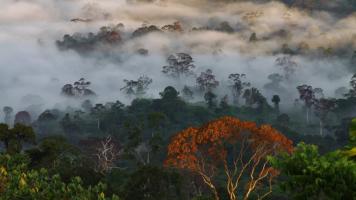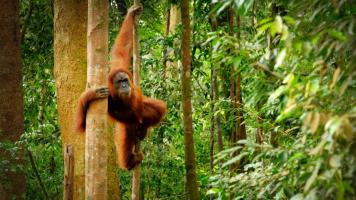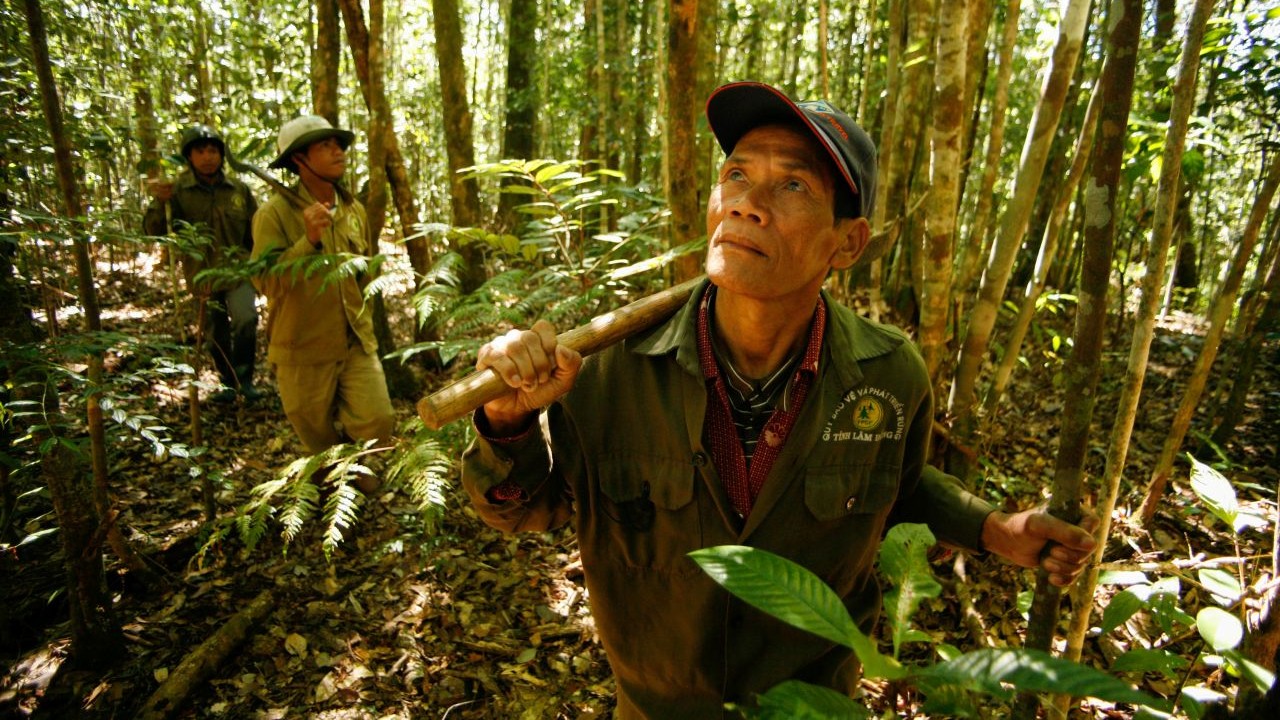
In Viet Nam, members of the K'Ho ethnic group patrol the forests under a biodiversity conservation corridor initiative. Photo credit: ADB.
The key is to capture the economic value of critical ecosystem services and create a market for them.
Healthy forests are essential for global sustainability. Not only do forests provide food, shelter, and clean water, but they also absorb carbon dioxide and release oxygen, cool temperatures, protect against natural hazards, and support the livelihood of billions of people.
There is strong international consensus that forests are an integral part of lasting solutions to pressing environmental problems. Translating consensus into action, however, has been challenging.
Forest restoration and conservation are among the most cost-effective nature-based solutions. Yet, “their immense ecological and economic value remains largely invisible to traditional financial markets,” says a recent policy brief from ADB. A paradigm shift is needed to transition forest protection from a cost center to a viable economic activity “by deploying a new tool kit of nature finance instruments—such as carbon markets, payments for ecosystem services, and green bonds—that translate ecological value into financial returns.”
Forest loss and degradation
Forests, which make up a third of the Earth’s land surface, face intensifying threats. The State of the World's Forests 2026 estimates that 489 million hectares of forest have been cleared between 1990 and 2025, while more than 460 million hectares are degraded.
“In total, 1.56 billion hectares of land are degraded, driven by population growth, land-use change, and rising demand for natural resources,” says the Food and Agriculture Organization of the United Nations (FAO) when it released the flagship report on 28 September. Degraded forests have reduced capacity to supply products and services, such as timber, carbon storage, and biodiversity.
According to the report, the loss of 100 hectares of primary forests, which are among the world’s most biodiverse and ecologically valuable ecosystems, has “contributed significantly to species decline, ecosystem fragmentation, and the erosion of critical ecosystem services.”
Southeast Asia, which is home to nearly 15% of tropical forests, is among the regions experiencing significant forest loss.
Both the ADB brief and FAO report point to agricultural expansion and oil palm development as the main drivers of deforestation in the region, resulting in biodiversity reduction. “Oil‑palm plantations alone are associated with nearly a 35% [biodiversity] decline in their vicinity,” says the brief.
Wildfires are also a major cause of forest loss and degradation.
“Every year, around 127 million hectares of forest are affected by fires, with further damage caused by insects, diseases, and severe weather events,” says FAO.
Some parts of Southeast Asia face recurring fires, which flare up during the dry season. This year, Indonesia is fighting to extinguish the worst wildfires amid forecasts of a “super” El Niño. At least 895,657 hectares of land and forest have been burned since January. Kalimantan on the island of Borneo is among the areas severely affected. Toxic smoke has reached Brunei Darussalam, Malaysia, Singapore, and even the Philippines.
Cost of inaction versus benefits
FAO says continued land degradation is costing the world an estimated $878 billion to $ 6.3 trillion, or 2% to 8.3% of the gross domestic product (GDP) per year, depending on the scope of valuation.
On the other hand, the benefits of restoring more than a billion hectares could amount to $1.8 trillion per year in public goods, such as improving biodiversity, the water cycle, and land productivity.
“Investing $2.6 trillion over 15 years in land degradation and drought mitigation could yield an eight-to-one social return,” the report says. “Under favorable conditions and over long time horizons, returns of up to $30 for every dollar invested have been estimated.” These estimates are based on the financial needs assessment of the UN Convention to Combat Desertification.
“Restoration also creates jobs, revitalizes production systems, and supports resilient growth,” says FAO. “Benefits extend beyond income to improved well-being, stronger social cohesion, and the preservation of cultural identity and knowledge systems.” According to the report, governments across 91 countries and areas have pledged more than 190 million hectares for forest restoration. The global target, however, is to restore 30% or 469 million hectares of degraded lands by 2030 under the Kunming–Montreal Global Biodiversity Framework.
“Scaling up action will require greater investment, inclusive governance, and sustained political commitment,” says FAO.
Financing a nature-positive future
The role of governments and international organizations as market enablers and catalysts is critical in unlocking private investment in the forestry sector, says the ADB policy brief. “This involves creating the robust legal and regulatory frameworks that give carbon and biodiversity credits their integrity, deploying public finance strategically to de-risk projects and mobilize multiples of private capital through guarantees and blended finance vehicles, and providing crucial technical assistance to build capacity on the ground.”
The brief notes that ecosystem services are still undervalued and forest investments have long pay‑back periods, which deter private capital.
There is a need to increase public awareness and understanding of the value of forests not just as natural assets but also as “strategic long‑term investments that deliver economic returns, build resilience, and reduce future risks.” For example, urban forests can cool crowded cities, while mangrove forests protect coastal communities from storm surges and prevent erosion. The brief cites emerging solutions such as blended‑finance vehicles that combine public or philanthropic money with private capital to de-risk projects and attract commercial finance to support nature-based projects.
It is also important to prioritize community involvement in the design and implementation of projects to ensure their sustainability. This entails strengthening land tenure security, putting in place benefit-sharing mechanisms, and simplifying access to finance.
The brief points out that, “historically, forests in Asia and the Pacific were managed by Indigenous Peoples and local communities (IPLCs), whose customary tenure and spiritual ties to the land created a de‑facto regulatory framework that balanced extraction with regeneration.” These communities are the “primary stewards of these ecosystems” and should be the primary beneficiaries.
Multilateral development banks also have a role to play in mobilizing private capital and building capacity. The brief cites several initiatives. The International Finance Corporation mobilizes institutional capital for sustainable lending in emerging markets through the Managed Co-Lending Portfolio Program One Planet facility. The World Bank’s Global Partnership for Sustainable and Resilient Landscapes (PROGREEN) supports reforms in “land-use governance, tenure systems, and regulatory frameworks to attract private sector investment.” ADB helps countries in Southeast Asia to develop digital monitoring, reporting, and verification systems and remote-sensing platforms to monitor forest and land use.
ADB has also supported projects and programs at the country and regional level, which provide lessons in strengthening institutional regulation and frameworks, designing and implementing community-based forest management, and planning and coordinating transboundary initiatives.
While challenges persist, the ADB brief says “a paradigm shift is underway, driven by a growing recognition that conservation can and must transition from a cost center—funded by philanthropy and limited public budgets—to a viable economic activity that generates tangible returns.”