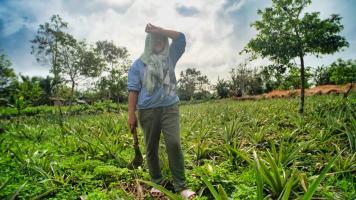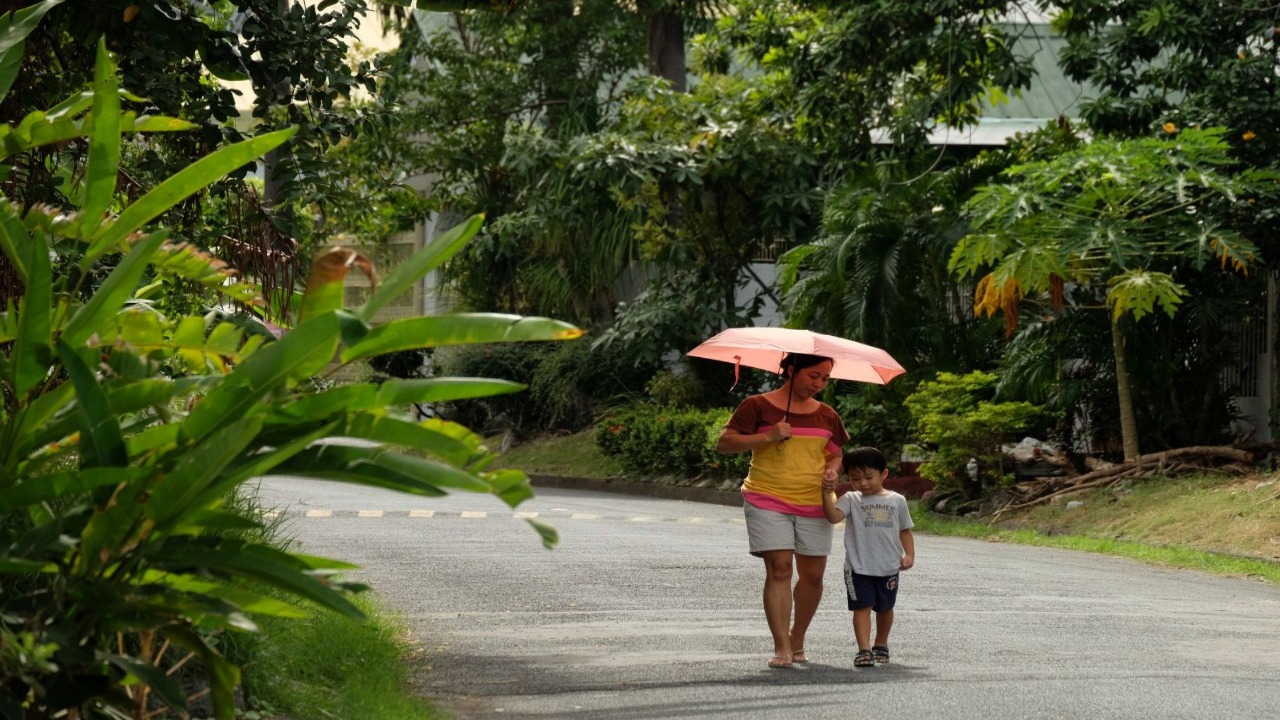
Keeping the public informed through official heat warnings can help prevent heatstroke and other health problems. Photo credit: ADB.
Heat waves expected, but early action and investing in resilience could prevent or reduce adverse effects.
The world is bracing for a potentially strong El Niño event in 2026. In Southeast Asia, this is expected to bring intensifying heat and dry spells, affecting agricultural output, water supply, and energy systems. With the past 11 years being the warmest on record, the risks posed by this year’s El Niño may be higher.
The heat crisis calls for improved knowledge and investments in forecasting, surveillance, and early warning systems as well as coordinated international action across sectors and populations, says an ADB paper. Aside from upgrading diagnostics and monitoring, there is also an urgent need to prioritize adaptation measures, institutional safeguards, and investments to protect vulnerable groups (e.g., older people, women, children) and workers from extreme heat events.
More people die from heat than from any other weather-related disaster. The World Health Organization says the negative impacts of heat on health are “largely preventable with specific public health and multi-sectoral policies and interventions.” These include keeping the public informed through official heat warnings and developing heat action plans.
Extreme heat also affects the economy as a whole because of reduced labor productivity, low farm yields, equipment failures, higher energy costs, and disruptions in supply chains. Except for agriculture, the paper finds that there is a lack of research on the impact of heat on the most vulnerable economic sectors, particularly in Southeast Asia.
Hotter and drier
According to the World Meteorological Organization (WMO), forecast models suggest “a rapid development into a strong El Niño event” between July and September, which is when the rainy season falls in Southeast Asia. El Niño is marked by a warming of ocean surface temperatures in the central and eastern Equatorial Pacific. It is likely to result in hotter, drier weather in the region, putting rainfed crops, such as rice and corn, at risk during the critical growing season.
The Food and Agriculture Organization of the United Nations (FAO) says in Asia, “agricultural drought risk runs from Pakistan and India through to Myanmar, Thailand, Cambodia, and Viet Nam and further to the east including the Philippines, Indonesia, and Timor-Leste.”
The Singapore Institute of International Affairs (SIIA) also recently released its Haze Outlook 2026, which sees a high risk of severe transboundary haze and fires affecting Brunei Darussalam, Indonesia, Malaysia, and Singapore in the remaining months of 2026. It identifies August to September as the peak danger period, driven by the El Niño and Indian Ocean Dipole (IOD) weather phenomena.
IOD is characterized by the oscillation of sea surface temperatures in the Indian Ocean; it affects global weather patterns, particularly in regions near the Indian Ocean, including part of Southeast Asia.
Ocean warming
The effects of El Niño are expected to be amplified by a warming planet. WMO says “there is no evidence that climate change increases the frequency or intensity of El Niño events,” but it can increase associated impacts.
After 2024, 2025 was the second warmest year on record for the South–West Pacific region, which includes part of Southeast Asia, Australia, New Zealand, and the Pacific.
“Marine heat wave coverage in 2025—whilst lower than the previous year—was the most extensive ever recorded in a year without an El Niño event. This is a worrisome sign for 2026, with a potentially strong El Niño event now developing,” says WMO. Ocean warming has serious consequences for marine ecosystems, communities, and economies. Marine heat waves, which are prolonged periods of extreme heat, “cause widespread coral bleaching, fish deaths, major disruptions to aquaculture operations, kelp forest mortality, shifts in species distributions, and harmful algal blooms,” which affect food safety and supply.
In response to the potential impact of a strong El Niño, FAO and the World Food Programme (WFP) issued a joint appeal for anticipatory action to scale early interventions to protect 8.8 million people in 22 high-risk countries, including the Philippines and Timor-Leste in Southeast Asia. Interventions will include “support to farmers and pastoralists, anticipatory cash assistance, and strengthened early warning systems.”
Heat-vulnerable sectors
Aside from food security, higher temperatures also have negative impacts on energy and water security.
A heatwave raises the demand for cooling, increasing electricity consumption. Energy systems can overheat and become less efficient in producing electricity or even result in power failures.
Reduced rainfall and extreme heat also increase the demand for water and can deplete reservoir levels. Water scarcity can lead to conflicts over shared resources, such as transboundary river basins.
Other heat-vulnerable sectors include education, health, and infrastructure (i.e., information technology, transport, buildings). Heat actions plans can help tackle sector-specific challenges and mitigate adverse effects.
“More impact-oriented heat forecasting is needed to provide early warnings for vulnerable people and sectors, such as cities, agriculture, livestock, energy, and water supplies,” says the ADB paper. “This requires development of population, sector, and place-specific heat indices and thresholds, improved understanding of the physical drivers for accurately forecasting each of these indices, as well as effective communication and targeted action plans.”
Occupational heat action plans are also needed to ensure workers’ health, safety, and productivity. Studies show worker productivity drops by 2% to 3% for every degree above 20°C. Health risks due to heat stress include heatstroke, dehydration, kidney dysfunction, and neurological disorders. The International Labour Organization (ILO) estimates that heat stress “could lead to a loss of 3.7% of working hours in Southeast Asia by 2030—the equivalent of 13 million full-time jobs.”
There is also a need to better understand and invest in adaptation to the impacts of heat stress on women and girls. Extreme heat affects the female population disproportionately because of socioeconomic disparities and health and physiological vulnerabilities. For example, studies show that rising temperatures increase the risk of miscarriages and stillbirths.
National and municipal heat action plans
To protect public health and economies, countries and cities need to prioritize investments in heat resilience and integrate measures into national and local adaptation plans. These require structured and integrated approaches and tools to accelerate action and strengthen resilience.
The ADB-supported HEAT (Health, Enablers, Architectonics, Technologies) Framework integrates “health solutions with urban planning, innovative technologies, climate vulnerability assessments, financing needs, and actionable strategies for scaling climate-resilient health systems.” It focuses on “socially inclusive actions and solutions that will reduce thousands of deaths and billions of dollars of health care costs due to heat stress.”
ADB also developed an Urban Heat and Health Toolkit to help cities “identify where interventions can deliver the greatest benefits for vulnerable communities.” The toolkit includes urban heat mapping using satellite data and hotspot analysis to assess heat exposure, vulnerable groups, and critical infrastructure.
Megacities in Southeast Asia—Bangkok, Jakarta, and Manila—are at high risk of extreme heat because of the urban heat island effect. These cities are dominated by heat-absorbing asphalt and concrete structures, which trap heat during the day and release it at night, and lack green spaces and vegetation that could provide natural cooling.
A proposed road map for a heat action plan for Thailand provides a guide for scaling up an inclusive, evidence-based, and sustainable response against heat stress nationally. The country is highly vulnerable to heat stress. Data from the Thai Meteorological Department shows “average maximum temperatures have risen by ~1.0°C since the early 1980s, with more frequent and intense heat waves.”
The road map outlines six steps in building a national action plan. It involves strengthening heat risk governance, developing early warning systems, enhancing health sector preparedness, adopting nature-based urban cooling solutions and infrastructure, improving community resilience, and promoting public awareness and society-wide behavior change.