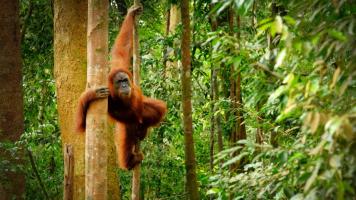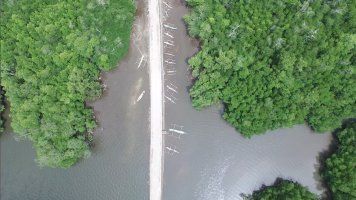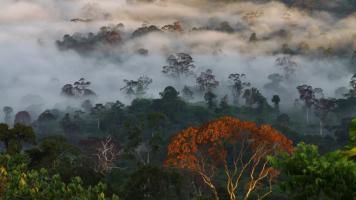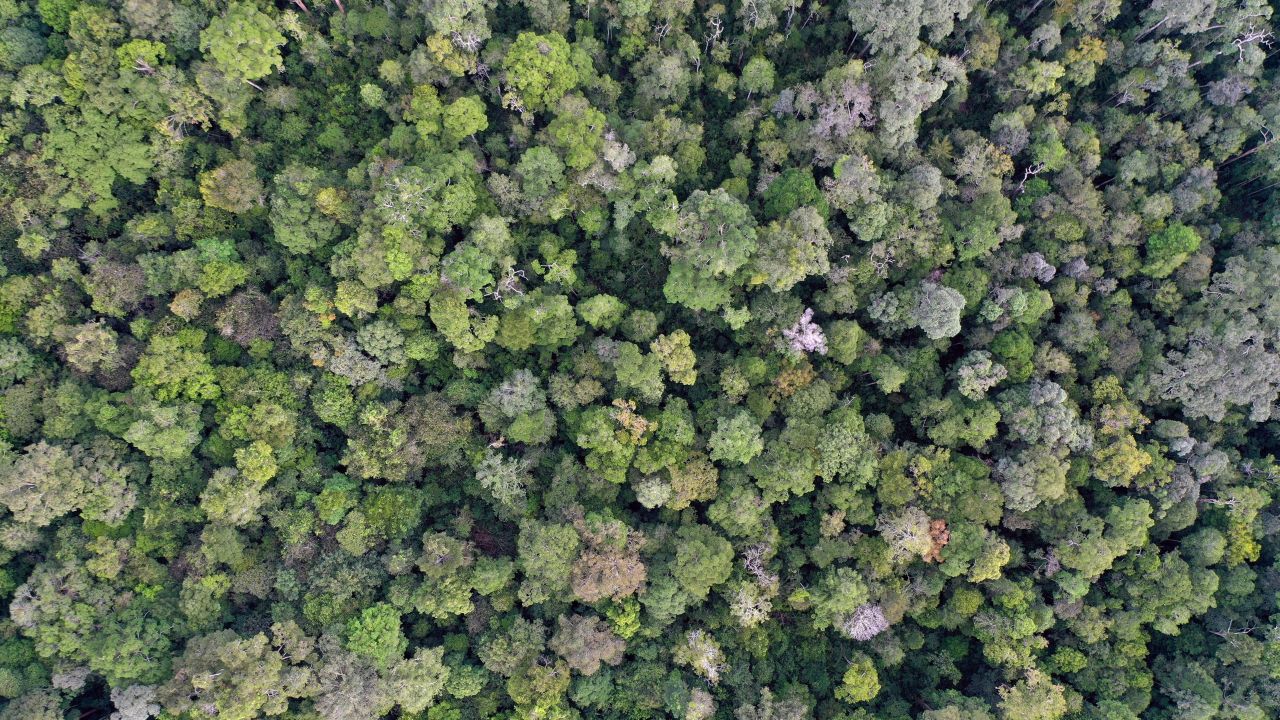
The Kapuas Hulu district has two national parks—Betung Kerihun, which features montane (or cloud) rain forests and lowland forests, and Danau Sentarum, a vast floodplain with seasonal lakes, freshwater swamp forest, and peat swamp forest. Photo credit: iStock/Rhett Ayers Butler - Mongabay.
In West Kalimantan, community-focused investments are preventing deforestation and forest degradation.
Deforestation and forest degradation are major sources of carbon emissions, contributing about 11% of global emissions. Forests serve as carbon sinks, but when trees die or are burnt, they release carbon dioxide into the atmosphere, contributing to climate change.
In West Kalimantan, a biodiversity-rich province in the Indonesian part of Borneo, a community-based approach to sustainable forest management is helping reduce emissions from deforestation and forest degradation.
The ADB-supported project increased ownership and involvement of local communities in the protection and conservation of forest resources against forest fires and encroachment. It also enhanced institutional capacity to implement incentive schemes to preserve forests in 17 villages in the province.
The role of sustainable forestry
Indonesia is among the world’s largest greenhouse gas (GHG) emitters. Land use, land use change, and forestry activities account for about a third of emissions. Forest loss and degradation not only threaten biodiversity and ecosystems but also the health and livelihood of rural communities.
Indonesia is targeting to achieve net zero emissions by 2060 or sooner. Its national strategy to reduce emissions from deforestation and forest degradation (REDD+) is key to achieving this goal. The country seeks to address the drivers of deforestation and increase forest carbon stocks. It envisions a forestry sector that supports inclusive and sustainable economic growth.
The idea behind REDD+, a framework created under the United Nations Framework Convention on Climate Change, is to encourage countries and communities to preserve forests through results-based payments for emission reductions.
Implementing the national REDD+ strategy involves the development of action plans at the subnational level. The Government of Indonesia selected West Kalimantan as a target province. It ranks among the top five provinces with the largest GHG emissions in the country with a mean deforestation rate of 132,500 hectares (ha) per year.
Challenges in implementation
West Kalimantan is a key forested area. In Kapuas Hulu district alone, there are two national parks with a great variety of flora and fauna. Betung Kerihun, the largest park in the province, features montane (or cloud) rain forests and lowland forests. Danau Sentarum is a vast floodplain with seasonal lakes, freshwater swamp forest, and peat swamp forest. These areas in Kapuas Hulu were declared as biosphere reserves by UNESCO in 2018.
Deforestation and forest degradation, however, threaten the sustainability of these ecosystems. The key drivers of forest loss are commercial logging, the clearing of forests for agricultural use, coal and gold mining, and uncontrolled fires.
Putting REDD+ into action in West Kalimantan faces several constraints at the provincial, district, and community levels. These include lack of institutional capacity for sustainable forest management, inadequate spatial planning due to limited data, an unconducive environment for investing in sustainable forestry and community forestry initiatives, unclear land use rights, weak implementation capacity of local communities, and poor access to forest resources.
Investing in communities
Started in 2016, the Community-Focused Investments to Address Deforestation and Forest Degradation project piloted REDD+ activities in 17 villages in Sintang and Kapuas Hulu districts, including Betung Kerihun and Danau Sentarum national parks. About 63% of communities in these districts rely on the forest for livelihood. Many of the residents are poor with an average daily income of $1.71.
With assistance from the Forest Investment Program under the Climate Investment Funds (CIF), the project provided a $17 million grant to the government. Indonesia is a pilot country of the Foreign Investment Program and has prepared a forest investment plan with support from ADB and the World Bank.
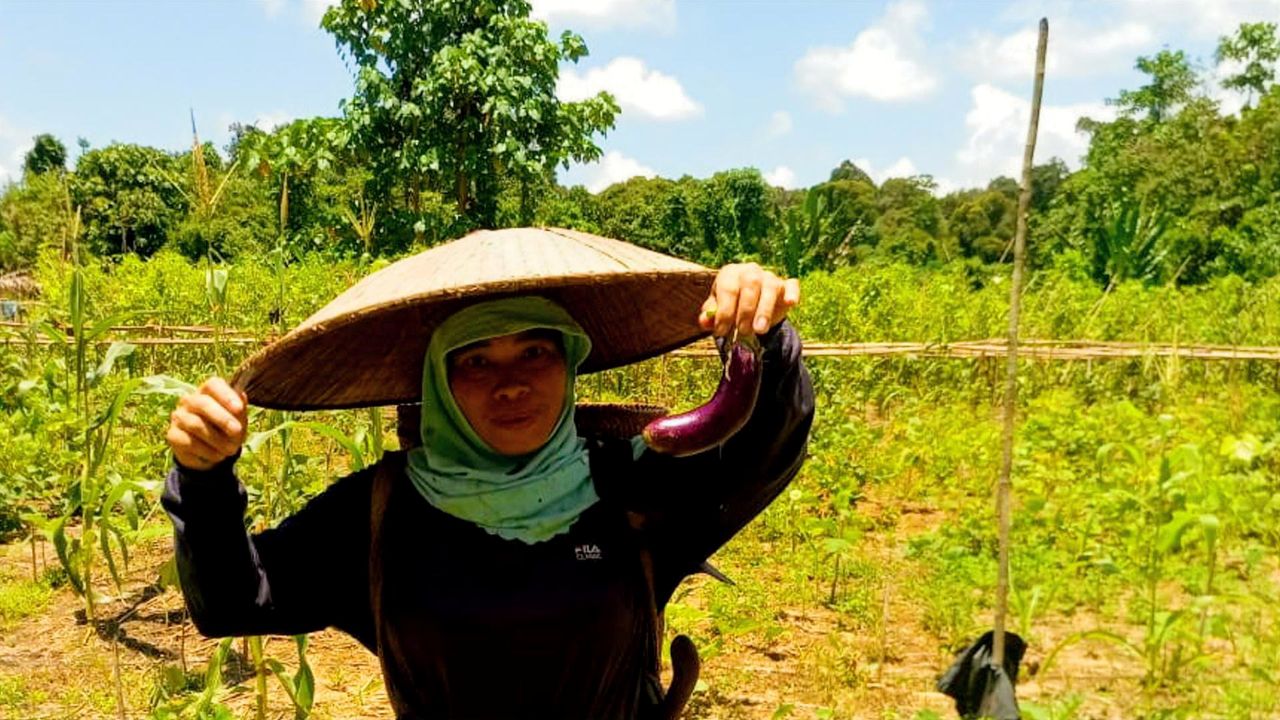
The project invested in community-focused activities for REDD+. These included community-assisted forest regeneration and maintenance, community-based forest fire management, community-led land use planning and monitoring, and community-based ecotourism. Women were included in these activities not just as beneficiaries but also as partners.
The communities were taught sustainable livelihood practices, such as honey harvesting and fish drying techniques that do not use fire or smoke. The project also supported alternative livelihoods, including the production and commercialization of nontimber forest products. It provided weaving tools and established handicraft galleries in the districts to support the women’s weaving business.
Equally important were efforts under the project to help harmonize national and subnational policies and strengthen the institutional capacity of West Kalimantan for conservation, sustainable forest management, and improving forest carbon stocks.
Reduced emissions, increased income
The project showed that linking community livelihood development with efforts to reduce deforestation and forest degradation ensures long-term gains.
Community members, including women, were trained in implementing community-based REDD+ pilot projects. The pilot REDD+ activities resulted in 2.03 million tons CO2e emission reduction by 2023 when the project was completed. The government reported that the annual community income increased by $2,720 or 45% in Kapuas Hulu and $1,978 or 44% in Sintang, exceeding the target of a 20% increase in income.
Breaking down structural gender barriers in the forestry sector played a catalytic role in promoting sustainable forest management, building community capacity, and developing livelihoods in the villages. The project found that “when men and women work together in agroforestry, household incomes increase, garden management skills improve, and individual and collective capacities” are enhanced. Nearly 3,000 households in project villages benefited from improved community infrastructure, such as clean water supply, energy (micro-hydropower installation), and village road, as well as from livelihood training and equipment for nontimber forest products.
Before the project started, the Indonesia Village Development Index classified the targeted villages as very underdeveloped or underdeveloped. By 2023, all 17 villages were reclassified as either independent or self-sustaining, advanced, or developing villages.
Community effort
The Social Forestry Program, which the project initiated in 2022, brought 27,196 ha of natural forestland under community-based forest management. Implementation covered eight villages using village forest and conservation partnership schemes.
The partnership approach to sustainable forest management proved effective. One of the social forestry schemes is a conservation partnership between the government and the community within the area of the Betung Kerihun–Danau Sentarum National Park. To manage the forest, the community is given long-term legal access to the park’s surroundings. This scheme reduces tenurial conflict and promotes community welfare while ensuring the conservation area is protected.
The project rehabilitated 6,000 ha of targeted degraded land through community-based assisted natural regeneration. It restored 1,880 ha of deforested land under community-based agroforestry systems.
Community forest fire brigades protected 18,712 ha of natural forest directly and 121,049 ha indirectly through community-based fire management, including improved honey collection and fish-drying practices. The project also supported proposals of six villages in Kapuas Hulu and two villages in Sintang to join the voluntary carbon scheme under the Rimba Collective program of Singapore-based Lestari Capital.
Improved institutional capacity
Subnational fiscal policies on REDD+ were harmonized with national policies, including those on benefit sharing and incentive mechanisms. Institutional capacity to implement REDD+ in West Kalimantan was also enhanced. Provincial regulations on peatland and mangrove management, nontimber forest products, and REDD+ measurement, monitoring, and reporting were strengthened.
A grievance redress mechanism on tenure and REDD+ and a safeguards and community-based monitoring system were established. Local staff, including women, were trained on REDD+ measurement, reporting and verification, data sharing, carbon accounting, and the safeguards information system.
The project paves financing pathways for climate mitigation and adaptation. Fifteen of the 17 project villages received the Kampung Iklim (Climate Village) Programme or ProKlim award from the national climate resilience village program. Though no financial reward was given, the recognition positions these villages to be prioritized for future financing.
Using lessons learned from the social forestry projects, Indonesia’s Ministry of Finance is developing a blended finance framework under its climate change trust fund, the Indonesian Environment Fund. The framework, which identifies social forestry as a priority sector, aims to “accelerate the development of impact-oriented businesses that generate both economic and ecological benefits while contributing to climate change mitigation or adaptation.”