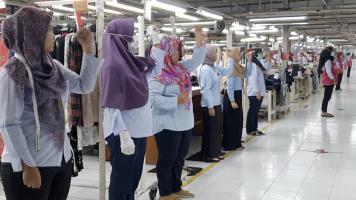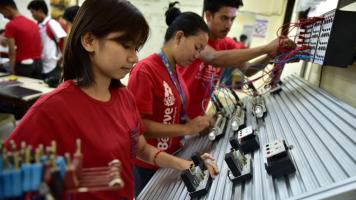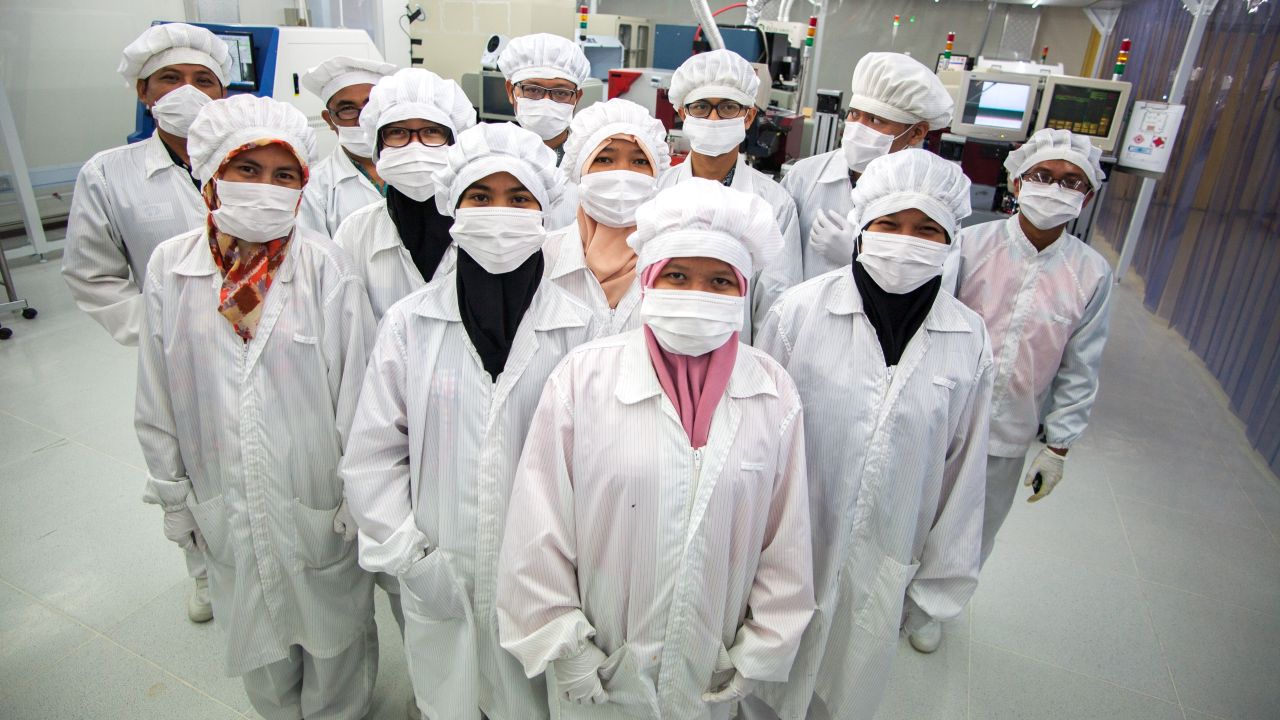
Students learn to make microchips at a teaching factory in Bandung. Photo credit: ADB.
An ADB-supported project is institutionalizing human capital development reforms in education, skills development, health, and social protection systems
A skilled workforce is key to realizing Indonesia’s aspiration to become a high-income country by 2045. This will enable the country to transition to high-tech manufacturing and higher value-added exports.
ADB recently approved a $500 million policy-based loan to support Indonesia's human capital development reforms in education, skills development, health, and social protection systems.
The Indonesian government has taken steps to accelerate human capital development. Yet, despite significant advances, the country still faces such challenges as skills mismatches and labor shortages, especially in high-value sectors. Youth unemployment was high at 19.4% in 2023, significantly above the unemployment rate for the general population of 5.3%. Gaps in social protection systems, such as health service coverage, persist, leaving many vulnerable to shocks, such as job loss or illness. Gender disparities across education, employment, and health also remain, limiting human capital potential.
ADB’s Boosting Productivity through Human Capital Development Program is implemented as three subprograms. The third subprogram focuses on institutionalizing reforms from the previous two subprograms approved in 2021 and 2023. While the first subprogram established regulatory foundations and pilot initiatives, and the second expanded implementation, this third subprogram integrates these reforms into Indonesia's national systems to support higher labor productivity for sustained economic growth.
"Indonesia's path to sustainable growth depends on investments in its people," said ADB Country Director for Indonesia Bobur Alimov. "By institutionalizing reforms that improve quality of education, expand health care access, and strengthen social protection, we are helping Indonesia build a more productive and inclusive economy where no one is left behind."
Upgrades and enhancements
Key reform areas include health insurance measures that expand preventive care coverage to include breast and cervical cancer screenings and anemia prevention for adolescent girls. These reforms empower women by allowing them to choose their primary health facilities and enabling them to seek care where they feel safe.
The pre-employment card program, which has trained more than 18 million people, has been upgraded with content on green skills and artificial intelligence, while a new digital career guidance platform helps match graduates with job opportunities. The program supports the establishment of 15 additional Sustainable Development Goals centers in partnership with universities, and mandates all public universities to prevent and address gender-based violence. It has also formed technical and vocational education and training coordination teams in 63% of Indonesia’s provinces to better align training with labor market needs.
The program enhances performance-based fiscal transfers to align local spending with national priorities. It is guided by the National Single Social and Economic Data (DTSEN) system for accurate social assistance targeting.
The program aligns with the Government of Indonesia’s Vision 2045 and National Medium-Term Development Plan 2025–2029, and supports ADB's country partnership strategy for Indonesia, 2025–2029—by advancing digital transformation, resilience, and empowerment priorities.
Building on past outcomes
Lessons from the previous subprograms show the importance of designing policies and programs that respond to the evolving needs of the labor market.
The JobStart and Kartu Prakerja (pre-employment card) for skills development programs provide market-responsive training to unemployed youth and adults. Leveraging its regional presence, ADB has enabled cross-country learning between Indonesia and the Philippines, where JobStart is also operational, and has facilitated the expansion of the JobStart program.
As part of the Guru Penggerak master teacher program, more than 30,000 teachers, majority of them women, were trained as “learning leaders.” The program builds the capacity of educators at various levels to strengthen foundational literacy and numeracy skills and education technology, which are essential for long-term learning outcomes and workforce readiness. Meanwhile, 2.9 million teachers were provided access to the master teacher’s digital platform on teaching and learning resources using their smartphones, laptops, and desktop computers.
The Indonesia Cyber Education Institute established a blockchain-based digital credentialing system for its world-class and market-oriented online higher education courses. More than 2,500 students, mostly women, have gained digital credentials and enhanced their school-to-work transition.
The third and last subprogram seeks to build on these achievements to strengthen Indonesia’s human capital and boost productivity.