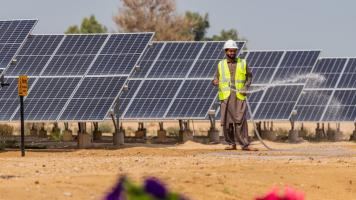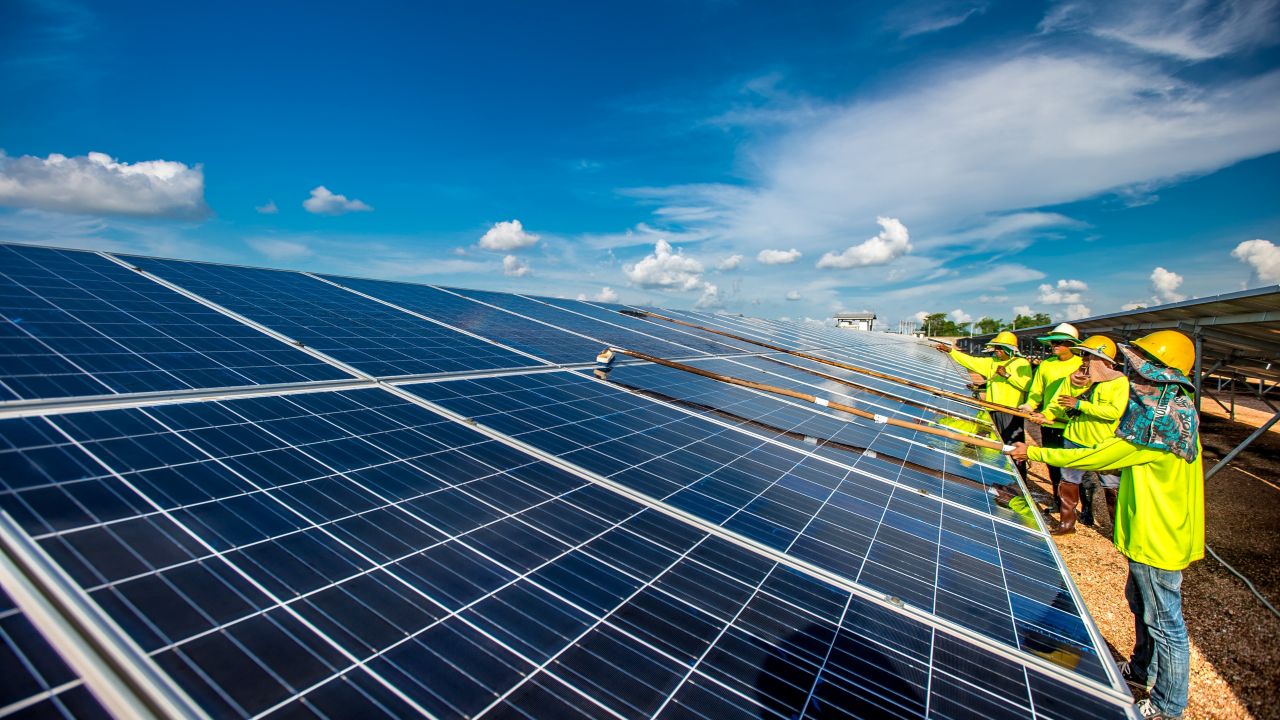
In Southeast Asia, low-carbon mobility and clean power have the potential to contribute up to $100 billion in revenues by 2030. Photo credit: ADB.
Poised to become the world's fourth largest economy, ASEAN can solidify its standing as an economic powerhouse by tackling the green transition as a growth opportunity and not a cost burden.
Over the years, ASEAN’s economic ascent has lifted millions of people out of poverty. The region has become an engine of global prosperity, driven by the proliferation of production networks and integration into value chains. But to build on this success, ASEAN must step up efforts in steering its economy toward low-carbon industries that thrive in the global green transition.
Southeast Asian countries are making headway in their green agenda, but the necessary transformation is not happening fast and far enough. The rapid changes unfolding globally warrant greater speed and scale toward sustainability to ensure the region’s continued progress.
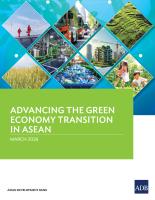
ASEAN is on the cusp of becoming the world’s fourth largest economy. It can solidify its standing as an economic powerhouse by tackling the green transition as a growth opportunity and not a cost burden. Increasing the momentum requires greater focus on value creation, where structural reforms must deliver net employment gains, competitiveness, and long-term resilience. To make the green shift bankable, ASEAN must create pathways to move up the value chain, participate in the development of modern technologies, and catalyze innovation. A new ADB report highlights how the transformation of ASEAN’s key sectors can safeguard the environment while also delivering sizable economic benefits.
Blessed with significant reserves of critical minerals, Southeast Asia can become a global leader in renewable energy manufacturing with potential revenues of up to $100 billion from low-carbon mobility and clean power by 2030 and about 1.7 million new jobs in the solar and geothermal sectors. Tapping into this potential is a strategic necessity. Economies are increasingly driven by power-hungry technologies like artificial intelligence, which require diverse energy sources along with modern and interconnected power systems.
Another growth area is circular economy, which could lead to $324 billion in economic growth over the next 2 decades and 6.6 million jobs by 2030. As circularity reduces the need for resource extraction, it can lower supply chain risks for clean technologies and the need for virgin minerals by reclaiming metals from end-of-life of products, such as solar panels and electric vehicle batteries. The region is also poised to unleash substantial economic and employment dividends from other sectors, including sustainable agriculture and green construction.
Such game-changing opportunities help frame the transition as a profitable undertaking, rather than a costly enterprise. This will enable political support for fast-tracking green policies. The investments required for ASEAN’s transformation will only flow when the right conditions exist. Institutional and private investors require an effective enabling environment, guided by cohesive green economy frameworks with clear sector roadmaps and long-term investment plans. Strong institutional coordination and policies that phase out harmful subsidies and promote green investments should underpin these plans. To unlock finance at scale, ASEAN governments must also introduce green taxonomies, carbon pricing schemes, and risk-sharing tools, such as guarantees and concessional finance.
Instrumental to these efforts is regional cooperation, a critical force multiplier that can harmonize standards, foster synergies, and attract cross-border capital flows. Collective action is also crucial to move beyond the traditional GDP benchmark toward a common yardstick that treats environmental and social dimensions as vital pillars of progress.
As with any transformation, greening ASEAN is expected to create structural changes and result in disruptions across the economic spectrum. People-centered measures like retraining and social protection schemes can help preserve development gains and broaden the benefits of a green economy.
Given their varying development and emissions profiles, ASEAN countries need to make their own transition pathways. Advanced economies in the region should prioritize decarbonization through technology and finance. Rapidly developing countries must align industrial growth with sustainability by adopting cleaner infrastructure and preserving ecosystems. Developing economies can leapfrog to low-carbon, inclusive growth by investing in renewables and safeguarding natural capital.
As ASEAN marks nearly 60 years of regional cooperation, the multifaceted challenges and rapidly evolving landscape it faces today underscore the need for a new development paradigm to futureproof its economy. Navigating the path ahead is complex, but the potential payoff is immense: $1 trillion annually from revenues in emerging green sectors and over 30 million new jobs by 2030. By leveraging their collective strengths and taking urgent action, ASEAN countries can seize this trillion-dollar opportunity and usher in a new green era.