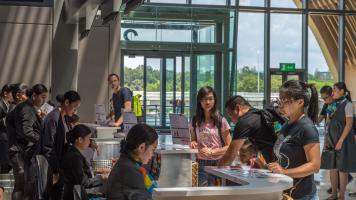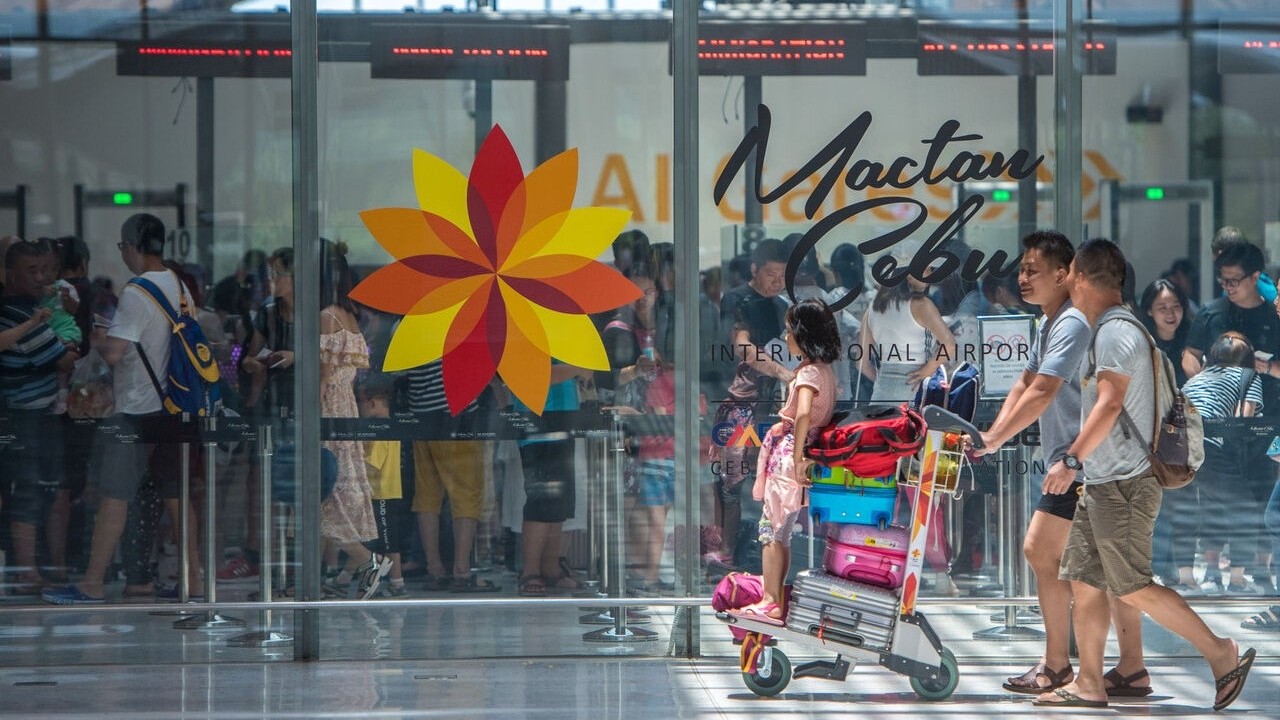
Southeast Asia welcomed an estimated 144 million international visitors in 2025, a 13.4% increase from the previous year. Photo credit: ADB.
Developing secondary destinations provides a way to spread the benefits of tourism while easing pressure on primary attractions.
With more than 7,600 islands, the Philippines offers limitless possibilities when it comes to beach destinations. Over the years, the island province of Bohol has emerged as a popular tourist attraction, with the government intent on broadening its appeal “beyond beaches.”
Last year, Bohol attracted 1.4 million tourists, a 4% increase from the previous year, as the island rebounds after the COVID-19 pandemic slump, aided by improved connectivity through the Bohol–Panglao International Airport and sustained destination marketing.
With a new provincial tourism code signed in January, Bohol hopes to manage tourism growth while protecting the province’s environment, cultural heritage, and residents. The code also institutionalizes a policy that prioritizes Boholanos in tourism employment and services.
Amid these developments, Bohol is emerging as a model for developing secondary destinations, as ASEAN countries increasingly look beyond capitals and primary gateways to manage overtourism and spread tourism’s benefits more widely.
At the ASEAN Tourism Conference 2026 in Cebu, Philippines, in January, Philippine Tourism Secretary Maria Esperanza Cristina Garcia Frasco said diversification is also a strategy to mitigate shocks such as COVID-19. “One of the lessons that we have learned from the pandemic is that a high dependency on one particular market or one particular tourism product can be devastating when there are upheavals that happen in any of these aspects.”
She added, “If we do not provide other opportunities for our tourists, and do not unburden our destinations with overtourism, then it can lead to threats to the sustainability of these destinations.”
The move toward secondary destinations is also due to changing consumer demand, with tourists seeking authentic experiences, more sustainable and affordable travel options, and less-crowded destinations.
For ASEAN, the destination-diversification strategy is part of a broader goal to advance sustainable, inclusive, responsible, and high-quality tourism development in Southeast Asia.
At a concurrent meeting in Cebu, ASEAN tourism ministers stressed the importance of quality tourism for the region. ASEAN defines quality tourism as sustainable, inclusive, and responsible governance and management of tourism destinations, including infrastructure, facilities, products, and services that provide valuable and unique experiences while preserving natural, cultural, and heritage values.
This thrust is enshrined in the recently launched ASEAN Tourism Sectoral Plan 2026–2030, which has five focus areas: resilient tourism, empowered tourism workforce, accessible and seamless travel, digital transformation and diversified products, and sustainable tourism. By 2030, the plan aims to deliver higher-value tourism outcomes—including increased visitor spending, stronger intra-regional flows, and broader community participation—contributing meaningfully to ASEAN’s 2045 vision of a competitive, sustainable, and inclusive tourism region.
Transforming tourism
As tourism in Southeast Asia nears a full rebound from the COVID-19 pandemic, the region is taking the opportunity to ensure the sector’s “quality growth,” said ASEAN Deputy Secretary-General Satvinder Singh in opening the tourism conference, which was co-organized by the Philippines’ Department of Tourism and the Asian Development Bank (ADB).
He noted the sector’s recovery, with the region welcoming an estimated 144 million international visitors in 2025, a 13.4% increase from the previous year, while sustaining 42.5 million jobs.
Amid increased competition from other parts of the world, Southeast Asia wants to use the opportunity to transform tourism, said Singh. “I think it’s really an opportunity of a lifetime for ASEAN—to move decisively from this recovery to transformation,” he said.
In his keynote speech, ADB Vice-President for East and Southeast Asia and the Pacific Scott Morris noted that the transformation is already underway. “Across ASEAN, countries are transitioning away from volume-led models toward higher value and more diversified forms of tourism.”
Noting that tourism remains one of Southeast Asia's most resilient and dynamic engines of growth, he said ADB will continue to partner with ASEAN member countries through policy dialogue, financing, technical assistance, and knowledge solutions. He said that ADB has a $3-billion pipeline in new tourism and tourism-enabling investments across ASEAN through 2030.
ADB has mobilized over $4 billion in tourism-related financing across Southeast Asia since the early 2000s, he said. “These investments have supported destination infrastructure, product development, skills upgrading, and private sector growth.”
Addressing bottlenecks
During the conference, experts emphasized that successfully developing secondary destinations requires more than marketing. Amid growing interest in secondary destinations, they stressed that promotion must be paired with investment in tourism experience development, infrastructure, improved connectivity, supportive policy frameworks, and digital readiness to ensure long-term viability and community benefit.
Cambodia’s approach to promote Battambang as a secondary destination is a good example of diversification. Positioned as an arts and creative hub, the city has become an alternative to primary destinations. With support from ADB, the government plans to initiate projects that will seek to stimulate private sector participation and investment, solve connectivity infrastructure gaps between primary and secondary destinations, strengthen destination management, and build the capacity of tourism-related small and medium-sized enterprises.
Promoting destinations before adequate infrastructure is in place risks undermining visitor experiences and placing unnecessary pressure on fragile natural and cultural assets central to sustainable tourism. To be effective and responsible, investments in product development and destination marketing must be aligned with parallel investments in connectivity and enabling infrastructure.
From an airline perspective, route and capacity decisions are shaped by a combination of infrastructure readiness, demonstrated demand, and policy coherence, underscoring the need for coordinated planning across tourism, transport, and aviation stakeholders.
Philippine Airlines Vice-President for Corporate Affairs Bud Britanico underlined the need for the right type and scale of infrastructure. “If the infrastructure cannot support the demand, present and future, it would be very challenging for us to even consider putting a new route into a destination.” He said infrastructure along with demand and policy are the three key things airlines look for in deciding service routes.
Bohol’s emergence as a major attraction, for instance, can be credited to having an airport served by multiple international and domestic airlines, connecting passengers to destinations such as Busan and Seoul in the Republic of Korea as well as major Philippine cities. Coupled with other infrastructure upgrades, including roads and power, the government is making sure the province can support tourism’s growth.
Stakeholders must also ensure that secondary and emerging destinations are digitally market-ready. Romey Louangvilay, a member of the ADB Tourism Study Team and marketing vice-president at marketing and communications agency ELMNTL, noted that many smaller destinations and tourism businesses remain underprepared for today’s digital- and mobile-first travel environment. Outdated websites, inconsistent social media presence, and fragmented digital touchpoints undermine destination credibility, particularly among Gen Z and millennial travelers. “In an era where discovery, validation, and booking converge on mobile devices, weak digital readiness directly translates into lost demand and reduced conversion.”
The Lao People’s Democratic Republic is among countries deploying information technology to cost-effectively improve destination marketing, provide online training, and promote electronic commerce. It is also investing in infrastructure to develop secondary destinations across the country.
Thanks to such initiatives, Luang Prabang province has become a well-established tourist destination in recent years. It now boasts of more than 200 cultural, natural, and historic tourism sites, including the town of Luang Prabang, a UNESCO World Heritage site. Besides its many handicraft villages, the province offers river cruises, agritourism, and trekking, which appeal to diverse markets. With support from ADB, the government has initiated a project in the province to improve the quality and coverage of urban infrastructure and services, promote inclusive urban planning, and strengthen women’s leadership roles in urban and tourism management.
With such initiatives across the region, ASEAN is well on the way to establishing a sustainable tourism sector. In his speech, Singh stressed the importance of sustaining the sector’s growth. “Tourism is not only recovering, we are seeing that in ASEAN, it's once again re-emerging as a key pillar for ASEAN's economic resilience, as well as people-to-people connectivity,” he said.