Future-Proofing Tourism: Building a Workforce-First Path

Executive Director Officer-in-Charge, Dr. Andrew L. Tan Centre for Tourism, Asian Institute of Management
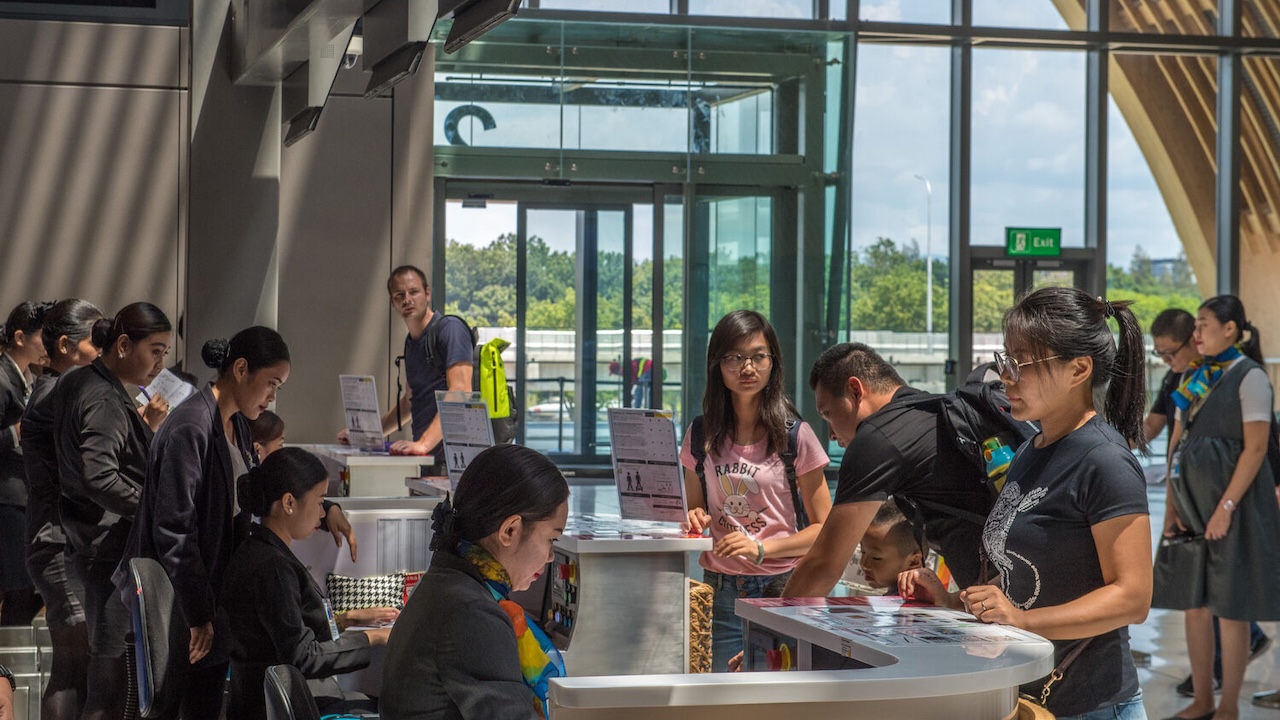
Tourism is considered one of the world’s largest employers, with over 270 million workers globally. Photo credit: ADB.
When guided by people-centered principles, digitalization can amplify human ingenuity, foster innovation, expand workforce opportunities, and strengthen the industry’s competitiveness.
This article is published in collaboration with the Tech for Good Institute.
Tourism is considered one of the world’s largest employers, with over 270 million workers globally. In Southeast Asia, it is regarded as a lifeline industry, supporting national economies, livelihoods, and the promotion of cultural identity. Yet, the ongoing wave of digitalization—encompassing artificial intelligence (AI), mobile platforms, virtual reality, and data analytics—is reshaping tourism faster than ever before.
This shift is not without controversy. While some stakeholders view digitalisztion as an opportunity for greater efficiency, personalization, and competitiveness, others fear it will displace jobs, exacerbate existing inequalities, and challenge the authenticity of human experiences. These mixed sentiments raise an important question: How can digitalization promote the development of the tourism workforce?
Transforming Supply and Demand through Digitalization
Globally, digitalization has continuously reshaped tourism—transforming how services are supplied, demand is generated and matched, and experiences are delivered on-site.
On the supply side, automation has streamlined operations through digital booking systems, automated check-ins, and AI-powered chatbots, with hotels and airlines increasingly adopting smart control and automated boarding systems.
At the intermediary stage, digital platforms have revolutionized demand generation and matching. Online travel agencies and social media channels connect travelers and providers via dynamic pricing, recommendation systems, and personalized advertising, aligning preferences with available offerings in real time.
At destinations, digital tools enhance on-site experiences—from e-immigration and contactless payments for faster cross-border transactions to mobile apps and augmented or virtual reality technologies for immersive encounters with heritage and place.
As the UN Tourism Organisation notes, digital tools are no longer merely enhancers of the experience; they have become the new environment in which the industry operates.
In Southeast Asia, however, progress remains uneven. While some countries have successfully integrated smart tourism within both public and private sector systems, others face structural challenges such as limited infrastructure and gaps in digital literacy. This underscores that although the region shares a common goal of advancing digitalization in the industry, the pace and scale of progress vary widely, shaped by local contexts and capabilities.
Navigating the Human Dimension of Digitalization
At the same time, automation in areas such as booking, check-in, and customer service has raised anxieties about job sustainability and the potential erosion of the human touch in service delivery. However, evidence from other industries suggests that digitalization does not necessarily reduce employment; rather, it often reshapes it.
Consider the rise of automated teller machines (ATMs) in the 1960s. Many feared that ATMs would replace bank tellers, but the opposite occurred: ATMs lowered the cost of opening new branches, leading to an increase in both the number of branches and employed tellers. Machines took over routine cash transactions, allowing tellers to focus on higher-value services such as customer relations, product development, financial advising, and critical decision-making.
Tourism follows a similar pattern. Digital tools have freed workers from repetitive tasks, enabling them to take on more human-centered roles that draw on creativity, empathy, and judgment.
This dynamic reflects economist Michael Kremer’s O-Ring Principle of Economic Development, which views work as a “series of interlocking steps, links in a chain, where every one of those links must hold for the mission to succeed.” In such a system, every role matters. As industries like tourism integrate digital and human elements, it remains human ingenuity that ensures the system’s success. As economist David Autor argues, technology complements human labor by shifting workers toward more complex, creative, and relationship-driven roles—underscoring the irreplaceable value of human creativity and connection in the digital economy.
Empowering the Tourism Workforce through Digital Transformation
Hence, building on the above discussion, human capital remains at the heart of the tourism industry, serving as the bridge between businesses and visitors.
Despite rapid technological change, people continue to create value through creativity, empathy, and critical thinking—qualities that technology cannot replace.
Digitalization should not be seen as a substitute for human labor but as an enabler that complements workforce capabilities. By automating routine tasks and meeting the evolving expectations of travelers, it expands opportunities for higher-value, human-centered work. In doing so, it supports a more adaptive, inclusive, and resilient tourism workforce.
Overcoming Key Barriers to Digitalization in Tourism
While the opportunities of digital transformation are clear, several obstacles continue to hinder the tourism industry’s digital adoption and workforce empowerment:
- Skills gap and mismatch: A lack of digital skills and competencies is a major barrier to promoting digital inclusivity. This issue is further exacerbated by a mismatch between industry needs and the curricula offered by educational institutions.
- Infrastructure inequality: Reliable infrastructure remains a significant challenge, particularly in rural areas and among small enterprises that often lack the connectivity and tools necessary to participate and compete in the digital economy.
- Policy fragmentation: Although various initiatives and policies exist, there is a lack of integrated, national-level strategies that effectively link tourism, ICT, and education. Many initiatives remain scattered and short-lived.
- Stakeholder skepticism: Concerns about job displacement persist among tourism stakeholders, especially those in routine roles such as booking services and front desk operations, which are increasingly supported or replaced by digital tools.
Without addressing these barriers, digitalization risks eroding—rather than enriching—the human experience that lies at the heart of tourism.
Strengthening the Foundations for Sustainable Digitalization
To ensure digitalization serves as an enabler rather than a disruptor, there is a pressing need to recalibrate how it is perceived, utilized, and managed-particularly in relation to workforce development. While theories of human ingenuity and adaptability suggest that the tourism workforce can thrive amid digital change, bridging the gap between theory and practice requires stronger cross-sector collaboration.
This calls for coordinated efforts built on the pillars of stakeholder integration, education, and awareness:
- Stakeholder integration: Collaboration must extend across tourism players and beyond. No single sector can tackle these challenges in isolation. Stronger partnerships, shared platforms, inter-sectoral synergies, and open dialogue are needed to ensure inclusivity and empowerment across the ecosystem.
- Education: Continuous upskilling and reskilling are essential to keep pace with technological demands. Education must evolve toward lifelong, holistic learning—encompassing cognitive, interpersonal, and intrapersonal competencies. Workers should be equipped not only with technical expertise but also with the ability to work effectively alongside digital tools.
- Awareness: Awareness efforts—such as forums and dialogues—should focus on acknowledging existing gaps while reframing apprehensions as opportunities to complement and strengthen workforce capacity.
Conclusion
Tourism in Southeast Asia stands at a crossroads. While digitalization is inevitable, its trajectory is not fixed. If left unmanaged, it could deepen inequalities and diminish the human essence of tourism. Yet, when guided by people-centered principles, digitalization can amplify human ingenuity, foster innovation, expand workforce opportunities, and strengthen the industry’s competitiveness.
Digitalization should thus be viewed not as a replacement for the workforce, but as its partner. With targeted interventions that promote stakeholder integration, skill-enhancing education systems, and awareness-raising initiatives, Southeast Asia can harness technology to benefit both the industry and the people who drive it. In doing so, the region can ensure that digitalization makes tourism not only smarter, but also more sustainable, inclusive, and human-centered.
This article was first published by the Tech for Good Institute on 8 December 2025.

Eylla Laire M. Gutierrez
Executive Director Officer-in-Charge, Dr. Andrew L. Tan Centre for Tourism, Asian Institute of ManagementEylla Laire M. Gutierrez the executive director officer-in-charge at the Asian Institute of Management's Dr. Andrew L. Tan Centre for Tourism. She is a development consultant and has worked with the Philippine Center for Environmental Protection and Sustainable Development, Inc., Warwick & Rogers, and the Masungi Georeserve Foundation Inc. She has been engaged in several commissioned research projects in partnership with the University of Auckland, Konrad Adenauer Stiftung, the Department of Tourism, and the Philippine APEC Study Center Network.

Tech for Good Institute
The Tech for Good Institute is a nonprofit organization working to leverage the promise of technology and the digital economy for inclusive, equitable, and sustainable growth in Southeast Asia. The Institute is seed funded by Grab, a leading superapp in Southeast Asia.