Microcredentials: ASEAN’s Answer to the Youth Jobs Crisis

Economist, Economic Research Institute for ASEAN and East Asia

Chief Economist, Kartu Prakerja Program, Coordinating Ministry for Economic Affairs, Indonesia
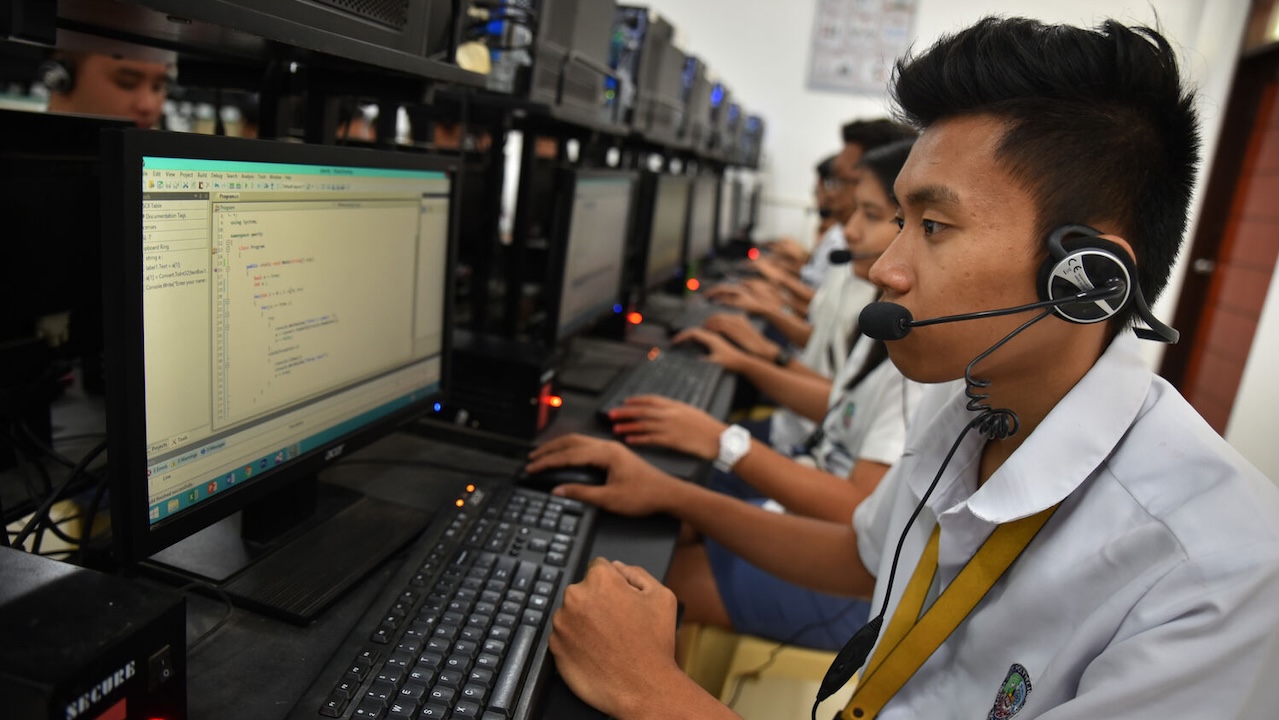
Firms are increasingly prioritizing skills-based hiring over educational pedigree, providing youth skills development pathways that can keep pace with industry change rather than the slower cycle of traditional curricula. Photo credit: ADB.
These short, targeted programs deliver job-relevant skills, assessed and certified in alignment with industry standards.
Youth unemployment remains stubbornly high across Southeast Asia. According to the International Labour Organization, more than 16% of youth in the region were not in education, employment, or training (NEET) in 2024. In Indonesia, the rate reached around 21%—amongst the highest in ASEAN—surpassed only by Lao People's Democratic Republic and almost double the levels in Cambodia, Viet Nam, and Thailand. This persistently high NEET rate highlights the hurdles first-time jobseekers face, even amid overall economic growth.
Two structural shifts are intensifying this challenge. First, slower economic growth, shaped by trade uncertainty and higher interest rates, reduces opportunities for entry-level positions as firms hold back from investing in inexperienced young workers. Second, automation and artificial intelligence are steadily replacing routine tasks that often serve as steppingstones for fresh graduates. Together, these trends lengthen the time it takes for youth to secure stable employment.
Traditional responses, such as extending years of schooling, are proving insufficient. As of 2025, Indonesia had more than 1 million unemployed university graduates, even as the economy faces a looming shortage of digital skills. By 2030, Indonesia will need an estimated 12 million digital talents, compared to a current base of only 3 million. This disconnect shows that degrees alone are no longer enough to prepare youth for the evolving labor market.
Microcredentials as a Game Changer
Firms are increasingly prioritizing skills-based hiring over educational pedigree. LinkedIn’s 2025 analysis reveals that shifting to skills-based screening dramatically expands candidate pools—especially for non-degree holders. What youth need, therefore, are skills-development pathways that can keep pace with industry change rather than the slower cycle of traditional curricula.
Microcredentials provide such a pathway. These short, targeted programs deliver job-relevant skills, assessed and certified in alignment with industry standards. They are faster, cheaper, and more adaptable than degree programs, making them well-suited to address specific gaps in the labor market. They also support lifelong learning, allowing individuals to incrementally build their skills over time.
Importantly, microcredentials can expand opportunities beyond domestic markets. By participating in freelance and gig-economy platforms, young people can demonstrate their skills, work ethic, and professionalism to global clients—building portfolios that enhance employability both online and offline.
Embedding Microcredentials into Education Systems
Microcredentials should complement, not replace, traditional education. A hybrid approach—combining the depth of degree programs with the flexibility of microcredentials—can better prepare youth for the dual demands of foundational knowledge and practical skills. Policymakers must also ensure that microcredentials are accessible to those who cannot pursue higher education, thereby expanding inclusivity.
Real-time labor market intelligence is essential for effective program design. ASEAN countries are already experimenting with labor-market information systems (LMIS) that link vacancies, skills requirements, wages, and training options. Singapore’s Skills Future, for instance, publishes public dashboards that map direct pathways from learning to work. Seamless integration between LMIS platforms and microcredential systems would allow programs to stay aligned with market demand.
A Policy Priority for ASEAN
Integrating microcredentials into workforce strategies offers ASEAN governments a powerful lever to accelerate reskilling and upskilling at scale. But success depends on regulatory reform, institutional support, and careful program design. International organizations such as OECD, Cedefop, and UNESCO are already developing standards to ensure quality, portability, and stackability—frameworks ASEAN can adapt to local contexts.
Regional initiatives provide a useful guide. Singapore’s Skills Future and Indonesia’s Kartu Prakerja demonstrate how digital learning platforms and microcredentials can empower workers to pivot, adapt, and thrive in fast-changing labor markets. Scaling such approaches across ASEAN could help unlock the region’s demographic dividend—turning today’s youth unemployment challenge into tomorrow’s engine of growth.
This article was produced by ERIA and is republished here with permission.

Rashesh Shrestha
Economist, Economic Research Institute for ASEAN and East AsiaRashesh Shrestha is an economist with research interests in labor markets, economic development, and human capital investment. At ERIA, he conducts academic research and leads policy-oriented research projects on a wide range of themes including human capital, education, global value chains, trade facilitation, regulatory management system, and financial inclusion. Prior to joining ERIA, he was an associate lecturer at the Australian National University. He earned his PhD from the Department of Agricultural and Applied Economics at the University of Wisconsin-Madison.

Romora Edward Sitorus
Chief Economist, Kartu Prakerja Program, Coordinating Ministry for Economic Affairs, IndonesiaRomora Edward Sitorus is the chief economist of the Kartu Prakerja Program. He oversees labor market analysis, monitoring and evaluation processes, and advocacy efforts to strengthen the program’s impact and sustainability. Romora is also the founder of the Hive Intelligence podcast, where he explores topics related to the future of work.

ERIA (Economic Research Institute for ASEAN and East Asia)
ERIA is an international organization that was established in 2008 by an agreement of the leaders of 16 East Asia Summit (EAS) member countries. Its main role is to conduct research and policy analyses to facilitate ASEAN Economic Community (AEC) building and to support wider regional community building.