ERIA (Economic Research Institute for ASEAN and East Asia)

ERIA is an international organization that was established in 2008 by an agreement of the leaders of 16 East Asia Summit (EAS) member countries. Its main role is to conduct research and policy analyses to facilitate ASEAN Economic Community (AEC) building and to support wider regional community building.

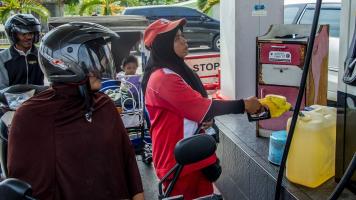
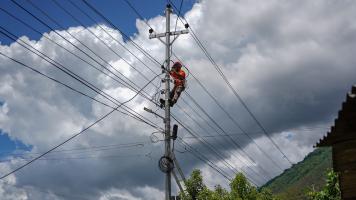
Across ASEAN, electricity demand is set to almost double by 2040, driven by economic growth, industrialization, and urbanization. Photo credit: ADB.
Article
28 January 2026

Bridging Borders for a Cleaner Future: ASEAN’s Next Leap in Cross-Border Power Trade

In today’s world, energy security is no longer just about having enough fuel within one’s borders—it is about building systems that are interconnected, resilient, and low-carbon.
In October 2024, ASEAN member states endorsed the ASEAN Declaration on Plastic Circularity, signaling a regional commitment to systematic change. Photo credit: iStock/piotr_malczyk
Article
24 December 2025

Beyond Traditional Funding: Can ASEAN Innovate Its Way Out of the Plastic Crisis?

Resolving the problem entails aligning environmental goals with economic and financial systems capable of delivering large-scale impact.
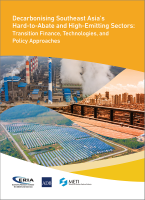
Decarbonising ASEAN's Hard to Abate and High Emitting Sectors: Transition Finance, Technologies, and Policy Approaches
Publication
4 November 2025

Decarbonising ASEAN's Hard to Abate and High Emitting Sectors: Transition Finance, Technologies, and Policy Approaches

The joint report by ERIA, ADB, and METI examines the current landscape, identifies challenges, and highlights emerging practices for mobilizing transition finance within the region's unique energy, financial, and industrial contexts.
About 97% of deep tech ventures strive to meet at least one of the SDGs, says a new report. Photo credit: iStock/Siam Virachitevin.
Article
21 May 2025

Unlocking Deep Tech’s Potential for Sustainable Development in ASEAN+3

Strengthening the overall ecosystem should be a priority while taking into account the disparities in market, infrastructure, human capital, and technology creation.
Digital Technology Adoption and Indonesia’s MSMEs during the COVID-19 Pandemic
Publication
4 June 2024

Digital Technology Adoption and Indonesia’s MSMEs during the COVID-19 Pandemic

This paper discusses Indonesia’s MSMEs during the COVID-19 pandemic and the digital transformation they pursue.
Technology and Disability: Trends and Opportunities in the Digital Economy in ASEAN
Publication
29 May 2024

Technology and Disability: Trends and Opportunities in the Digital Economy in ASEAN

This report examines the current and potential role of digital technology in fostering the inclusion and economic empowerment of people with disabilities in Southeast Asia.
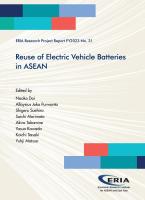
Reuse of Electric Vehicle Batteries in ASEAN
Publication
28 March 2024

Reuse of Electric Vehicle Batteries in ASEAN

As e-vehicle adoption grows, policymakers must anticipate and establish systems for recycling batteries.
The Extended Producer Responsibility is an environmental policy that extends a producer’s responsibility for a product to include its post-consumer stage. Photo credit: ADB.
Article
14 March 2024

Addressing Plastic Pollution Through Extended Producer Responsibility in Southeast Asia

Ensuring producers are responsible for the management of products at the post-consumer stage is key to ending plastic pollution.
Southeast Asia has a population of more than 670 million people and almost 70% are internet users as of 2022. Photo credit: ADB.
Article
26 February 2024

Bridging Disparities to Bolster Digital Transformation in ASEAN

Southeast Asia needs to improve digital access and literacy and upgrade people's skills for genuine digital transformation.
Accelerating AI in ASEAN: Addressing Disparities, Challenges, and Regional Policy Imperatives
Publication
24 January 2024

Accelerating AI in ASEAN: Addressing Disparities, Challenges, and Regional Policy Imperatives

The paper discusses the significance of AI, the challenges of deploying AI in Southeast Asia, and the need for ASEAN-centric policies.