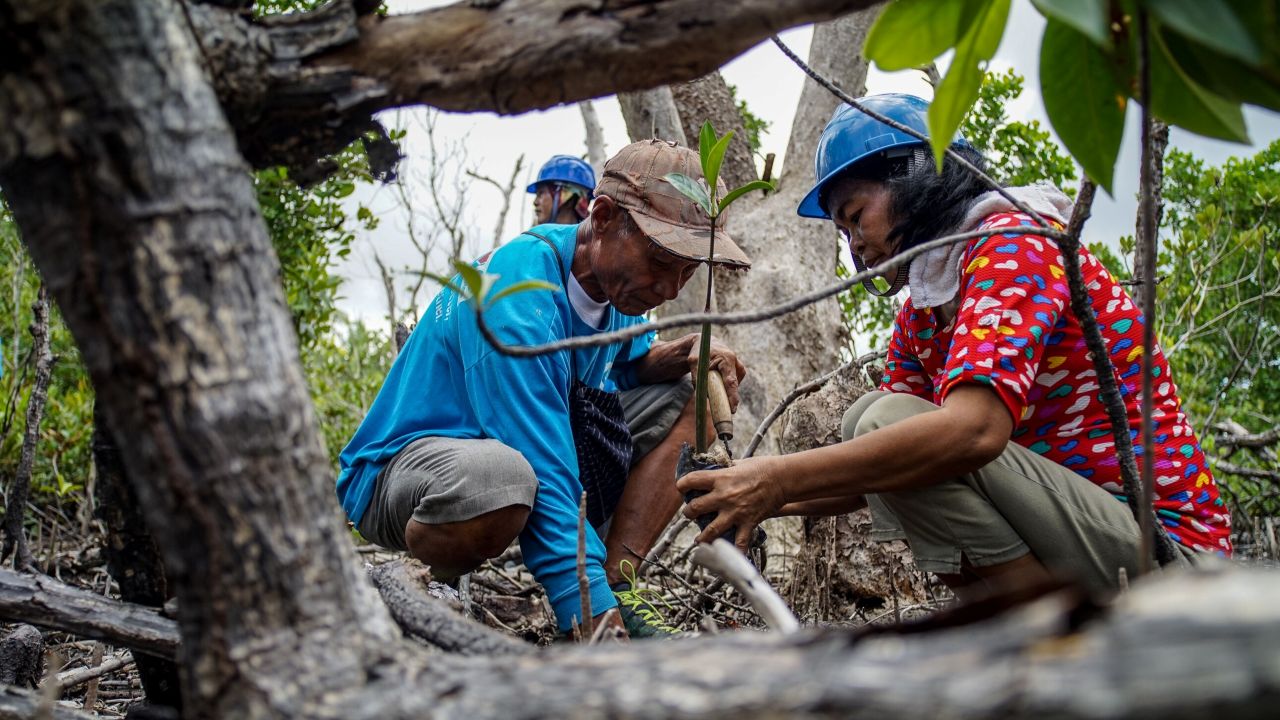
Coastal protection initiatives, such as mangrove planting, strengthen local communities' resilience against storm surges and erosion. Photo credit: ADB.
ASEAN Climate Week looks at practical and concrete ways of improving the lives of vulnerable populations.
The inaugural ASEAN Climate Week 2026 focused on making countries’ climate commitments more actionable at the community level. These include using ecosystem-based approaches and coordinated measures to address loss and damage and climate-induced mobility.
From 27 April to 1 May, the Philippines led the discussions on how climate action can directly benefit people on the ground. Earlier in April, the country, as this year’s ASEAN chair, convened the first High-Level Policy Dialogue on Climate Finance and advanced the ASEAN Climate Finance Policy Platform.
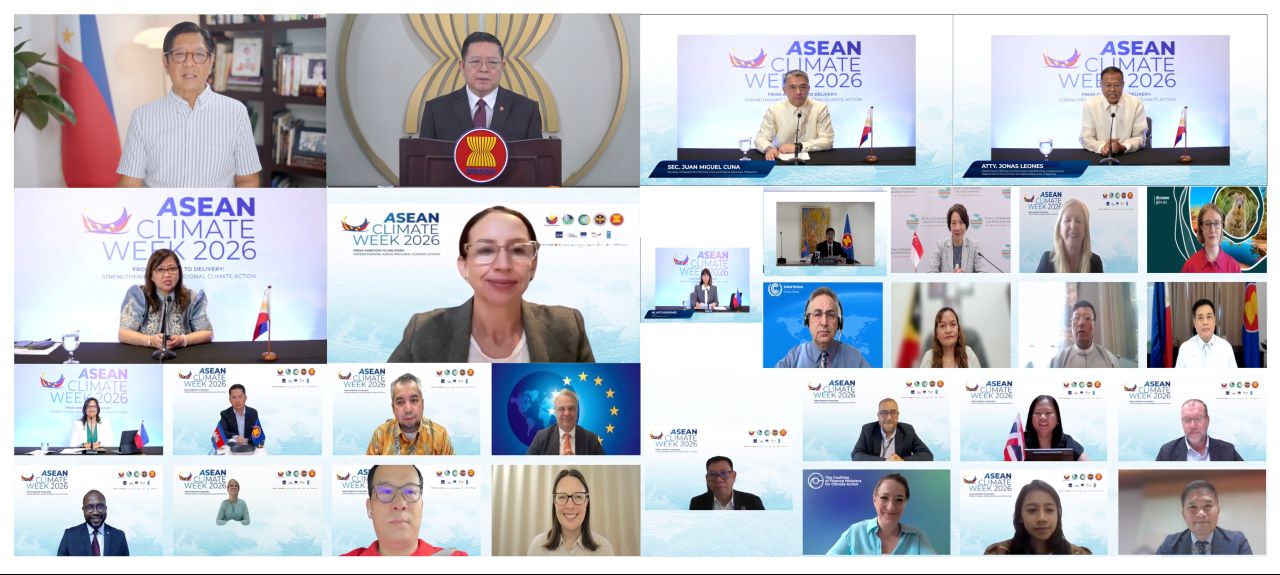
The virtual event was supported by key development partners, including ADB, GIZ ASEAN-EU Climate Action Programme, United Nations Development Programme, UK FCDO, ASEAN Center for Biodiversity, Center for Conservation Philippines, Global Affairs Canada, Global Green Growth Inc., GIZ TRANSCEND, Parabukas, ASEAN-UK Green Transition Fund, International Organization for Migration, and C40/GCom.
Human dimension of climate change
Communities across Southeast Asia are experiencing the impacts of climate change, particularly in densely populated coastal areas and regions with limited access to finance, technology, and institutional support.
“We have heard clearly that the human dimension of climate change is becoming increasingly pronounced,” said Department of Environment and Natural Resources (DENR) Secretary Juan Miguel T. Cuna in his chair’s report at the close of ASEAN Climate Week. “Communities across the region are already experiencing the impacts through displacement, changing livelihoods, and heightened vulnerability.”
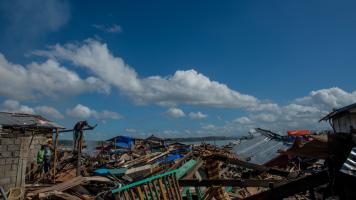
The Intergovernmental Panel on Climate Change (IPCC) warns that climate-driven loss and damage will hit hard the communities and ecosystems least able to cope. The severity and frequency of climate-related disasters are already forcing a growing number of people to relocate.
Discussions at the ASEAN Climate Week focused on translating key climate commitments, such as Nationally Determined Contributions (NDCs), National Adaptation Plans (NAPs), and Long-Term Low Emissions Development Strategies (LT-LEDS), into concrete actions that directly address the challenges that communities face.
Improving access to financing
DENR and ADB conducted the session on advancing NDC implementation in ASEAN.
Under the Accelerating Climate Transitions through Green Finance in Southeast Asia program, ADB is helping countries to mobilize financing for NDCs by improving investment planning, identifying and developing projects, and building country capacity to accelerate a pipeline of green projects for the region. It is linked to the ASEAN Catalytic Green Finance Facility (ACGF) under the ASEAN Infrastructure Fund. Projects identified by the program could benefit from further funding from ACGF and its financing partners.
Though among the world’s most climate-vulnerable regions, Southeast Asia receives only a small fraction of adaptation and mitigation financing. Access to climate finance is hampered by a lack of bankable projects, regulatory uncertainty, and limited data and knowledge.
“What emerged strongly from our exchanges is the need to create enabling environments that can unlock private capital, strengthen investor confidence, and support innovative financing approaches. At the same time, improving access to existing sources of climate finance remains equally important, particularly for regional and cross-border initiatives,” said Cuna in his report.
ASEAN works with international partners to mobilize financing and improve access to funds, including the Adaptation Fund, Green Climate Fund, Fund for Responding to Loss and Damage, and the Global Environment Facility.
Interlinked issues
Cuna also talked about how climate issues are linked to other global challenges.
“Energy insecurity and climate vulnerability are two sides of the same coin,” he said. “What affects global energy systems also affects our ecosystems, our livelihoods, and our communities. The situation in the Middle East reminds us of the urgent need to strengthen climate resilience and why ASEAN's climate agenda is part of the solution.
Another regional priority is the biodiversity–climate nexus. “Forests, peatlands, mangroves, and coastal systems must be recognized not as passive assets but as strategic climate infrastructure,” said Cuna. “Safeguarding and restoring them provides an integrated pathway for mitigation, adaptation, and resilience.”
Turning climate ambition to action requires closer coordination across ministries to support national priorities and at the regional level.
For example, Cuna said “strengthened cooperation on loss and damage can help improve how countries respond after disasters—enabling faster mobilization of assistance following typhoons, improving access to financing for rebuilding damaged homes and infrastructure, and supporting recovery programs for affected sectors like agriculture and fisheries.”
Deeper cooperation is also needed in enhancing transparency and data systems and in aligning policies to build trust and attract investment.
“ASEAN Climate Week has reinforced a simple but important message. The region is ready to move forward. The ambition is clear. The challenges are well understood, and there is a growing alignment on the actions required,” said Cuna.