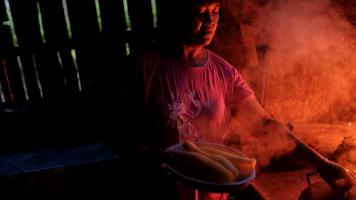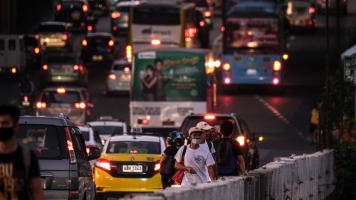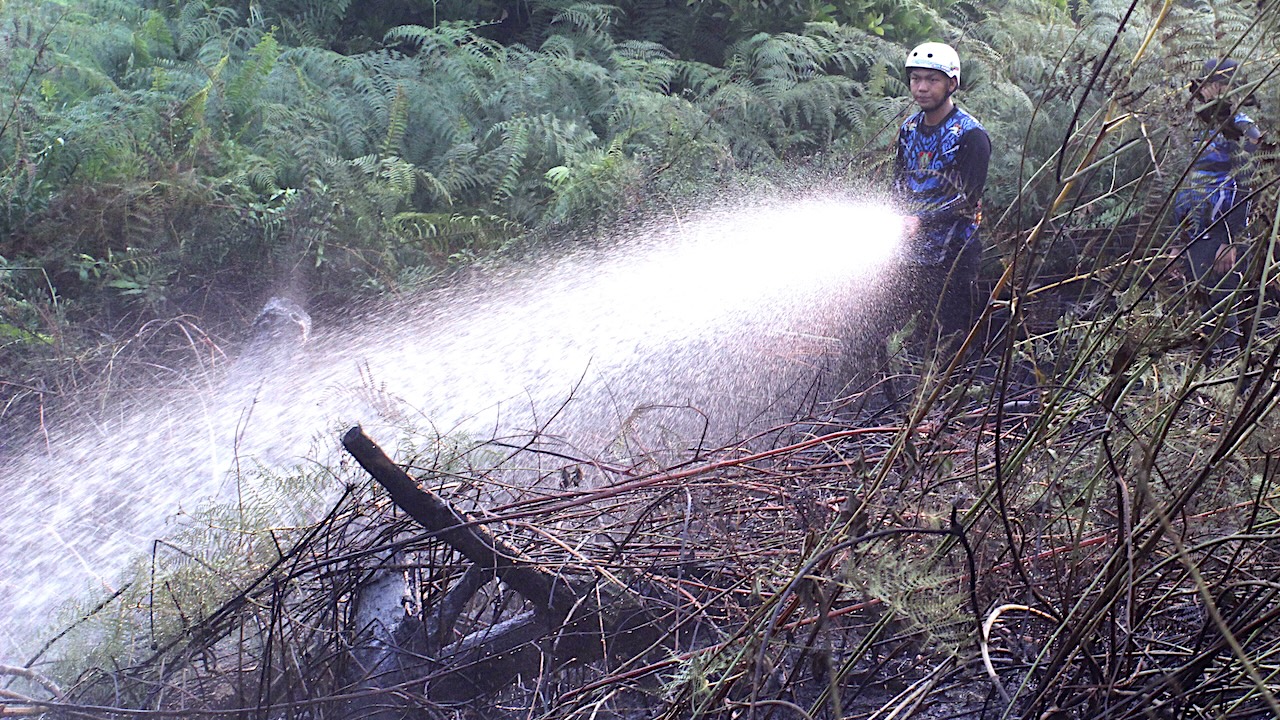
Indonesia is reported to be fighting its worst wildfires in 11 years, with 202,000 hectares gutted between January and July and an additional 600,000 hectares in the succeeding months. Photo credit: iStock/Didindan Bintang.
Containing the fires entails connecting prevention, land management, rapid response, and regional cooperation.
For decades, Indonesia has faced devastating wildfires in its forests and peatlands, with impacts extending beyond the country’s borders as the resulting haze would waft across Southeast Asia. The haze exposed millions of people to hazardous air pollution, while disrupting daily life and economic activity.
This year is no exception. Indonesia is reported to be fighting its worst wildfires in 11 years, with 202,000 hectares gutted between January and July and an additional 600,000 hectares in the succeeding months.
The haze caused by the fires has since spread to Brunei Darussalam, Malaysia, and Singapore, with reports also indicating impacts in the Philippines.
Firefighters struggle to contain the wildfires as drier-than-usual conditions associated with the El Niño weather phenomenon has made it easier for the fires to spread. Authorities also blame slash-and-burn land-clearing practices.
The fires come at a cost. Jakarta-based think tank Center of Economic and Law Studies estimated that this year, Indonesia faces nearly Rp39.29 trillion–Rp123.1 trillion ($2.56 billion–$6.95 billion) in economic losses due to the fires. The projection includes loss of properties and economic activity, potential tax revenue losses, and healthcare costs as people develop respiratory illness and other related health conditions due to the forest and land fires. Other affected countries also face business and health costs due to the haze.
Costly disasters
Past disasters illustrate how costly these fires can become. According to a working paper published by the United Nations Economic and Social Commission for Asia and the Pacific (ESCAP) in August, the 1997–1998 Indonesian fires scorched more than 9 million hectares and spread haze across six ASEAN countries. Regional losses was estimated to exceed $9 billion. In 2015, fires burned more than 2.6 million hectares in Indonesia, contributing to an estimated 100,300 premature deaths across three countries and economic losses of $16.1 billion. These episodes demonstrate that fires originating in one country can become a regional public health and economic crisis.
The paper said building resilience against wildfires depend on an approach combining technology, institutions, and communities.
- Technology helps detect different types of fires under difficult conditions.
- Institutions can share information and coordinate responses across sectors and national borders.
- Communities equipped with knowledge, resources, and capacity can act before fires escalate.
The paper, which examined wildfires across Asia and the Pacific, said better satellite monitoring alone will not solve the problem. Monitoring must be connected to prevention, land management, rapid response, and regional cooperation. The region must also recognize wildfires as a systemic, transboundary, and humanitarian challenge, instead of treating them solely as forestry or environmental issues.
A 2022 report from a United Nations Environment Programme said that climate change and land-use change are making wildfires worse, and warned about a global increase of extreme fires even in areas previously unaffected.
The report noted that annual fires affect about 340 to 370 million hectares of the Earth’s land surface area, including an estimated 67 million hectares of forested areas. The frequency and intensity of wildfires are expected to increase by almost 15% and 30% in 2030 and 2050, respectively.
From detection to action
The ESCAP paper identifies several potential interventions to address weaknesses in wildfire monitoring and response.
Improving detection. Combining optical satellite imagery with radar and other Earth observation data can improve monitoring when smoke, haze, cloud cover, or difficult terrain obscures fires. Peat fires, in particular, are hard to detect because they happen underground. Artificial intelligence (AI) could help analyze data from multiple sources, identify potential fire activity, and improve near-real-time monitoring.
Making data usable. AI, in particular large-language models, can help generate reports that are easy to understand. User-friendly decision-support tools could help authorities and frontline responders interpret complex environmental data and translate it into timely warnings and action. This requires accessible data platforms, compatible information systems, and training for local operators and forest rangers.
Strengthening community action. Local communities are often among the first to detect fires and respond to them. Community-based fire management, supported by training, timely information, and local knowledge, can help prevent fires from escalating. Sustainable land management and alternatives to burning for land clearing are also important parts of prevention.
The report also cited the importance of regional institutional frameworks. These include the ASEAN Agreement on Transboundary Haze Pollution adopted in 2002 to commit ASEAN members to prevent, monitor, and mitigate transboundary haze through national action, regional cooperation, and early warning systems.
There are also new mechanisms, including Asia–Pacific Network for Sustainable Forest Management and Rehabilitation and Regional Community Forestry Training Center for Asia and the Pacific, which launched the Southeast Asia Fire Management Mechanism. The mechanism aims to facilitate information sharing, best practices, and community-based fire management partnerships.