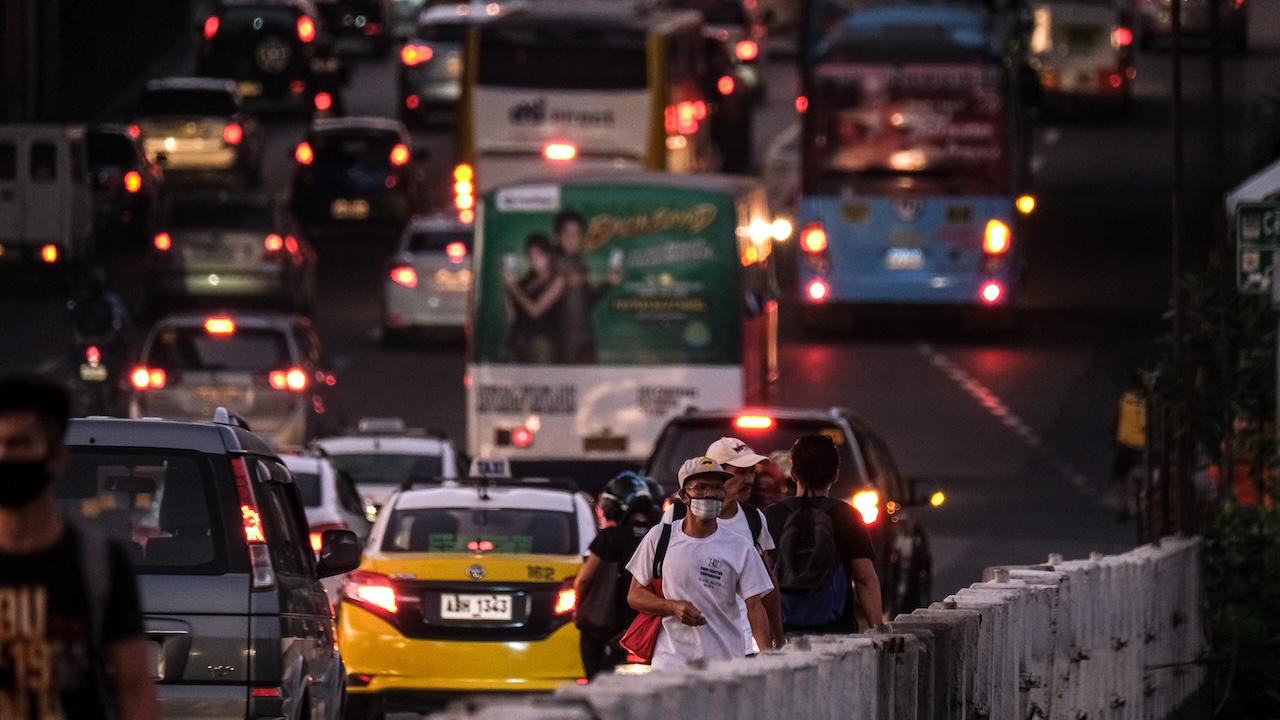
More than 85% of Southeast Asia’s population is exposed to unhealthy air, leading to premature deaths estimated at 335,000 annually. Photo credit: ADB.
New ADB study says many cities in the region already have policies, but enforcement is weak and institutional responsibilities are fragmented, leading to limited impact.
With scientists warning of a possible "Godzilla El Niño" and climate whiplash that could worsen droughts, floods, and transboundary haze in Southeast Asia, ASEAN is again faced with the urgency to curb air pollution.
More than 85% of Southeast Asia’s population is exposed to unhealthy air, leading to premature deaths estimated at 335,000 annually.
A new study from the Asian Development Bank (ADB), Air Quality in Southeast Asia: Status, Trends, and Priority Interventions Across Eight ASEAN Cities, said many cities in the region already have policies addressing air pollution, but enforcement is weak or inconsistent and institutional responsibilities are fragmented, leading to limited real-world impact. Citing publicly available data from more than 200 cities between 2014 and 2024, the report said air quality trends in the assessed cities have topped the World Health Organization’s (WHO) guidelines for PM2.5 in 2024. Most recorded concentrations around the WHO interim target of 25 micrograms per cubic meter, underscoring the need for strengthened and sustained interventions.
PM2.5 refers to tiny pollutants with a diameter of only 2.5 microns or less. They are harmful to human health because they are small enough to enter the bloodstream and are linked to a range of respiratory and cardiovascular issues. PM2.5 is the primary pollutant during periods of transboundary haze plaguing Southeast Asia.
During the Better Air Quality conference organized by ADB in March, Zbigniew Klimont, research group leader of the Pollution Management Group at the Energy, Climate, and Environment Program of the International Institute for Applied Systems Analysis, said that current climate and air quality policies across ASEAN are helping prevent air pollution from worsening. However, the policies are not yet delivering major improvements in exposure levels, he said during the “Shared Atmosphere, Shared Responsibility: ASEAN Solutions for Better Air” session at the conference.
Presenting findings from an ASEAN-focused modeling study, Klimont said without existing measures, exposure to very high pollution levels could increase sharply. Based on estimates, he said, without current policies populations exposed to very high pollution levels could rise from 25 million to 70 million people.
According to a global modeling cited in the ADB report, residential solid biofuel is the main source of PM2.5 in the region. But national emissions inventories and source apportionment studies suggest that transport, industry, biomass burning, and area sources are also main contributors.
In the same forum, KE Vongwattana, deputy director general at the General Directorate of Environmental Protection of Cambodia’s Ministry of Environment, warned of the evolving challenges facing the region in addressing air pollution. “There are new sources of pollution, new pressure from urbanization, and new demand from our citizens for healthier and more livable environments.”
Challenges
The study noted that while plans exist, interagency coordination across transport, energy, environment, agriculture, and urban development authorities remains a challenge. Regulatory enforcement varies in strength, and accountability mechanisms are not always clearly defined. As a result, many priority measures remain at early stages of implementation.
While most cities have developed action plans or are in the process of updating them, technical capacity remains uneven. Gaps persist in emissions inventory development, source apportionment analysis, emissions modeling, and integration of air quality data into urban and sectoral planning processes. In several cities, monitoring coverage remains limited, constraining data-driven decision-making.
Financing is also a major constraint. Few cities have dedicated, sustained clean air financing mechanisms. Many interventions rely on short-term project-based funding, technical assistance, or donor support.
The report said scaling priority measures such as transport electrification, cleaner production upgrades, waste treatment infrastructure, and alternatives to open burning will require predictable and long-term capital aligned with national development strategies and climate commitments. Strengthening project preparation capacity and developing bankable pipelines will be essential to mobilize diversified financing, including public budgets, concessional finance, private investment, and climate-related funding instruments.
County efforts
During the ADB forum, speakers from Malaysia, the Philippines, and Thailand shared efforts to address air pollution at the national level.
Malaysia is aggressively shifting the energy mix toward renewables and exploring cleaner thermal operations to ensure its economic expansion is fundamentally green. It is also reforming its environmental laws and enforcement systems through a major retrofit of the Environmental Quality Act and revisions to clean air regulations.
The country has also shifted from traditional command and control to guided self-regulation to encourage industries to take proactive ownership of emissions. The government also plans to apply the polluter pays principle and is looking to introduce an environmental pollution fee to encourage industries to adopt cleaner technologies to reduce emissions.
It is also updating regulations to address emerging issues, including industrial emissions, open burning, ozone mitigation, carbon emissions, climate change, and fuel quality. The country also plans to strengthen data-driven monitoring and ambient air quality monitoring.
Similarly, the Philippines has implemented a wide range of programs against air pollution and has adopted a multi-stakeholder approach focused on monitoring, local action, public engagement, and policy reform.
For instance, the government has partnered with the private sector for real-time air monitoring. It is encouraging companies to adopt continuous ambient air monitoring systems to ensure the availability of air quality data and bolster real-time monitoring capacity.
The Philippines has also mobilized city governments for local clean air action and is working to expand low-cost sensor networks, particularly in Metro Manila cities. The data is shared with the public through social media.
The government also makes it a point to consult citizens, nongovernment organizations, the academe, local government units, and the private sector when updating air quality policies. Stakeholder inputs are then incorporated into policy updates, for instance, on PM10 guideline values, transition from Euro 4 to Euro 5 emission standards, as well as national emission benchmarks.
Thailand addresses pollution control through a comprehensive national approach, covering not just air pollution, but also wastewater, solid waste, and hazardous waste. It has also been strengthening air quality monitoring and early-warning systems, while promoting greater transparency and data sharing.
The country is also advancing green urban planning by integrating green spaces, urban forests, and climate-sensitive land use planning into city development.
It is also strengthening local enforcement against open burning and transboundary haze pollution, supporting sustainable agriculture, and coordinating management of forest and agricultural fires.
The government is also offering incentives for cleaner technologies and is mobilizing green finance and innovation by attracting green investment and climate finance, and promoting public–private partnerships.
Other countries across the region have taken varied approaches. Still, both the report and the forum highlighted that current policies are largely stabilizing pollution rather than significantly reducing exposure levels.
Regional response
While a strategic and integrated national approach is important, a regional response is key. “Air quality is not just a local issue, it is also a regional challenge and it requires a regional response,” said Cambodia’s Vongwattana.
Both the report and the forum highlighted the need for harmonized standards, stronger enforcement, shared monitoring systems, regional data sharing, and more coordinated policy responses.
Vongwattana said that over the past decade, ASEAN has taken steps to strengthen cooperation on air quality, including developing various cooperation frameworks to address air pollution. “Progress is possible when we act together,” he said.