Beyond Traditional Funding: Can ASEAN Innovate Its Way Out of the Plastic Crisis?

Director, Research Strategy and Innovation, Economic Research Institute for ASEAN and East Asia (ERIA)
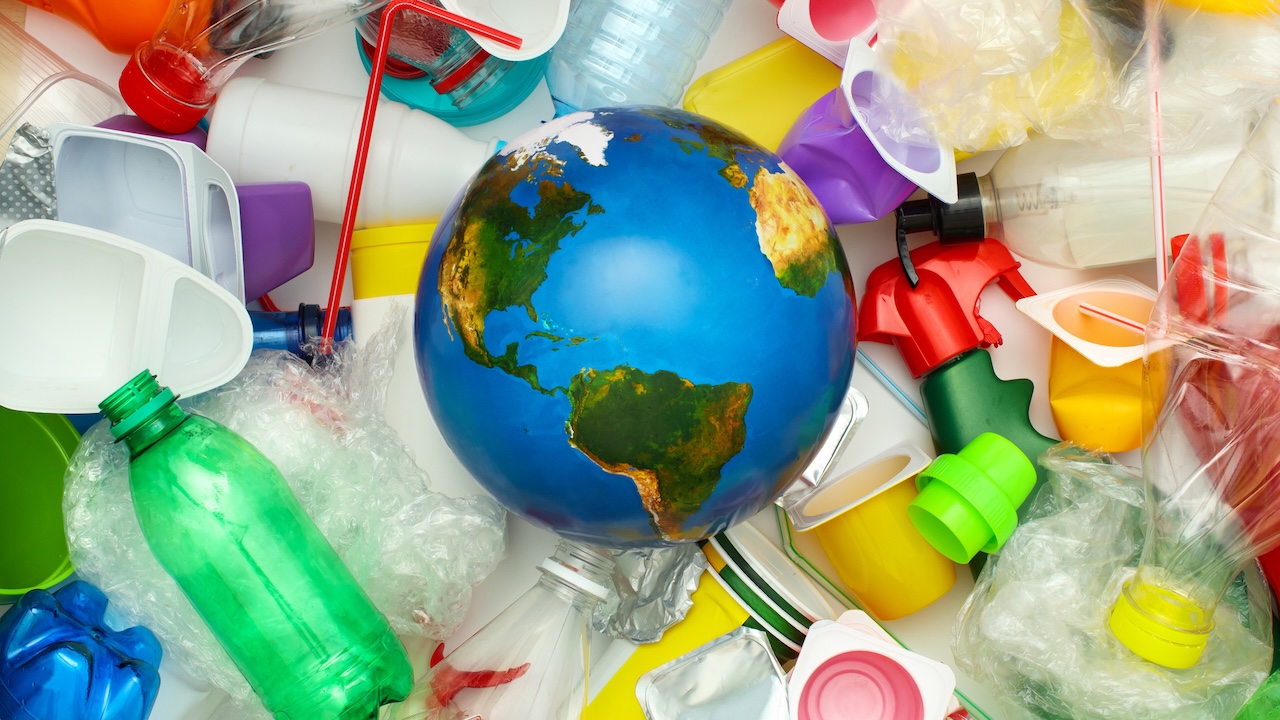
In October 2024, ASEAN member states endorsed the ASEAN Declaration on Plastic Circularity, signaling a regional commitment to systematic change. Photo credit: iStock/piotr_malczyk
Resolving the problem entails aligning environmental goals with economic and financial systems capable of delivering large-scale impact.
This article is published in collaboration with the Economic Research Institute for ASEAN and East Asia.
Plastic waste has infiltrated every corner of the planet: it leaches into our water, contaminates our food, and even enters our bodies. Yet, while the scale of the problem is vast, plastic pollution remains one of today’s most solvable environmental challenges—especially with the right mix of technical solutions and financial innovation.
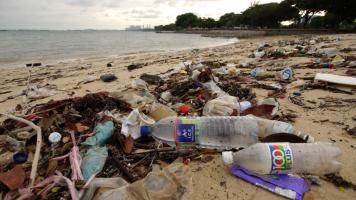
For decades, plastic has symbolized modern convenience—lightweight, versatile, and cheap. But this convenience has become an environmental curse. The ASEAN region, while economically dynamic, is amongst the world’s largest contributors to marine plastic pollution. Indonesia alone generates over 3 million metric tonnes of mismanaged plastic waste annually, a large share of which ends up in the ocean. The Philippines, Viet Nam, Thailand, and Malaysia are not far behind. Collectively, the 10 ASEAN member states account for nearly half of global plastic leakage into oceans.
This is not a local problem—it is regional and increasingly global. Ocean currents carry waste across borders. Contaminated seafood undermines public health from Jakarta to Tokyo. Plastic pollution degrades ecosystems, disrupts food systems, and damages coastal infrastructure—placing growing pressure on public finances. All of this unfolds against the backdrop of climate change, to which plastic production and degradation are becoming significant contributors. If current trends continue, plastics could account for 20% of global oil consumption by 2050.
Governments across ASEAN are responding. The region adopted the Bangkok Declaration on Combatting Marine Debris in 2019, followed by a Framework of Action the same year and a Regional Action Plan on Marine Debris in 2021. Most recently, in October 2024, ASEAN member states endorsed the ASEAN Declaration on Plastic Circularity, signaling a regional commitment to systematic change.
At the national level, seven ASEAN countries have developed national action plans, while the remaining three are in the process of doing so. Several countries—Thailand, Indonesia, and Malaysia—have also introduced roadmaps to phase out single-use plastics by 2025. Meanwhile, the private sector is piloting biodegradable alternatives and improving waste collection systems.
These are encouraging steps—but they remain fragmented, small-scale, and underfunded relative to the magnitude of the crisis.
A paradigm shift is needed—one that aligns environmental goals with economic and financial systems capable of delivering large-scale impact. This is where the circular economy offers a compelling solution. Unlike the traditional "take-make-dispose" model, the circular economy prioritizes reducing, reusing, and recycling. It aims to keep resources in use for as long as possible, extract maximum value, and regenerate materials at the end of their lifecycle.
But realizing a circular economy requires more than ambition. It demands infrastructure, behavioral change, enabling policies—and above all, financing. Many ASEAN and Indo-Pacific countries face fiscal constraints and competing development priorities. Without innovative financing, the circular economy risks remaining more aspiration than action.
Innovative Financing Tools to Tackle Plastic Waste
Green bonds are a promising solution. These debt instruments, earmarked for environmental projects, can fund recycling infrastructure, waste management systems, and sustainable packaging. A harmonized ASEAN green bond framework could unlock billions in public and private capital.
Sustainability-linked loans are another emerging mechanism. These loans tie interest rates to a borrower’s ability to meet environmental performance targets—such as reducing plastic use or increasing recycled content. Regional banks could take the lead in mainstreaming sustainability-linked loans to support corporate transitions.
Plastic credits, modeled after carbon credits, offer a novel market-based solution. Companies could purchase credits equivalent to a specific amount of plastic collected or recycled. A regional plastic credit market, supported by robust verification systems, could direct funding to community-based waste collectors and social enterprises—bringing informal workers into the formal economy.
Blended finance—using concessional public funds to de-risk private investments—can catalyze innovation in bio-based materials, reverse logistics, and clean technologies. Multilateral institutions like the Asian Development Bank, World Bank, ASEAN Infrastructure Fund, and Green Climate Fund have a key role to play in scaling such solutions.
Aligning Plastic Circularity Across Borders
Finance alone is insufficient without coordinated policy frameworks. One of the biggest barriers is regulatory fragmentation. For example, a company using recycled plastic in Thailand may face entirely different labelling and safety standards in Singapore or Viet Nam. Varying rules around recycled content, waste classification, and extended producer responsibility (EPR) create uncertainty and disincentives.
ASEAN governments must cooperate to align standards, create interoperable eco-labelling systems, and enable the cross-border flow of recyclable materials under clear and safe conditions. The ASEAN Circular Economy Framework is a strong starting point—but its scope could be expanded.
A bold next step would be to establish an Indo-Pacific Regional Circular Economy Council, anchored in ASEAN and inclusive of partners like India, Japan, Australia, and the Republic of Korea. This council could harmonize policies, coordinate a regional fund for plastic circularity, and support demonstration projects—from zero-waste cities to R&D in sustainable packaging and local innovation hubs.
Governments can also lead by example through green public procurement, favoring goods and services aligned with circular economy principles. Tax incentives for recycled materials, eco-design, and clean-tech startups—coupled with penalties for non-compliance—can shift market behavior at scale.
All these measures must be underpinned by robust monitoring and evaluation to ensure transparency, impact, and adaptive learning.
A Moment for Environmental Stewardship
The benefits of early action are both environmental and economic. Cleaner coastlines boost tourism. Improved waste systems reduce public health costs. Circular industries generate green jobs and entrepreneurial opportunities. And most importantly, we hand future generations a region defined not by pollution—but by resilience, innovation, and stewardship.
We stand at a crossroads. We can treat plastic pollution as tomorrow’s problem—out of sight and out of mind—or we can confront it now, together, with shared responsibility and shared resolve.
Let ASEAN and the Indo-Pacific emerge not just as engines of economic growth, but as champions of planetary well-being. Economics teaches us to grow and compete endlessly. The circular economy teaches us to cooperate, innovate, and moderate.
Some forms of excellence arise not from competition, but from collaboration. We each choose which economy we live under—and whether we align our growth with planetary boundaries, or face the consequences of failing to do so.
The future will not be defined by what we consume, but by what we choose to preserve.
This opinion piece has been published by the Manila Times and The Phnom Penh Post.

Venkatachalam Anbumozhi
Director, Research Strategy and Innovation, Economic Research Institute for ASEAN and East Asia (ERIA)Venkatachalam Anbumozhi has authored several books and research articles and produced project reports on resource management policies, energy infrastructure design, and private sector participation in green growth. He was invited as a member of the APEC Expert Panel on Green Climate Finance and the ASEAN Panel for promoting climate-resilient growth. He has taught resource management, international cooperation and development finance at the University of Tokyo. He obtained his PhD from the University of Tokyo.

ERIA (Economic Research Institute for ASEAN and East Asia)
ERIA is an international organization that was established in 2008 by an agreement of the leaders of 16 East Asia Summit (EAS) member countries. Its main role is to conduct research and policy analyses to facilitate ASEAN Economic Community (AEC) building and to support wider regional community building.