Quantifying the Impact of Typhoon Phanfone on Philippine Port Activity Using Automatic Identification System Data
 Download (3.55 MB)
Publication Type:
Publisher:
Asian Development Bank (ADB)
Publication:
November 2025
This paper explores how high frequency automatic identification system data can be leveraged to assess the near real-time impacts of typhoons on maritime activity.
The Philippines typically encounters 20 tropical cyclones each year, with significant impacts on port operations and economic activity. Understanding the magnitude and quantifying the impact of typhoons on port activities are essential for implementing effective disaster preparedness measures, enhancing port resilience, and mitigating the economic impact of future typhoon events.
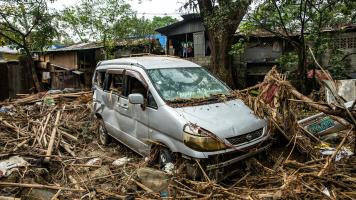
In December 2019, Typhoon Phanfone (known in the Philippines as Typhoon Ursula) hit the country, affecting 3.4 million people, damaging 594,214 houses, while disrupting maritime operations. A total of 23,789 passengers, 3,253 rolling cargoes, 157 vessels, and 46 motorbancas were reported stranded in various ports nationwide. The economic damage to infrastructure and agriculture was estimated at ₱5.7 billion or $98 million.
This study examines how Typhoon Phanfone disrupted maritime activity based on data from a short-range coastal tracking system used to identify ships and their speed and location worldwide. It quantifies disruptions at ports affected by typhoons. The proposed framework provides a valuable tool for rapid impact assessment, aiding disaster risk management, port operations planning, and resource allocation.
Contents
- Introduction and Motivation
- Related Works
- Data and Methodology
- Analysis and Results
- Conclusion