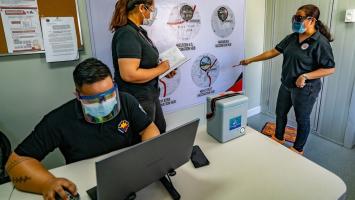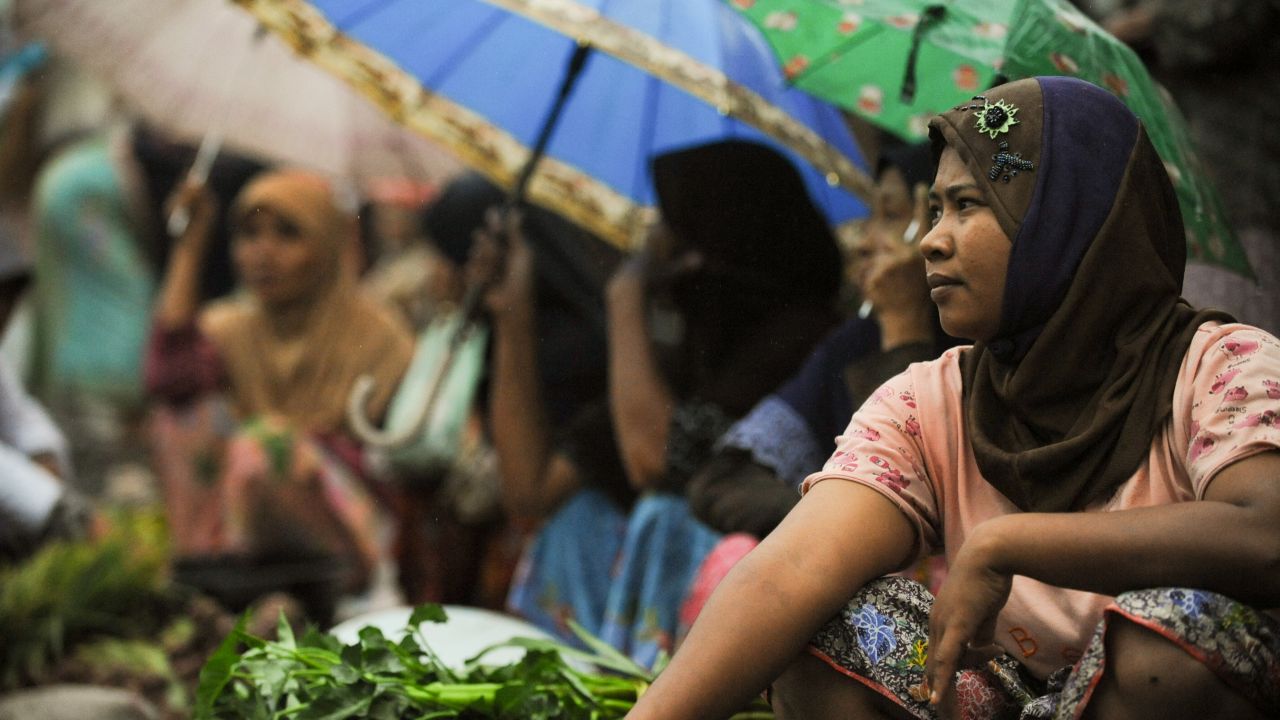
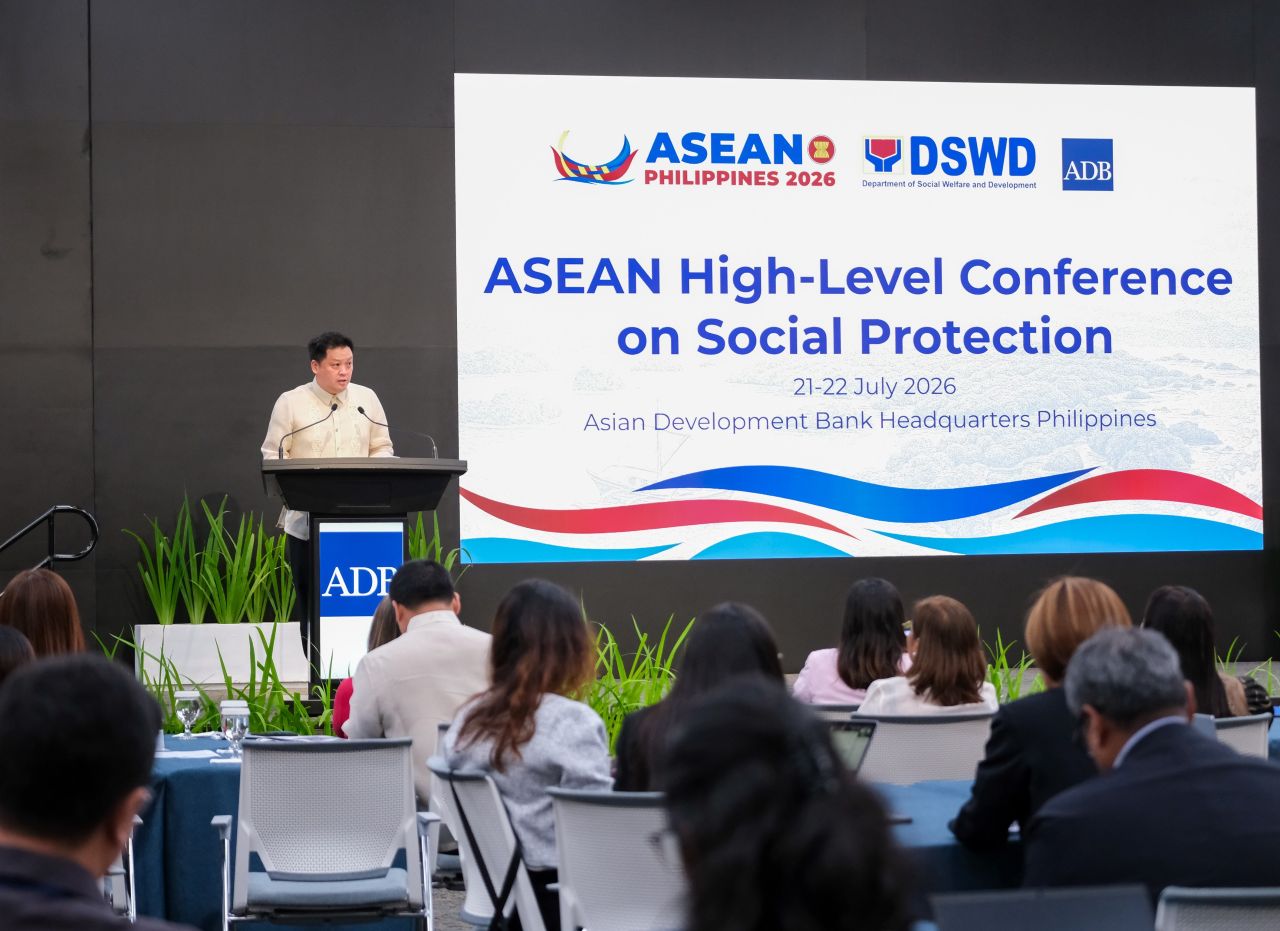
Evolving social, economic, health, and climate-related risks are increasing the urgency of building social protection systems that are more inclusive, adaptive, and resilient. Photo credit: ADB.
A high-level meeting of senior government officials, development partners, and experts examined emerging risks and trends, challenges and opportunities, and areas for regional cooperation.
The successive waves of crises in recent years underscore the need for strong social protection systems that can help protect poor and vulnerable groups prepare for, cope with, and adapt to adverse events and shocks. The COVID-19 pandemic, global economic disruptions, and geopolitical tensions, including the ongoing crisis in the Middle East, have exposed households to job and income losses, supply disruptions, and renewed inflationary pressures.
In Southeast Asia, these external pressures are compounded by the increasing frequency and severity of climate-related hazards, including super typhoons and heat waves, as well as longer-term structural challenges such as population ageing, rising inequality, and widening skills gaps. Together, these trends are increasing the urgency of building social protection systems that are more inclusive, adaptive, and resilient.
Shocks are “no longer occasional stress tests,” said Philippine Department of Social Welfare and Development (DSWD) Secretary Rex Gatchalian, who is this year’s Chair of the ASEAN Socio-Cultural Community (ASCC).
Multiple and overlapping crises
Speaking at the recent ASEAN High-Level Conference on Social Protection, Secretary Gatchalian said emerging and intensifying risks demand social protection systems that can respond to multiple and overlapping crises while strengthening the capacity of individuals, households, and communities to withstand future shocks.
“Over the past decade, social protection has gained traction across the globe. It is no longer about poverty reduction alone,” he said. “Rather, it is about implementing a combination of interventions aimed at reducing vulnerabilities that threaten our potential to achieve inclusive and sustainable development.”
The DSWD organized the 2-day conference in partnership with the Asian Development Bank (ADB) to advance more inclusive, adaptive, and resilient social protection systems across ASEAN. Held from 21 to 22 July at ADB Headquarters in Manila, the high-level meeting brought together senior officials from ministries responsible for social welfare, health, labor, and human development across ASEAN member states, along with development partners and technical experts.
Discussions focused on five thematic areas: inclusive, adaptive, and resilient social protection systems; digital transformation and integrated systems; human capital and community-based delivery; sustainable financing and resource efficiency; and evidence-based governance and regional cooperation. In her welcome remarks,
Lessons for other regions
ADB Vice-President HK Yu highlighted how ASEAN’s experience offers valuable lessons to other regions confronting inequality, demographic change, climate-related risks, and fiscal constraints.
Across ASEAN, governments are increasingly investing in social registries, integrated beneficiary databases, digital identification and payment solutions, and front-line capacity to improve targeting, reduce fragmentation, and deliver assistance more efficiently. These investments are helping countries move beyond stand-alone programs toward more integrated systems that can support people across the life cycle and respond more effectively when crises occur.
“As ASEAN’s main bank, ADB is so proud to have played a key role in advancing social protection and human development across this region. We have combined large-scale financing with technical assistance, policy dialogue, and regional knowledge to help governments expand coverage, modernize delivery systems, and build more inclusive and adaptive programs," said VP HK Yu. She also underscored the enduring partnership between ADB and ASEAN, noting ADB’s continued commitment to supporting the region’s development goals and citing ADB President Masato Kanda’s announcement at the 48th ASEAN Summit that ADB will mobilize up to $30 billion by 2030 to support ASEAN’s long-term development priorities and resilience, complemented by technical assistance, policy dialogue, and knowledge-sharing initiatives.
ADB support has included emergency assistance during the COVID-19 pandemic, as well as financing and policy support for measures designed to cushion households from food, fuel, and inflationary pressures intensified by global disruptions and the conflict in the Middle East.
Most recently, the DSWD has partnered with ADB to expand the government’s flagship initiative, the Walang Gutom (Zero Hunger) Program, to fight involuntary hunger and malnutrition in the Philippines. With lending support from ADB, Agence Française de Développement (AFD), and OPEC Fund for International Development, as well as technical assistance support through the Japan Fund for Prosperous and Resilient Asia and the Pacific (JFPR) and the Japan Special Fund (JSF), the Walang Gutom Program is scaling electronic food vouchers, alongside nutrition-sensitive social and behavior change communication to 750,000 households nationwide.
Investing in people
The conference also provided an opportunity to take stock of progress under the 10-year Regional Framework and Action Plan to Implement the ASEAN Declaration on Strengthening Social Protection, which concluded in 2025. Participants reflected on lessons from the framework and considered emerging priorities for a post-2025 regional agenda, including stronger system integration, wider coverage, improved adequacy of benefits, and greater preparedness for future shocks.
ASEAN has long recognized that “social protection is an investment in people, calling for broader coverage, stronger systems, and greater inclusion, especially for older persons, children, persons with disabilities, and other sectors in vulnerable situations,” said Secretary Gatchalian.
This perspective places social protection at the center of efforts to improve well-being, strengthen human capital, and build resilience throughout the life cycle, from early childhood to old age. It also recognizes that well-designed social protection can contribute not only to poverty reduction but also to better nutrition, health, education, employment, and economic participation.
Despite progress, important gaps remain. Access to social protection, the adequacy of benefits, and the quality of services continue to vary widely across and within countries. Informal workers, migrant workers, persons with disabilities, and people living in remote, disaster-prone, and climate-vulnerable areas are among those most likely to remain underserved.
Innovation and cooperation
Closing the conference, ADB’s Director General for Sectors Department 3 Christine Engstrom emphasized that digital technologies can help make social protection systems more efficient, accessible, and responsive. However, she cautioned that these innovations must remain “inclusive, safe, and user-centered—designed to work for those who need them most.”
Strong systems, she added, are built not only on sound policies, digital infrastructure, and delivery platforms but also on the people and institutions that make social protection work. “They depend on trust, outreach, capacity, and the ability to respond to people’s real needs.”
DG Engstrom congratulated participants on having rich discussions to inform future priorities, including how countries can mobilize adequate and sustainable financing for social protection while improving the efficiency and impact of existing public spending.
The high-level meeting ultimately reinforced the value of regional cooperation in helping countries learn from one another, develop common priorities, and strengthen the institutions needed to deliver effective social protection. By sharing experiences, evidence, and practical solutions, ASEAN member states can build systems that are able to protect people today while preparing them for the risks and transitions of the future.