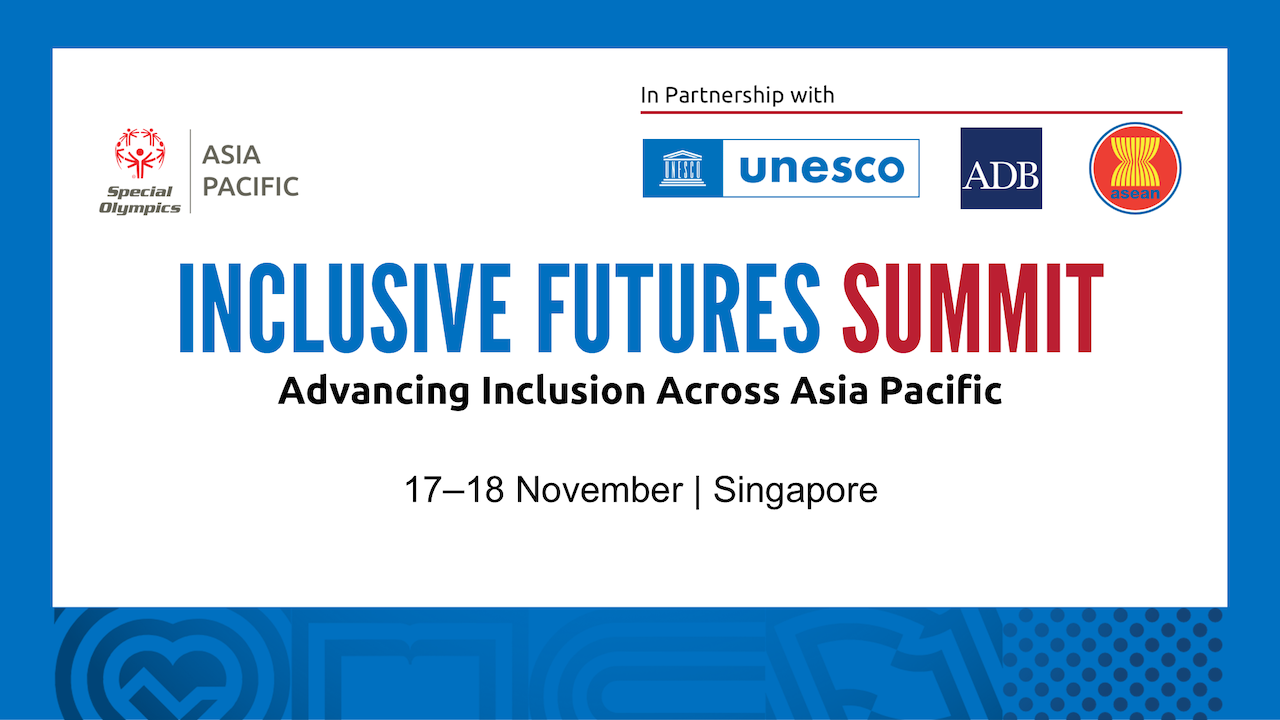
Inclusive Futures Summit: Advancing Inclusion Across Asia–Pacific
Event Type:
Date:
Time:
Organizer:
The event will examine how to strengthen systems and create more supportive environments for people with disabilities.
The Inclusive Futures Summit is a government-focused regional convening that will bring together leaders from the health, education, and sport sectors to explore practical approaches to strengthen systems, promote health and well-being, and advance inclusion. Jointly organized by Special Olympics Asia Pacific; United Nations Educational, Scientific and Cultural Organization; Asian Development Bank, and supported by Association of Southeast Asian Nations through the Senior Officials Meeting on Sports, the summit will explore how sport and physical activities can drive more inclusive, equitable, and resilient systems.
The event will examine how multi-stakeholder engagement, system assessment, prioritization, planning, and implementation can help strengthen systems and create more supportive environments for people with disabilities. It will also provide an opportunity for governments, development partners, donors, and other stakeholders to identify areas for collaboration.
A key focus will be advancing health equity for persons with disabilities and inclusive education through strengthened policy dialogue and investment, while leveraging the role of physical activity and sport in promoting healthy lifestyles, expanding opportunities for people of all abilities.
The Inclusive Health Track, led by the ADB Health Practice Team, will focus on strengthening approaches to noncommunicable disease (NCD) prevention and management. NCDs remain a major challenge for health systems, with implications for individual well-being, healthcare costs, productivity, and quality of life. Regular physical activity is a key component of NCD prevention and management and presents an important opportunity for governments to promote healthier communities through policies, programs, and supportive environments.
Target participants include government representatives from priority sectors and countries, specifically: health, education, and sport ministries or agencies. It is also open to broader participation to other governments in Asia and the Pacific and selected private sector partners.