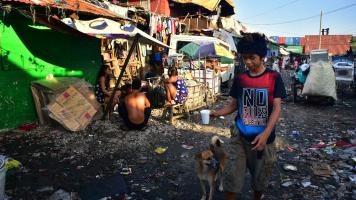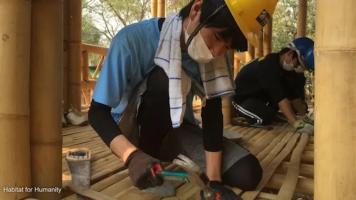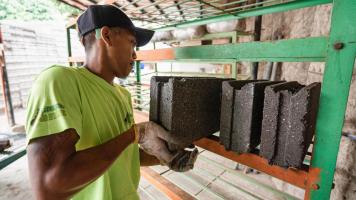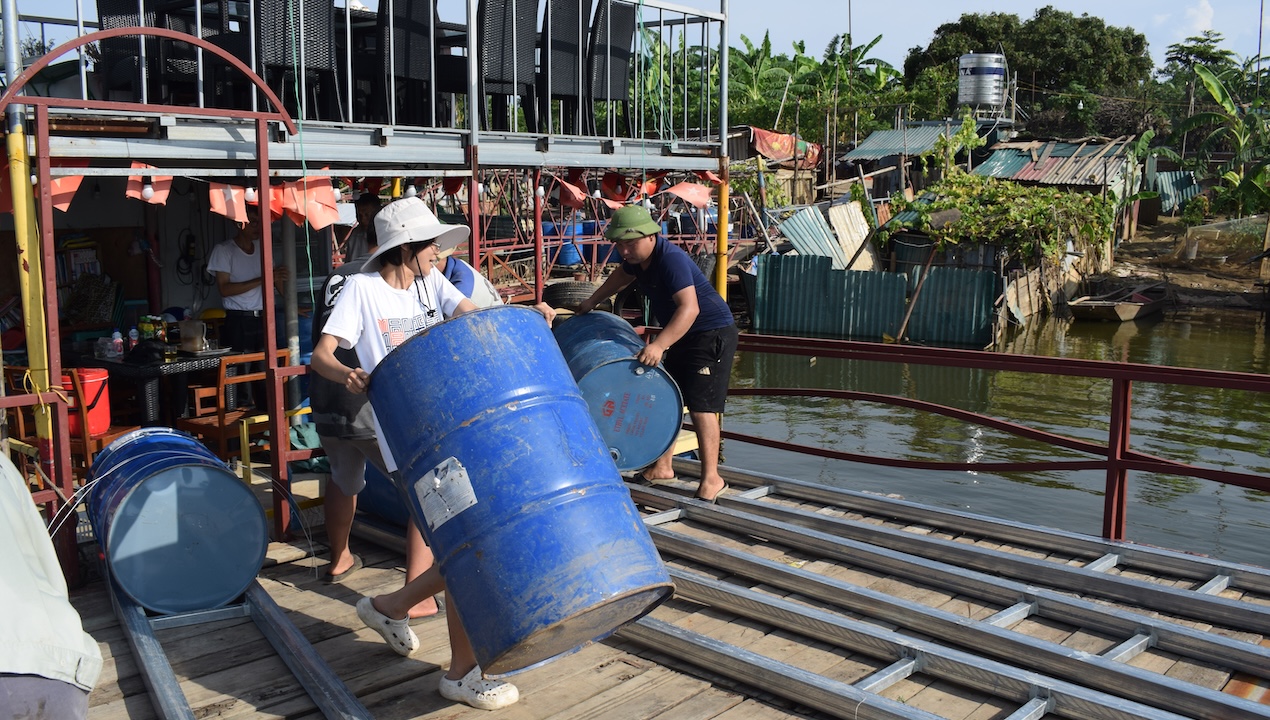
Young people bring local knowledge, urgency, and fresh thinking to some of the region’s most pressing housing challenges. Photo credit: Courtesy of Habitat for Humanity/Thinking Playgrounds.
Young innovators bring local knowledge, urgency, and fresh thinking to some of the region’s most pressing housing challenges.
“Community starts with a home—it’s where we build a life, where we find safety, where we recharge,” said Ngoc Anh Chu Thi, a grant recipient from a Habitat for Humanity program, empowering young people to help address the housing crisis. "People want to have a sense of belonging in their home. When they have that, they can make a better life," the young architect said of what motivated her to join the program.
The words from this young leader from Viet Nam capture a wider sentiment among her peers across Asia and the Pacific, where a deepening housing crisis is colliding with rapid urbanization, climate change, and widening inequality.
Across the region, vulnerable populations—including low-income families, indigenous communities, women, older people, and those living in climate-exposed areas—often face the greatest barriers to safe and adequate housing. Through Habitat Youth Solutions, which is part of Habitat for Humanity's youth engagement strategy in Asia–Pacific, young innovators are demonstrating that climate resilience and housing equality go hand in hand, ensuring that those most at risk are not left behind. By encouraging young people to design, test, and lead their own solutions, the initiative responds directly to housing insecurity and related urban challenges in one of the world’s most vulnerable regions.
Investing in Youth-led Housing Innovation
Since 2021, Habitat has been awarding microgrants to young individuals or youth-led organizations in Asia–Pacific to support new, innovative housing solutions. In the program's latest iteration in June 2025, Habitat provided 10 winners with $4,000 each—or a total of $40,000—to start, scale up, or replicate practical solutions that could improve access to adequate housing.
An additional five winners have completed projects in Bangladesh, Cambodia, the Republic of Korea, and Viet Nam. As of March 2026, the winners are estimated to have directly improved the housing conditions of 1,400 people, with close to 5,000 more benefiting indirectly. Another five projects in India, Nepal, and the Philippines are expected to be completed within the year, with an estimated 9,200 people set to benefit directly and indirectly. Three of the projects focus on housing-related climate adaptation in coastal and riverine communities. Their solutions include risk mapping, culturally appropriate sanitation features for floating settlements, low-cost water purification technologies, and climate-resilient retrofitting strategies for disaster-prone areas.
The Modern Balsa Initiative: Floating Housing for Flood-Prone Indigenous Communities
One of the winning initiatives was implemented by civil engineering graduate Augustus Nicko Bas. The Modern Balsa Initiative responds to chronic flooding in Agusan del Sur, Philippines, where Manobo indigenous families live in low-lying riverine areas. Seasonal floods regularly submerge homes, sanitation systems, and access routes. Yet residents choose to remain on their ancestral land rather than relocate.
The initiative builds on the traditional balsa (floating houses) by integrating durable flotation devices, rainwater harvesting systems, and self-contained sanitation facilities. With support from Habitat, the team constructed the community’s first floating sanitary facility, which now serves 411 households. It also trained 45 community members in carpentry and masonry, strengthening local capacity for climate adaptation and long-term maintenance.
By preserving cultural identity while improving safety and sanitation, the Modern Balsa Initiative demonstrates how climate-resilient housing can be both deeply rooted in community and relevant for wider adaptation efforts in flood-prone areas.
“Water, housing, and livability go hand in hand,” said Bas.
Gajahlah Kebersihan: Turning Coastal Plastic Waste into Housing Materials
In Bandar Lampung, Indonesia, Build with Good—developed by youth-led organization Gajahlah Kebersihan, headed by sustainability advocate Dicky Dwi Alfandy—addresses the dual challenges of marine plastic pollution and poor quality housing in coastal communities.
The initiative trains residents to manufacture ventilation blocks made from recycled plastics, turning waste into durable building materials for homes. Used in place of cement or wood and other conventional building materials, the ventilation blocks help improve airflow and indoor comfort in dense coastal settlements, reducing heat stress and making homes more livable.
Within six months, the project reused more than 220,000 pieces of plastic, preventing them from entering marine ecosystems. It also trained 30 community members in production and engaged 100 students in awareness activities focused on coastal housing and environmental stewardship.
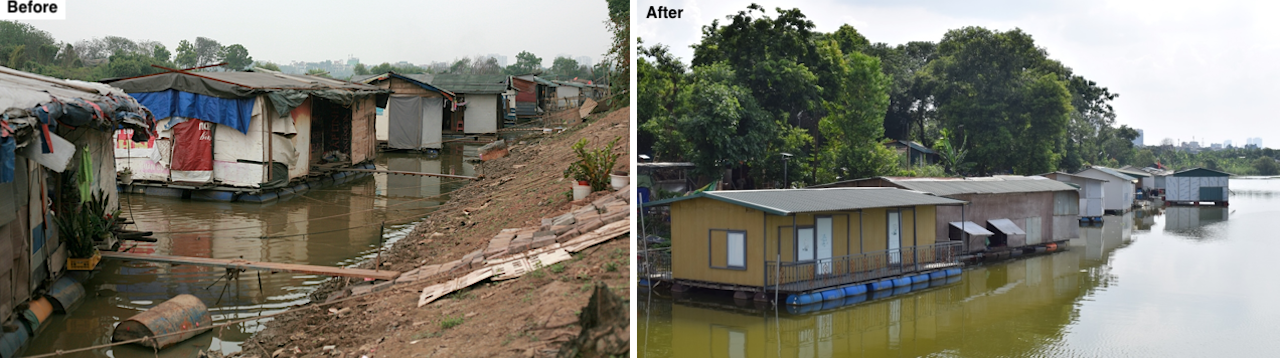
Floating Futures: Adapting Housing to Rising Water Levels in Viet Nam
In Xóm Phao, in Viet Nam, seasonal flooding is not an occasional disruption but a part of life. Floating Futures, a youth-led initiative headed by Chu Thi, came up with a solution grounded on the harsh realities faced by communities during the rainy season. The project approached water as a constant condition to which homes and communities must adapt. It focused on improving safety and resilience, while allowing residents to remain rooted in place, where livelihoods and social ties are strongest.
The project began with a renovation of a floating house, improving the dwelling of one family by using a modular design and reinforcing the structure with barrels, steel, and lightweight roofing. The design and build stabilized floating homes, allowing them to rise with the water, while serving as a practical demonstration of climate-adaptive housing. This was paired with hands-on training for 10 local residents on basic construction and renovation techniques, to ensure that knowledge remained within the community. Fifty of the residents also participated in activities that strengthened their understanding of flood risks, floating housing concepts, and collective preparedness.
Youth and academic collaboration also played a critical role. Fifteen students from the VNU School of Interdisciplinary Sciences and Arts volunteered to help with the project, while 40 students and two professors from five universities took part in workshops linking architecture, engineering, and climate adaptation in practice. The exchange bridged academic learning with the realities faced by flood-exposed communities.
Shifting the Narrative on Youth and Housing
Habitat Youth Solutions reflects a broader shift in how young people are viewed in the housing sector: not only as future stakeholders, but as agents of change already shaping responses on the ground. They bring local knowledge, urgency, and fresh thinking to some of the region’s most pressing housing challenges.
It also shows what modest, targeted investments can unlock. With seed funding, mentoring, and regional support, young people are able to test practical, context-specific ideas rooted in the needs of their communities.
At a time when Asia–Pacific faces growing housing stress, climate risk, and urban inequality, initiatives like this help build a pipeline of young leaders who can continue shaping the future of housing in the region.
Habitat for Humanity
Driven by the vision that everyone needs a decent place to live, Habitat for Humanity partners with families and individuals to build or improve a place they can call home. Founded in 1976, Habitat has since grown to become a leading global housing organization working with partners in local communities in more than 70 countries. To learn more, visit habitat.org.