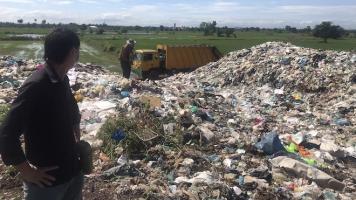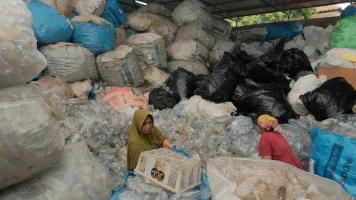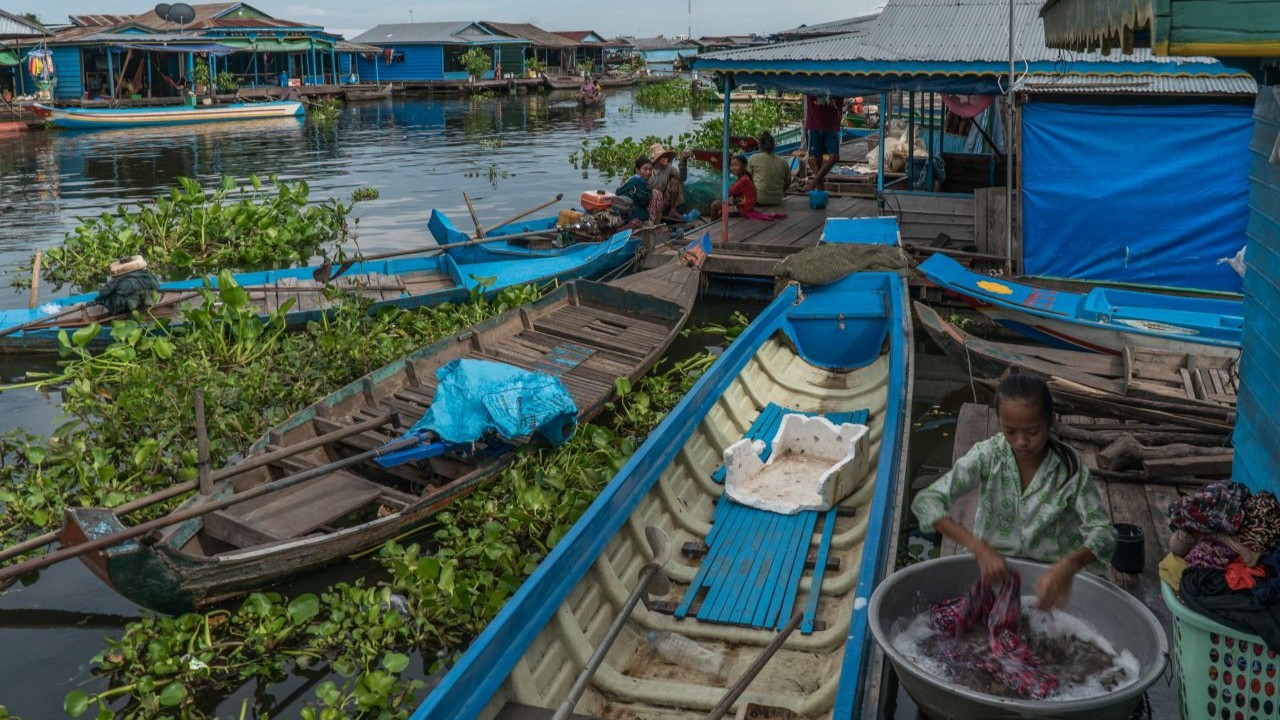
Some villages near the lake lack latrines, making human waste disposal an environmental problem. Photo credit: ADB.
An ADB-supported project addresses critical gaps in urban environmental infrastructure and helps strengthen protection of Cambodia’s Tonle Sap Basin.
In Cambodia, more than 1.7 million people depend on the Tonle Sap, Southeast Asia's largest freshwater lake, for food, water, and livelihood. The lake is also an important source of protein in the national diet, contributing about 60% of the country’s total freshwater fisheries production.
However, rapid urbanization and increased human activities around the Tonle Sap Basin have resulted in environmental degradation and declining fish stocks. The delivery of basic services, such as clean water and waste management, has failed to keep up with population growth. Uncollected garbage pollutes canals and rivers, which flow into the Tonle Sap. Frequent and severe flooding in the area worsens wastewater contamination in the lake, increasing health risks to communities.
An ADB-supported project addressed critical gaps in urban environmental infrastructure in Kampong Chhnang and Pursat and helped strengthen environmental protection of the Tonle Sap Basin, which is designated a United Nations Educational, Scientific and Cultural Organization (UNESCO) biosphere reserve. Investments focused on climate-resilient infrastructure and services (drainage, flood protection, solid waste management, and wastewater treatment plants) and on small-scale environmental improvements, coordination, and training.
This project is under the first phase of ADB’s environmental management intervention program in the Tonle Sap Basin. The second phase is developing similar facilities in the neighboring towns of Battambang, Serei Saophoan, and Stueng Saen.
These five towns in the largely rural region are key for economic growth in the basin. Their development is expected to strengthen rural–urban linkages.
Urbanization and climate challenges
Cambodia has improved access to basic water and sanitation to nearly 83% each in 2024, from 73% and 54% in 2015. However, critical gaps remain.
Rapid and unplanned urban expansion, including in the provinces surrounding Tonle Sap, has led to poor land use, environmental degradation, and limited access to essential services. Sewerage, drainage, and solid waste management systems need to be upgraded to meet growing demand and withstand extreme weather events.
Over half of Cambodia’s population is exposed to climate-related risks because they depend on agriculture for their livelihood and live in flood-prone areas. Without effective adaptation, climate impacts could reduce the gross domestic product by up to 10% by 2050.
The Tonle Sap Urban Areas Development Framework identifies Kampong Chhnang and Pursat as priority towns. Both experience frequent flooding and lack adequate drainage, sanitation, and solid waste management systems. In Kampong Chhnang, increasingly intense rainfall worsens the impact of seasonal inundation from the Tonle Sap, cutting off poor and vulnerable households’ access to markets and social services. In Pursat, poor drainage is the major cause of flooding. Lack of access to latrines, particularly among residents living near the lake, made human waste disposal an environmental problem.
Resilient urban systems
Cambodia’s growing urban challenges need a programmatic approach that integrates policy, planning, and climate-resilient infrastructure to build inclusive, adaptive, and resilient urban services.
The Integrated Urban Environmental Management in the Tonle Sap Basin Project sought to improve policies and regulations, upgrade urban infrastructure, and enhance institutional effectiveness.
A gender-responsive climate adaptation action plan was developed. Women’s needs were integrated into the infrastructure design. Poor and female‑headed households were given equitable access to sanitation and waste services.
Based on the project’s recommendations, the government adopted higher effluent discharge standards and sludge disposal regulation.
The project built two controlled landfills, two wastewater treatment plants, stormwater drains, sewers and connections, and latrines for poor and vulnerable households.
Climate adaptation and mitigation measures were incorporated in the project design, which strengthened resilience and improved urban living conditions. For example, the Kampong Chhnang wastewater treatment platform was raised to 13 meters to reduce flood risk. A 225-kilowatt solar system was also installed at the plant.
Drainage and flood control systems in both municipalities were upgraded to improve stormwater management and reduce flooding particularly in high-density population areas. A flood protection dike was constructed in Pursat to protect households in Kosh village and downstream areas.
The closure of open dump sites reduced harmful emissions. Mandatory disposal at landfills and incentives for more efficient waste collection helped improve waste collection, prevent the clogging of urban drainage and canals, and reduced the practice of open burning. The municipalities paid waste collectors based on how much waste they collected.
The two landfills now cover neighboring districts and serve as regional facilities
Dedicated sanitation and solid waste management units were established in both municipalities to ensure the sustainability of operations. More than 20% of the staff employed by these units are women.
The government approved joint water and wastewater billing in late 2023, which is expected to improve billing efficiency and revenue collection after rollout in 2029.
These interventions enhanced environmental quality, public health, and service reliability for more than 114,000 residents in Kampong Chhnang, Pursat, and adjacent areas. Employment and training at the new landfills also supported human capital development.
Lessons
The project offers lessons in ensuring the long-term sustainability of environmental infrastructure and services. These include integrating environmental, social, and gender considerations into the project design; staffing and funding provisions for operations and maintenance; strengthening asset protection; and gradually expanding cost recovery mechanisms through combined billing.
The project also contributed to poverty reduction through targeted pro-poor measures. Reducing flood‑related disruptions created time savings and enabled increased productivity and local economic activities. The project created jobs, provided skills training, opened opportunities for women, and provided free latrines to poor households.
The second phase of the project will continue the programmatic implementation of the Tonle Sap Urban Areas Development Framework in the next three priority cities—Battambang, Serei Saophoan, and Stueng Saen. It will support the preparation of risk-sensitive urban master plans, provide urban environmental services that address disaster and climate risk, and strengthen institutional capacity.