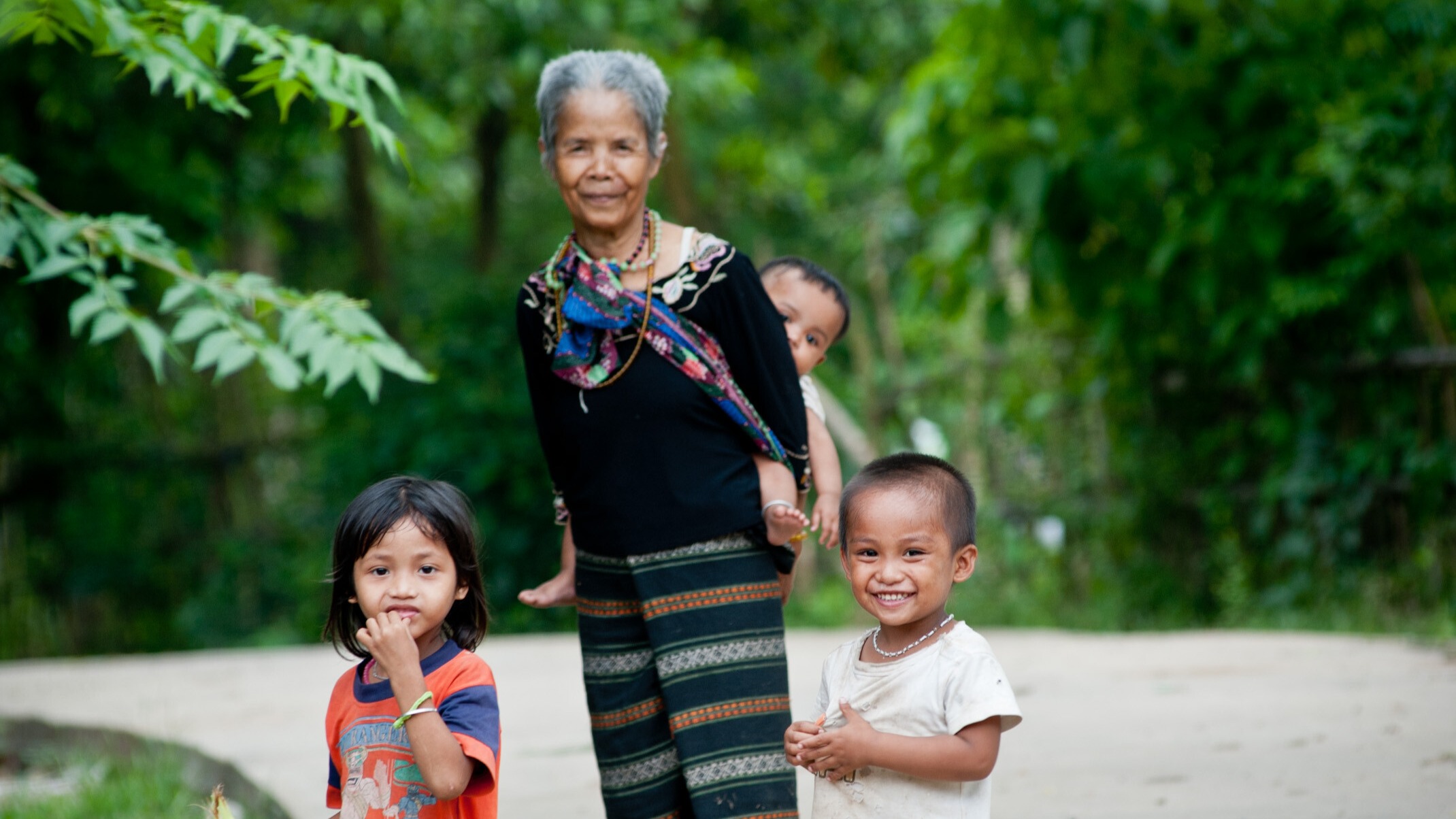
Active aging empowers older people to maintain their independence and resilience. It can also reduce the onset and severity of chronic conditions. Photo credit: ADB.
Pilot projects in Indonesia, Mongolia, and Viet Nam offer lessons and insights in developing affordable and sustainable long-term care systems.
Southeast Asia’s population of older people is growing fast.
By 2050, the share of those 60 years and older are projected to increase to 1 in 5 persons from 1 in 9 persons in 2020. The demographic shift from a relatively young to aging population is due to the rapid decline in fertility rates and continued improvements in life expectancy at older ages. This raises serious concerns over how families, communities, and health care and social protection systems can cope with the long-term and often complex needs of seniors.
Lessons from ADB-supported pilot projects in Indonesia, Mongolia, and Viet Nam offer insights and recommendations on how countries can develop sustainable and replicable models for long-term care using a holistic and person-centered approach.
Context-specific interventions
Studies conducted by ADB in Asia and the Pacific show that “countries favor supporting older people to stay in their homes and communities—known as aging in place—rather than to go into residential care,” which is not widely available and unaffordable to most people. Family members are the primary caregivers, but they lack training and support. Nongovernment, civil society, and faith-based organizations also provide long-term care to older people in their homes, but there are not enough carers to serve the growing number of seniors.
The pilot projects in the three countries sought to design and develop innovative, affordable, and sustainable community-based long-term care service models, building on existing community assets and social and health care services. These models can operate in low-income settings and still deliver quality services.
Indonesia’s population aged 60 and above is projected to reach 21% by 2050 from 10% in 2019. The country has a robust cadre network that provides community health and social services but lack the expertise and facilities to handle complex care needs. Health cadres are community volunteers who were trained by healthcare professionals to run programs of the district health centers or puskesmas. Long-term care services are limited and highly fragmented.
Mongolia has a relatively young population, but the share of those aged 60 and above is expected to more than double to 17.3% in 2050 from 7.2% in 2020. Long-term care for seniors covers medical and rehabilitative services. There is a need for more holistic models that include continuous care and offer social and emotional support.
Of the three countries, Viet Nam is aging the fastest with the proportion of older persons hitting 25% of the population by 2050 from 11.9% in 2019. The country has a wide network of Intergenerational Self-Help Clubs (ISHCs) and a strong volunteer culture in services for seniors.
Project interventions prioritized the integration of health and social care services, setting up case management systems to facilitate integration, healthy and active aging, and developing the capacity of both formal and informal carers.
Community-based long-term care systems and services were developed to support aging in place and customized to the needs and caregiving traditions of each country. International evidence and experience show that enabling older persons to remain in familiar environments enhances their social, economic, and physical well-being. Meanwhile, community-based care encourages intergenerational interaction and promotes social inclusion, reducing risk factors for depression, cognitive decline, and dementia.
Three models of care
In Indonesia, community care hubs were established at the village level—three in Yogyakarta, and two in Bali. These hubs connected older people and their caregivers to government-run community health clinics through appointed senior case managers (puskesmas). They provided active aging activities, information and referral, and care and support, including home care visits.
In Mongolia, active aging hubs were created in Ulaanbaatar, Darkhan-Uul, and Mandal Soum and implemented by existing service providers. The first was run by a nongovernmental organization; the second was housed in the government-run Elderly Development Centre; and the third was in a general hospital. The active aging hubs provided access to basic needs and information, rehabilitation, day care, social and educational activities, and home care visits.
In Viet Nam, the pilot developed the case management system. It involved 12 village case management teams across four communes, two each in the provinces of Hoa Binh and Thanh Hoa. These teams focused on frail older people. The case management system linked local health services (commune health stations) through appointed case managers with community organizations, which are overseen by Commune Care Coordinating Committees. The teams conducted home visits and health checks, provided support in accessing benefits, and mobilized community and local government resources to meet specific needs.
All three care models included information and referral systems, active aging initiatives (e.g., physical activity, social engagement), and a case management system, which includes risk screening, to create individualized care plans and coordination. Case management made services more efficient and accessible to older people. For example, in Indonesia, the system linked them with primary care providers, nurse‑based elder centers, community health stations, social centers, elder and family education groups, and women’s groups.
Training adapted to local contexts provided care providers, social workers, volunteers, and community groups with the necessary knowledge and skills to support long-term care systems and active aging initiatives. Older people that are healthy and require minimal support were encouraged to join the training and serve as volunteers or additional workers.
Role of technology
Digital technology is transforming long-term care by improving service delivery and coordination, centralizing information and improving communication among providers, social workers, and families. It is used in case management and in data collection and analysis.
In Indonesia, the project expanded SILANI, a web-based assessment tool used by the government to survey the health and social status of seniors living in communities, into a digital platform for documenting and monitoring higher-risk seniors who are vulnerable and frail. The platform incorporated a comprehensive needs assessment, care-foci-triggering algorithm, and digital care plan. Care foci refers to areas of common health and psychosocial needs that would benefit from intervention and support.
In Mongolia, a mobile application is used for case management. It includes a risk screening tool, comprehensive needs assessment, care-foci-triggering algorithm, and care plan.
However, the use of digital technology is constrained by gaps in rural connectivity and low digital literacy among older persons. In Viet Nam, for example, only a small percentage uses digital apps for referrals.
Broad benefits
The success of the pilot projects shows that community-based long-term care can reach older people who need help the most, such as those with low income, those who are bedbound and not on the radar of service providers, and those living in remote areas. It is less costly as residential care and generates cost savings by preventing unnecessary hospitalization.
Active aging empowers older people to maintain their independence and resilience. It can also reduce the onset and severity of chronic conditions.
The involvement of community care workers and volunteers in long-term care allowed health care professionals to focus on the most critical or complex cases.
Community-based care also benefits other members of the community. It creates jobs and business opportunities in caregiving, transportation, and support services. It also helps reduce the burden and stress on family caregivers by allowing them to take a break and through other support services, such as training.
Lessons from the pilot projects helped inform policy and program development. In Indonesia, the replication of community care hubs was integrated into the country’s medium-term development plan. In Mongolia, experience from the project informed the 2024 amendments to the Elderly Law, which included assessment and case management services and increased the budget for home-based services. In Viet Nam, the provision of home medical treatment and services was integrated into the Health Insurance Law.