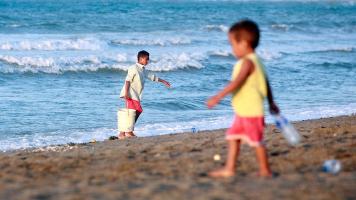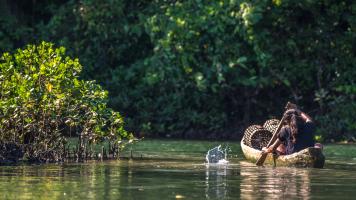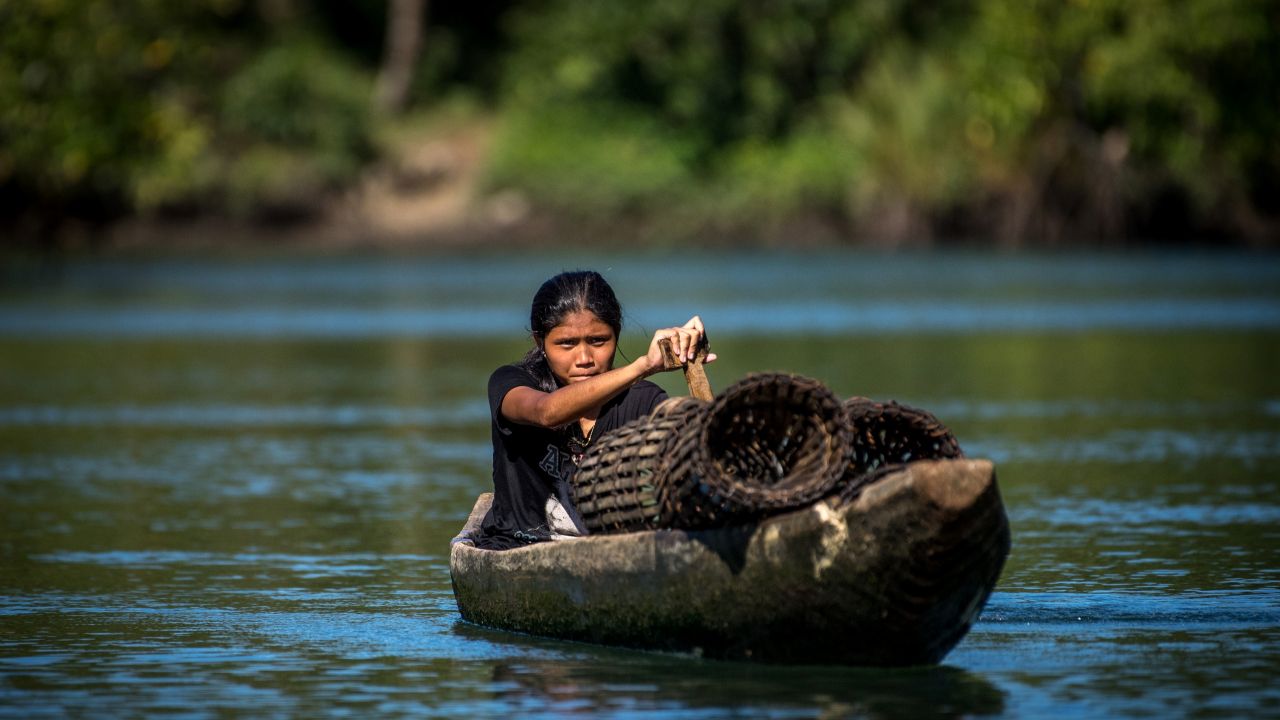
About 60% of Filipinos rely on the ocean for food and livelihood. Photo credit: ADB.
Inclusive and sustainable management of coastal and marine ecosystems will ensure long-term ecological and economic resilience and protect millions of Filipinos from worsening climate impacts.
The blue economy in the Philippines holds great potential to become an anchor of inclusive and low-carbon growth. However, coastal and marine ecosystems are increasingly under threat from unsustainable practices (e.g., overfishing), plastic and solid waste pollution, and the effects of extreme weather changes.
ADB has approved a $500 million policy-based loan to help advance the sustainable development of the blue economy in the Philippines. It will support the inclusive and sustainable management of marine ecosystems, help rejuvenate coastal areas, and foster an ocean-based economy. These efforts will ensure long-term ecological and economic resilience and protect millions of Filipinos from the worsening impacts of climate change.
Located at the heart of the Coral Triangle, the Philippines is endowed with a wealth of marine resources; it is a global center of marine diversity. The Verde Island Passage between Batangas province and Mindoro Island in Southern Luzon is recognized by experts as the center of marine shore fish biodiversity, hosting 60% of the world’s shore fish species.
A blue nation
The world’s second-largest archipelagic nation has one of the longest coastlines. People living along the coast make up about 60% of the population. They derive significant economic and social benefits from the blue economy.
“More than half of the Philippine population is dependent on the country’s oceans and rich marine biodiversity for food and livelihoods, with the blue economy having great potential to be central to attaining inclusive, resilient, and low-carbon development,” said ADB Philippines Country Director Andrew Jeffries.
In 2024, key blue economy sectors contributed Php1.01 trillion ($17.17 billion) to the country’s economy, equivalent to 3.8% of the gross domestic product. In national statistical accounts, the blue economy includes fisheries, manufacturing of ocean-based products, tourism-related services, shipping, and offshore energy. The fisheries sector is the biggest contributor to the blue economy with a share of about 25%. The country is one of the world’s top producers in this sector.
Marine ecosystems contribute to climate mitigation. Coastal and marine habitats capture and store carbon dioxide from the atmosphere and can be a potential source of revenue from carbon credits. Tapping offshore wind energy can help the country meet its renewable energy targets.
The growth of the blue economy, however, is hampered by environmental degradation. Loss of ecosystem services increases climate risks and diminishes economic productivity and quality of life. In 2024, the Philippines ranked 169 out of 180 in the Environmental Performance Index, a global ranking system by two American universities, Yale and Columbia. In Manila Bay and other urban coastlines of the country, an estimated 360,000 tonnes of riverine plastic waste enters the ocean every year. According to a 2021 report, the 27-kilometer Pasig River alone contributed 6.4% of global river plastics.
Severe weather conditions also pose risks to ecosystems and communities. Climate-related impacts damage coastal and marine infrastructure and settlements, exacerbate the degradation of mangroves and coral reefs, and reduce fish stocks. The Philippines is hit by at least 20 typhoons annually, with cyclones becoming fiercer in recent years. Two strong typhoons struck the country within a week in November, leaving hundreds of casualties and millions of dollars in property damage due to flash floods and storm surges.
Policy reforms
The Marine Ecosystems for Blue Economy Development Program (Subprogram 1) supports reforms in coastal and marine ecosystem management, pollution control, and natural capital planning, budgeting, and investment. It seeks to strengthen the productivity and diversity of the country’s ocean-based economy, and improve the health and adaptability of coastal areas and communities. It aims to enhance the plastic and solid waste management value chain and promote circularity and investments in natural capital. These efforts will ensure long-term ecological and economic resilience and protect millions of Filipinos from the worsening impacts of climate change.
“This is ADB’s first extensive cross-sector program focused on fostering national blue economy development in the region,” said Jeffries. “We are committed to assisting our host country in achieving its climate resilience and low-carbon objectives.”
The program is aligned with the Philippine Development Plan 2023–2028 and supports the implementation of the government’s National Adaptation Plan 2023‒2050 and its nationally determined contribution, with a focus on nature-based solutions, climate-resilient livelihoods, and blue carbon ecosystems. It builds on ADB’s long-standing engagement on natural resources management in the Philippines and Southeast Asia. ADB has previously supported government initiatives on watershed management, coastal community development, and marine plastic pollution management. ADB’s Natural Capital Lab has supported the use of natural capital assessments in line with the Philippine Ecosystem and Natural Capital Accounting System (PENCAS) Act to identify and prioritize investments.
The program also leverages ADB’s support for climate action in the country under the Climate Change Action Program, the bank’s first climate policy-based loan in the region. It complements the Philippines Flyway Project, which aims to conserve and sustainably manage three priority wetlands—Candaba in Luzon, and Lake Mainit and Sibugay wetlands in Mindanao—to enhance biodiversity, promote sustainable livelihoods, and boost climate resilience. ADB is assessing the potential for nature and carbon credits at nine coastal wetlands in the country and developing a pilot project for restoration of abandoned, undeveloped, and underutilized (AUU) fishponds to mangroves at Sibugay Wetlands Nature Reserve in Zamboanga Sibugay province, Mindanao.
The program will be implemented as two subprograms to sequence complex and strategic reforms across multiple implementing agencies, policies, and plans. The Agence Française de Développement and Germany’s KfW Development Bank will provide cofinancing of up to €200 million (about $235 million) each for subprogram 1, bringing total financing to nearly $970 million.