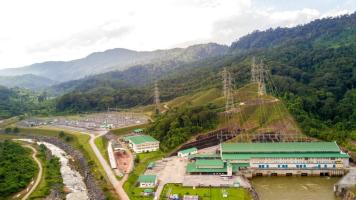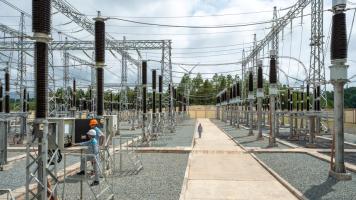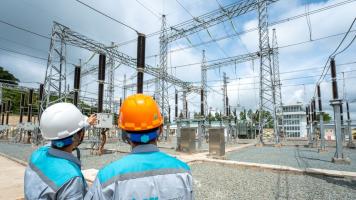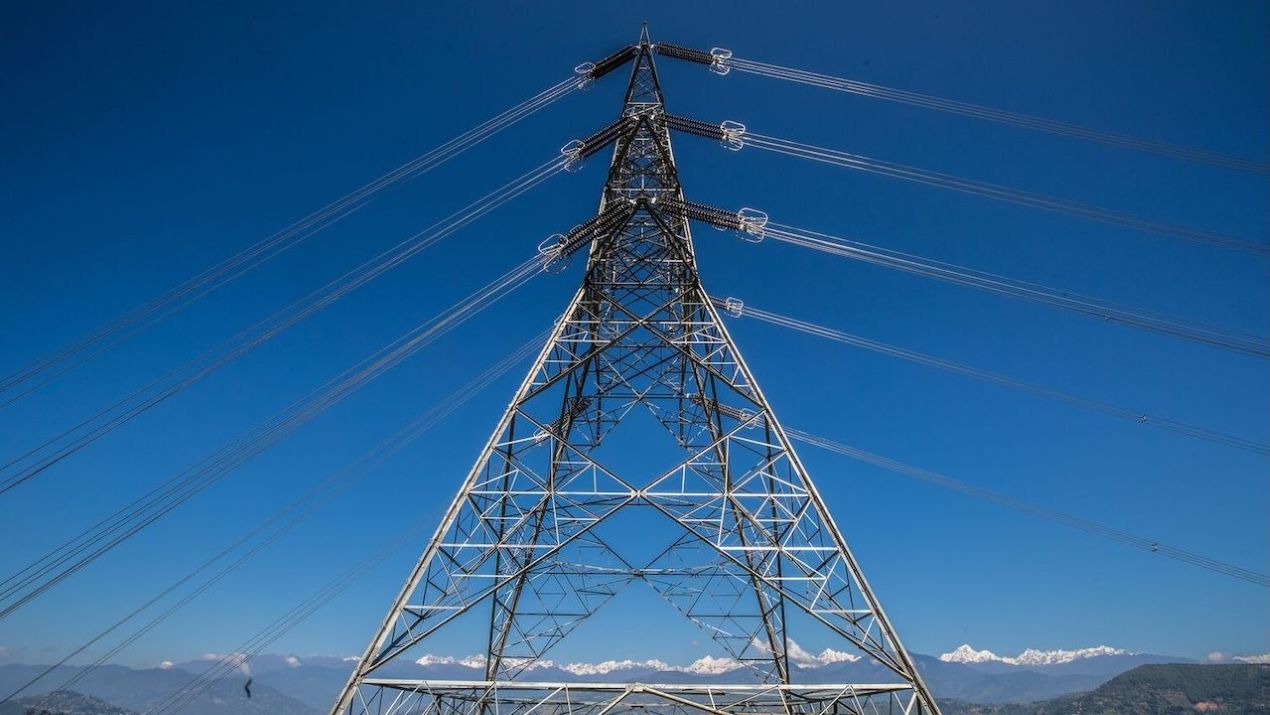
According to the International Energy Agency, the region needs $27 billion between 2025 and 2040 to build interconnectors—transmission lines that link power systems, often across borders—to realize the ambitions of the APG. Photo credit: ADB.
To create a pipeline of projects, the region needs to address concerns over regulatory and licensing rules as well as revenue certainty.
Southeast Asia spent decades planning an ambitious project—connect national grids so countries can share power across borders, and ultimately strengthen the region’s energy security and lower electricity costs.
ASEAN is targeting a fully integrated regional power system by 2045 under an initiative dubbed the ASEAN Power Grid (APG).
The regional bloc knows it needs an integrated grid. Southeast Asia’s energy demand is projected to triple by 2050. ASEAN needs to meet this demand to sustain growth as recent geopolitical shocks roil economies across the region. The countries’ net-zero commitments are also a factor as the project is expected to help deploy more renewables into the energy mix. At the same time, energy-hungry data centers are expected to increase power demand further.
“The trends are not just happening in sequence but are happening simultaneously. So in this context, the ASEAN Power Grid is not simply energy infrastructure, it is a strategic economic infrastructure,” said Kanchana Wanichkorn, director of the Sectoral Development Directorate at the ASEAN Secretariat, during one of the panel discussions at the Asia Clean Energy Forum organized by the Asian Development Bank (ADB) in June.
“The question is no longer whether we should build the ASEAN Power Grid, the question is… how quickly we can implement it,” she said.
The region is facing huge bottlenecks to get the APG across the finish line, as regulatory, technical, institutional, and financial challenges slow efforts to develop a pipeline of bankable projects. During the ADB energy forum, experts said capital is available to bankroll APG projects, but differing standards and licensing requirements, along with uncertainty over returns, are making potential investors hesitate to commit.
According to a report from the International Energy Agency (IEA), the region needs $27 billion between 2025 and 2040 to build interconnectors—transmission lines that link power systems, often across borders—to realize the ambitions of the APG. It is based on the pipeline of projects needed between 2025 and 2040 proposed in the ASEAN Interconnection Masterplan Study III and other announced projects. The projection represents a 14-fold increase compared with total investment in interconnectors in Southeast Asia from the 1970s to 2024.
Another IEA report said the region needs more than $300 billion in total to expand and modernize electricity grids from 2025 to 2040 to keep pace with the rise in generation capacity as energy demand rises. This is a 72% increase compared to investments from 2009 to 2024.
Growing momentum
While there are challenges, the momentum for the APG has never been stronger, according to the IEA.
It cited sustained high-level political backing for the initiative as well as several key milestones since 2024. These include a 2025 ASEAN agreement reaffirming support for the initiative; endorsement of the terms of reference for a submarine power cable development framework; the launch of an APG financing initiative from ADB and World Bank; and the flagship APG initiative Lao People’s Democratic Republic (Lao PDR)-Thailand-Malaysia-Singapore Power Integration Project entering Phase 2.
While noting the momentum, experts speaking at the ADB forum’s panel discussions on the APG, pressed ASEAN to address bottlenecks.
Rules before cables
One of the biggest barriers is that each country has its own technical standards in running their grids. To ensure integration, countries need compatible technical and operational arrangements.
This is one of the reasons the private sector hesitates to invest in interconnector projects.
“We’ve go to put rules before cables,” said Assaad Razzouk, chief executive officer of renewable energy developer Gurin Energy. “We, the private developers, can't underwrite cross-border transmission risks when the national grid codes are a mess and unharmonized and aren't talking to each other,” he said during the forum. “That's a very big ask of the private sector. That needs to be addressed…head-on.”
Beni Suryadi, senior manager for the ASEAN Plan of Action for Energy Cooperation and Strategic Partnership at the ASEAN Centre for Energy (ACE), agreed on the need for the region to set clearer rules. He said ACE is now preparing an implementation strategy for ASEAN's multilateral power trading that is expected to provide greater clarity to stakeholders.
The implementation strategy would draw on studies on minimum technical standards and harmonizing grid codes, while establishing the regulatory and market architecture needed for multilateral power trading.
The strategy would also cover rules for cross-border interconnections, including how they are licensed, owned, and operated and how their costs are recovered through tariffs. It would also cover transmission pricing and wheeling charges, as well as third-party access and capacity allocation, said Beni, while noting the need for more clarity on licensing, cost recovery, and dispute resolution, among others.
ASEAN is also working to have a clearer project pipeline so manufacturers, financiers and development partners can anticipate demand and prepare.
Show us the cash flow
Beyond technical standards and grid codes, the private sector ultimately needs clarity about revenues, cash flow, and returns as certainty on how a project will recover investments and generate returns is key to determining whether it is bankable.
At the ADB forum, Ganesh Padmanabhan, managing director and head of project finance at DBS Bank, said bankability depends on how much risk investors take on for a project. He identified three key issues that need to be addressed: construction and completion risks, political risks arising from the need for clearances and intergovernmental approvals, and revenue certainty.
“Cash flow will form the basis of any financing,” he said. “So revenue certainty and cash flow certainty is key to make sure that the projects are bankable.”
However, the IEA said ASEAN currently lacks harmonized commercial arrangements that can provide that certainty. The region also has no harmonized wheeling or transmission charges or power-trading arrangements. Instead, cross-border power trade has relied on bespoke power purchase agreements while wheeling charges were negotiated case by case.
While these arrangements worked for bilateral trading, these become increasingly complex as more countries, exporters, importers, and interconnector owners participate. “A reliance on bespoke bilateral agreements means the region lacks the basis for harmonized trading arrangements, thereby limiting transparency and scalability,” the IEA said.
Mobilizing financing from diverse sources will also be key to scaling APG investment, the IEA said. This requires new financing models and sources of finance, especially in the context of already sizable investment needs for domestic transmission and distribution.
IEA identified priority actions for scaling APG investment. These include establishing transparent, harmonized and predictable commercial arrangements for power trading; adopting alternative financing models, including shared ownership; reducing investment risks; and using public finance to crowd in private capital. It also called for stronger project preparation and supply chain coordination.
Among cross-border energy projects already operating in the region, the 600-megawatt Monsoon Wind project in Lao PDR was cited as an example of how development finance can help bridge financing gaps. Monsoon was the first cross-border wind power project in Asia, allowing Lao PDR to export and sell power to Viet Nam. The project mobilized private capital with the help of close to $693 million worth of loans and grants from ADB, demonstrating how blended finance and de-risking can help unlock private capital for complex cross-border energy projects.
Marife Apilado, deputy director general of the Private Sector Operations Department at the ADB, said Monsoon also demonstrated how support from the right partners like ADB is essential. “We can replicate this success many times across other APG projects,” she said.
ADB has already committed $10 billion toward APG in the next 10 years via the ASEAN Power Grid Financing Initiative it set up with the World Bank. The initiative will mobilize the funding crucial to take projects from concept to completion and bring ASEAN Power Grid vision to life. ADB also recently launched another initiative, the Regional Connectivity Fund for Energy in Southeast Asia, to finance project preparation work for cross-border energy and transmission infrastructure.
Such initiatives are crucial. The IEA said ASEAN is now looking toward more complex interconnection projects. These projects would entail building longer-distance links and subsea connections across multiple countries. The financing models would thus need to take this into consideration. The challenge is ensuring these projects can secure financing and actually get built to deliver on APG’s promise.
“Electricity does not need to be generated everywhere, but it needs to be available everywhere,” said ASEAN’s Wanichkorn as she underlined why the region needs the APG. “A connected grid would improve reliability, lower cost, enable renewable energy transition and integration, and strengthen resilience against all these disruptions. Most importantly, it would allow ASEAN to transform national energy strength into a shared regional advantage.”