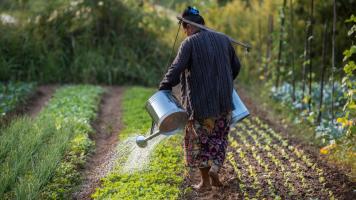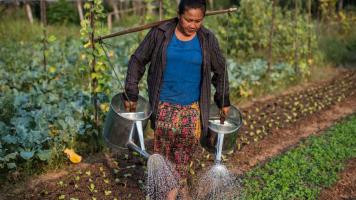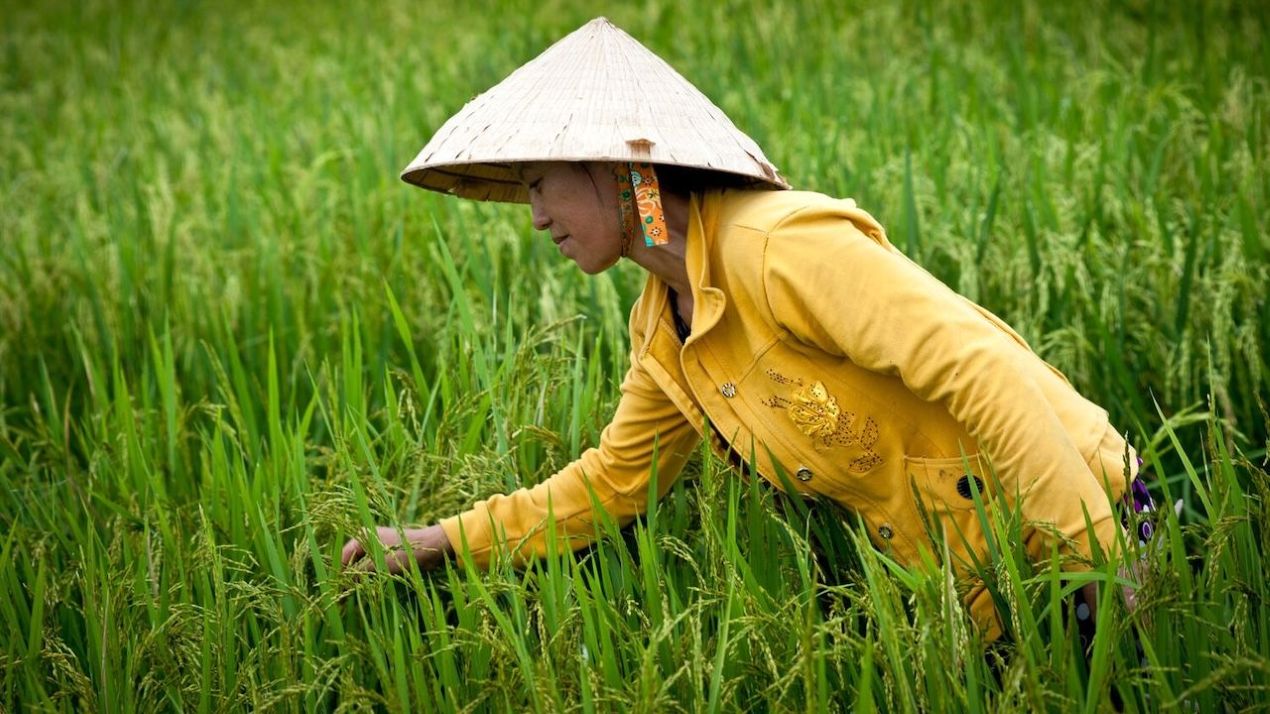
A new UN report says an estimated 12.8% of the region’s population, or about 89.5 million people, experienced moderate or severe food insecurity in 2025, down from 15.3%, or 103.5 million in 2020. Photo credit: ADB.
To go beyond pilots, ASEAN needs to create a mechanism to embed innovations into policy and financing pipelines.
Southeast Asia has seen a decline in the number of people who faced hunger in the last six years, but the region’s food systems continue to be vulnerable as geopolitical tensions, extreme weather, and funding cuts threaten gains.
A new report from the United Nations, The State of Food Security and Nutrition in the World 2026, said 5.1% of Southeast Asia's population faced hunger in 2025, down from 5.9% in 2020. This translates to about 35.4 million people in 2025 versus 39.8 million in 2020.
The report said an estimated 12.8% of the region’s population, or about 89.5 million people, experienced moderate or severe food insecurity in 2025, down from 15.3%, or 103.5 million in 2020. The Food and Agriculture Organization (FAO) said people face food insecurity when they were at times forced to compromise on the quality or quantity of the food they ate.
At the Asia and the Pacific Food System Forum 2026 organized by the Asian Development Bank (ADB) in March, experts said amid threats to its food security, ASEAN needs to build agri-food systems that can withstand shocks, make healthy diets more affordable, and turn solutions that work from individual projects to regional investment pipelines.
With Southeast Asia one of the most vulnerable regions to climate change, countries have been trying to make food systems more resilient by pilot testing climate-smart agriculture, modern irrigation, agroforestry, digital technologies, and new approaches to managing forests, rivers, and watersheds.
But promising solutions have yet to be scaled across the region.
“Scaling is essential, but it requires platforms not isolated projects to manage trade-offs across water, land, and agriculture,” said Maximo Torero, FAO chief economist, who spoke at the ADB forum’s thematic session on ASEAN’s food systems.
Testing solutions
Many promising solutions are already being tested across Southeast Asia, according to experts who spoke at the ADB forum.
In the Lao People’s Democratic Republic, the government is integrating natural capital into development planning. It is seeking to conserve 70% of its land cover as forest areas and establishing mechanisms to protect water resources. It is also using carbon-credit financing to share benefits with villages that protect forests.
“For Lao PDR, we can balance the growth of economics with ecosystem protection by treating rivers, forests, and soil as natural capital,” said Boundeth Southavilay, director general of the Department of Planning and Cooperation at the Ministry of Agriculture and Environment.
Timor-Leste focuses on agroforestry and climate-resilient farming. The country is promoting coffee agroforestry, organic composting, crop rotation, improved storage, and watershed-level planning. Smallholder farms have also adopted smart farming practices to enhance soil fertility and resilience to climate change.
In the Philippines, the Department of Agriculture is pursuing an action plan to transform food systems, entailing strategies to ensure productive supply chains, fair returns, climate resilience, investment and innovation, and healthy and affordable diets.
At the forum, William Dar, president of climate-smart farming advocate InangLupa Movement Inc., recognized the region has no shortage of solutions. “You have a lot of technologies, but scaling up is the problem.”
He said scaling would require a more active partnership among the public sector, private companies, and producers.
Unlocking financing
While finding solutions is not an issue, financing remains a major obstacle.
Torero said agri-food systems receive only 4% to 6% of climate finance. “This is totally inconsistent and needs to be changed,” he said.
The private sector is also willing to invest since a healthy food system is essential to their business.
At the forum, Jesse Teo, chief financial officer of food manufacturer Monde Nissin, cited the company's difficulty sourcing enough Philippine shallots and the declining productivity of coconut trees among its challenges. “We are ready to give commitments so that people can make long-term plans, long-term investments,” he said.
But farmers need to be organized and able to obtain financing. “We need the producers to organize. We need the public sector to help provide financing,” he said.
Multilateral financing institutions are also stepping up to bolster the region’s food systems. In 2025, ADB announced its ambition to mobilize $40 billion through 2030 to support stronger food systems across the Asia and the Pacific.
In Southeast Asia, ADB has two initiatives that seek to help the region foster water and food resilience. The initiatives reflect the region’s growing recognition that long-term prosperity depends on better integration of land, water, and ocean systems. In particular, the Southeast Asia Resilient River Initiative aims to strengthen river basin management, disaster resilience, and ecological health across the region. Meanwhile, the ASEAN Blue Economy Initiative is designed to support sustainable fisheries, coastal resilience, and innovative blue financing solutions.
From pilots to pipelines
Research institutions have an important role in helping ASEAN scale pilots.
Mercedita Sombilla, director of the Southeast Asian Regional Center for Graduate Study and Research in Agriculture (SEARCA), said to go beyond pilots, ASEAN needs to create a mechanism to embed innovations into policy and financing pipelines.
Research institutions can help countries leverage research and innovation in designing future investments in agri-food systems transformation by turning innovations into actionable insights. Such insights could strengthen the region’s ability to make investment decisions based on credible and regionally comparable evidence.
She also urged the region to create a consortium or a platform that could look into transboundary challenges. “Many of the issues that are now emerging in our region are really impacting across borders—climate change, natural degradation, geopolitical conflicts, malnutrition. These are affecting several countries.”
She said SEARCA is establishing such a consortium for agricultural policy and research, which can then generate comparative evidence in guiding policymakers toward investments with the highest regional impact.
Abdul Malik Melvin Castelino, Malaysia’s ambassador to the Philippines, agreed on the need to develop a pipeline of investable agri-food projects across the region. “ASEAN must move from declarations to investable regional pipelines,” he said. “Declarations are great, but if not coupled with investable regional pipelines, then we are getting nowhere.”