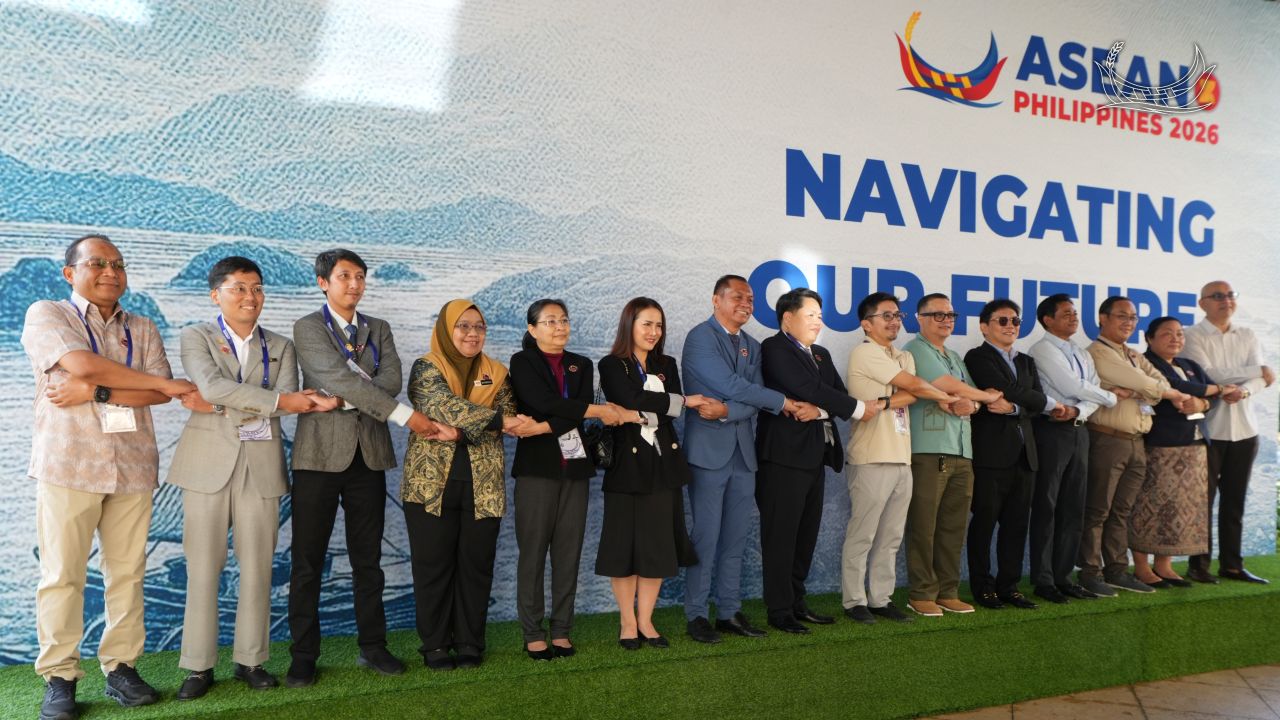
ASEAN member states and ADB conducted an information session on energy resilience on the sidelines of the recent ASEAN Special Senior Officials’ Meeting on Energy in Bohol, Philippines.
Senior energy officials explore a common agenda for insulating energy systems from instability and climate and supply chain shocks.
Building resilience is critical to achieving Southeast Asia’s energy security and transition targets. Increasing pressures on power systems from faster renewables build-out, climate hazards, and supply chain disruptions call for strategic and coordinated regional planning and action to enhance resilience and risk mitigation measures.
ASEAN member states and ADB conducted an information session on energy resilience on the sidelines of the recent ASEAN Special Senior Officials’ Meeting on Energy in Bohol, Philippines. The session was also attended by the ASEAN Secretariat, ASEAN Centre for Energy (ACE), and specialized energy bodies, including the Heads of ASEAN Power Utilities/Authorities (HAPUA) and ASEAN Council on Petroleum (ASCOPE).
“Energy resilience is no longer a future concept; it is an urgent operating requirement,” said Philippine Energy Undersecretary and Senior Official on Energy Leader Felix William B. Fuentebella, who led the discussions as chair. “By engaging early with our ASEAN partners, we are building a common foundation for policies and investments that keep our energy systems stable, adaptable, and ready for shocks, whether from extreme weather, disruptions in fuel or equipment supply, or rapid demand changes.”
Southeast Asia's energy demand is expected to triple its 2022 levels by 2050, fueled by population growth and economic expansion. Extreme heat is also driving up electricity consumption because of increased air-conditioning and refrigeration requirements.
To meet rising demand and secure a sustainable future, ASEAN has put in place a new 5-year plan of action for energy cooperation to advance regional efforts toward energy transition, interconnectivity, and resilience. The regional bloc is targeting a 45% renewable energy share by 2030. After more than 20 years, interconnection plans and multilateral power trade under the ASEAN Power Grid (APG) are regaining momentum through an enhanced memorandum of understanding. Collaboration is essential to mobilize the financing, expertise, and technology needed to achieve these ambitious plans.
"ASEAN's vision for a connected energy future faces a trio of intensifying challenges, including grid stability pressures as renewables scale, climate impacts on assets, and global supply chain disruptions for critical components. The practical question is how to convert ambition into concrete, resilient action, so the vision translates into secure, on-the-ground implementation,” said Keiju Mitsuhashi, Asian Development Bank’s (ADB) Energy Director, covering Southeast Asia and the Pacific.
To anchor the discussions in evidence and regional context, participants reviewed indicators presented by ACE and ADB that could help align perspectives of the current regional energy resilience landscape.
At the end of the session, ASEAN member states and ADB agreed to identify priority areas anchored on program areas of the ASEAN Plan of Action for Energy Cooperation (APAEC) 2026–2030 and integrate resilience in the subsector networks, for deeper discussion at the June 2026 Energy Resilience Roundtable, with indicative messages to be elevated to the Senior Officials Meeting on Energy (SOME) for discussion and potentially to the ASEAN Ministers on Energy Meeting.
Meanwhile, ASEAN Senior Officials on Energy endorsed ASEAN’s Annual Energy Priorities, including the Philippines’ Priority Economic Deliverables for its ASEAN Chairmanship.
At the conclusion of the senior officials’ meeting, Fuentebella said the Philippines will work with ASEAN partners to implement the Enhanced ASEAN Power Grid Memorandum of Understanding signed during the 43rd ASEAN Ministers on Energy Meeting in Malaysia in October 2025. The enhanced agreement seeks to strengthen regional connectivity by advancing multilateral power trade, enabling greater renewable energy integration, and attracting investment into the energy sector.
“With the Enhanced APG MoU, our focus now is execution, turning regional commitment into clear, workable arrangements that ASEAN can implement. This includes operationalizing dedicated Task Forces on Policy, Legal and Regulatory, and Technical, so we can move in a coordinated and time-bound manner,” Fuentebella said.
He added that the Philippines will develop comprehensive operational guidelines for the Submarine Power Cable Framework, covering legal and regulatory, technical, financial and commercial, and governance components to help create an investment-ready environment for cross-border connectivity, multilateral power trade, and renewable energy integration.